 一孔录
子曰:道千乘之国:敬事而信,节用而爱人,使民以时。The Master said: To govern a state of a thousand chariots: be careful in affairs and keep faith; be sparing in expense and love the people; and call on the people's labour only in the right season.
常The common reading
No common misreading; the question is why governing a state should be only these five things.
注Key words in the commentary
“道,治也” — dao here means to govern; “敬者,主一无适之谓” — jing (care) is keeping the mind on one thing and not wandering; “时,谓农隙之时” — the right season is the slack time in farming; Yang Shi cites the Changes: “节以制度,不伤财,不害民” — regulate by set measures, and neither wealth nor people are harmed.
读How Yikonglu reads it
Cheng Yi: “此言至浅……若推其极,尧舜之治亦不过此” — the words are plain, but pushed to the limit, even Yao and Shun governed no differently. Today: a shopkeeper who keeps his word, doesn't waste money, and doesn't send staff on private errands in the busy season.
核Check every citation
Every commentary line quoted in the video: the original wording, who said it, and the page in the base edition. “Paraphrase” marks our summary, not the commentator's words.
| Quoted text | Source | Page |
|---|---|---|
| “道,治也;千乘,诸侯之国,其地可出兵车千乘者也” | Zhu Xi's commentary | page 16 |
| “敬者,主一无适之谓;敬事而信者,敬其事而信于民也;时,谓农隙之时” | Zhu Xi's commentary | page 16 |
| “上不敬则下慢,不信则下疑,下慢而疑,事不立矣” | Yang Shi, quoted by Zhu Xi | page 16 |
| “易曰:节以制度,不伤财,不害民” | The Book of Changes, via Yang Shi in Zhu Xi | page 16 |
| “然使之不以其时,则力本者不获自尽,虽有爱人之心,而人不被其泽矣” | as above | page 16 |
| “此言至浅,然当时诸侯果能此,亦足以治其国矣;此三言者,若推其极,尧舜之治亦不过此” | Cheng Yi, quoted by Zhu Xi | page 16 |
音Pronunciation
| Character | In the line | Read as |
|---|---|---|
| 道 | 道千乘之国 | dào |
| 乘 | 千乘 | shèng |
页Pages of the base edition
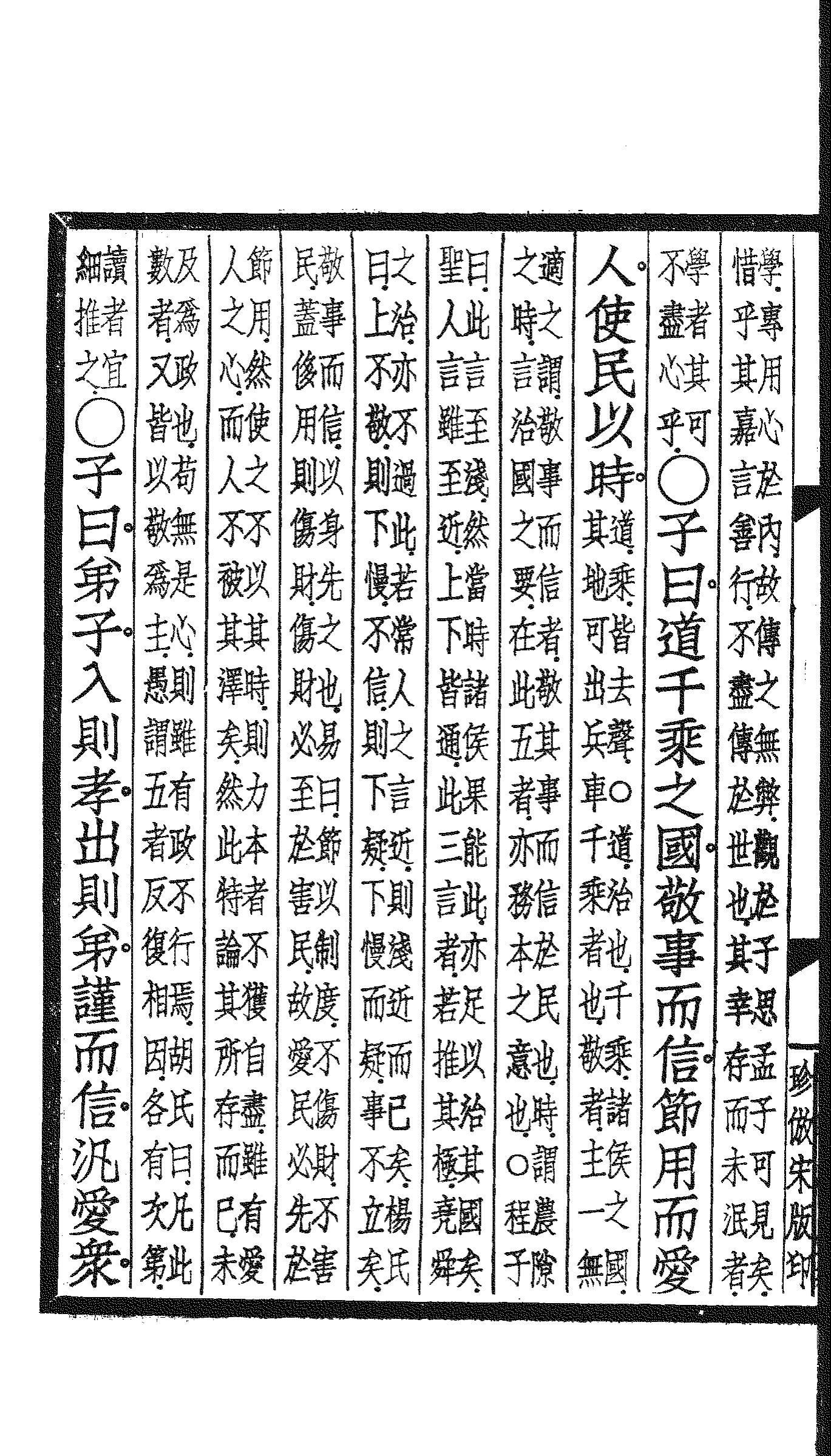
Yikonglu, Analects Xue er (Book 1) 1.5 “Governing a state of a thousand chariots”, https://yikonglu.com/en/lunyu/xue-er/5.html, version 2026-11-03.Last checked: 2026-11-03. Changes are logged on theerrata page.
Found an error in this chapter? Email us; once checked, it goes on the errata page under your username: 
看Watch this chapter
This chapter is read in Yikonglu episode “学而二”:YouTubeBilibili(in mainland China use Bilibili)
