 一孔录
曾子曰:慎终追远,民德归厚矣。Master Zeng said: Take care over the end, and follow the distant dead with remembrance, and the people's virtue will return to fullness.
常The common reading
Finish what you start.
注Key words in the commentary
“慎终者,丧尽其礼;追远者,祭尽其诚” — care at the end means the full rites of mourning; remembrance of the distant means full sincerity in sacrifice; “终者人之所易忽,远者人之所易忘……厚之道也” — the end is what people easily neglect, the distant what they easily forget; attending to them is the way of fullness.
读How Yikonglu reads it
Put your heart into the places that are easy to neglect and easy to forget. Today: driving two hundred kilometres to stand ten minutes at a grave.
核Check every citation
Every commentary line quoted in the video: the original wording, who said it, and the page in the base edition. “Paraphrase” marks our summary, not the commentator's words.
| Quoted text | Source | Page |
|---|---|---|
| “慎终者,丧尽其礼。追远者,祭尽其诚。民德归厚,谓下民化之,其德亦归于厚” | Zhu Xi's commentary | page 19 |
| “终者,人之所易忽也,而能谨之;远者,人之所易忘也,而能追之:厚之道也” | Zhu Xi's commentary | page 19 |
页Pages of the base edition
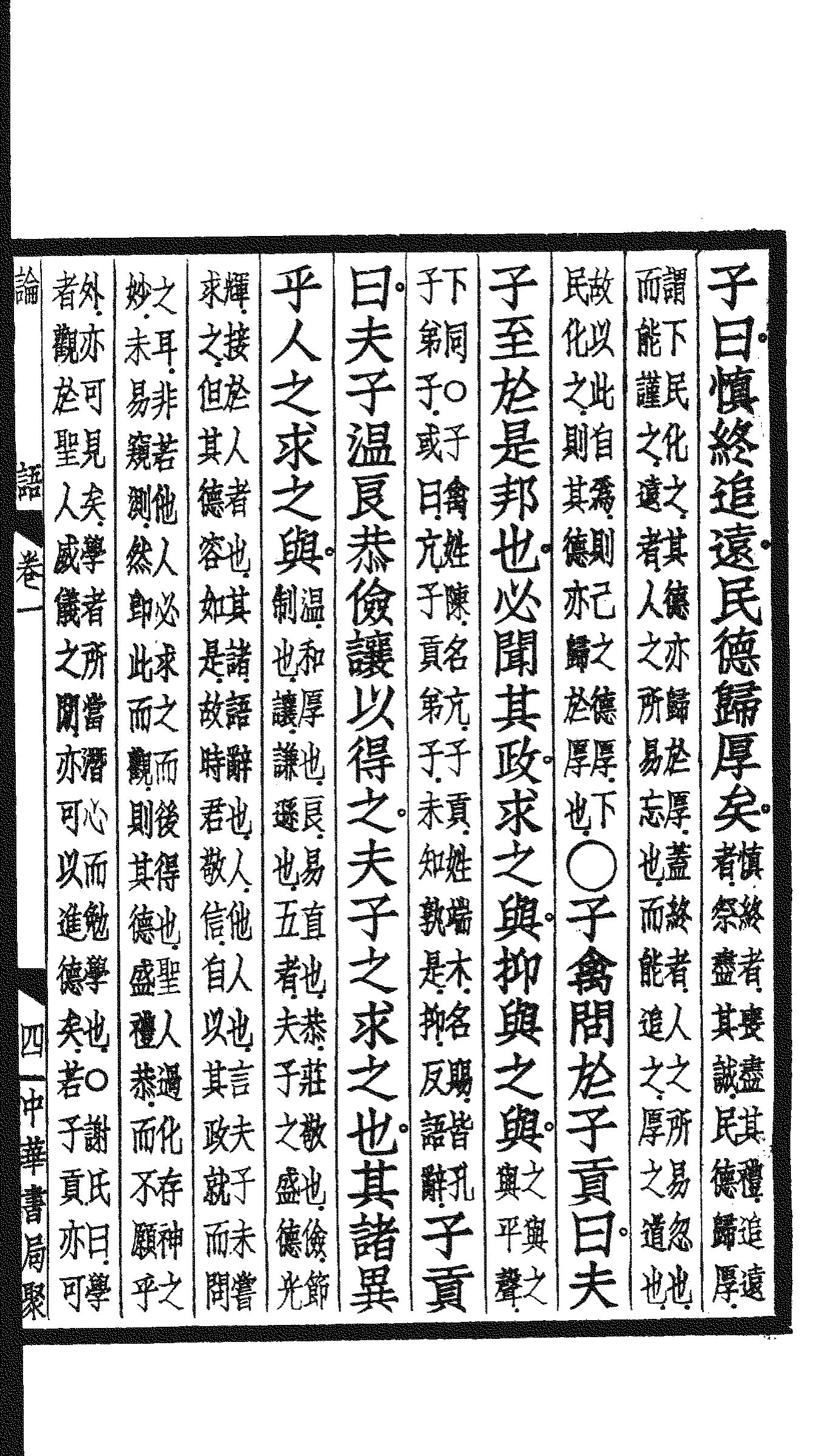
Yikonglu, Analects Xue er (Book 1) 1.9 “Care at the end, remembrance of the distant”, https://yikonglu.com/en/lunyu/xue-er/9.html, version 2026-11-03.Last checked: 2026-11-03. Changes are logged on theerrata page.
Found an error in this chapter? Email us; once checked, it goes on the errata page under your username: 
看Watch this chapter
This chapter is read in Yikonglu episode “学而三”:YouTubeBilibili(in mainland China use Bilibili)
