 一孔录
子曰:德不孤,必有邻。The Master said: Virtue is not solitary; it is sure to have neighbours.
Tap any sentence of the original to copy it with its source.
白Plain Chinese
孔子说:有德的人不会孤立,一定会有志同道合的人来亲近他。
A plain modern-Chinese rendering following Yikonglu's reading.
常The common reading
Read as a consolation: “good people are never alone”.
注Key words in the commentary
Zhu Xi: “邻,犹亲也。德不孤立,必以类应。故有德者,必有其类从之,如居之有邻也” — neighbour means those close to one; virtue does not stand alone but is answered by its kind; so one who has virtue will have his kind follow him, as a dwelling has neighbours.
家What other commentators say
(This episode gives only Zhu Xi.)
读How Yikonglu reads it
This is not “good deeds are rewarded”; it is like answering like. What you hold to draws people who hold to the same thing.
家Other commentaries
Our base text is Zhu Xi's Collected Commentaries (above). Here are other commentaries side by side: for old commentaries, the first line of the sub-commentary with a link to the woodblock scan; for modern editions, one short quoted translation for comparison. The “compared with Zhu Xi” notes are written by Yikonglu, not quoted.
皇侃《论语义疏》Liang dynasty · Zhibuzu Zhai edition · juan 二
“言人有德者,此人非孤然,而必有善鄰里故也。”……
Compared with Zhu Xi
| Commentary | Point | Relation | Confidence | Note |
|---|---|---|---|---|
| 杨伯峻《论语译注》 | same | settled | 有德者必有同类相亲;杨引同声同气相求,朱训邻为亲、德不孤立,不是保证必有现实官位。 | |
| 钱穆《论语新解》 | same | fairly sure | 同取有德者必有同类相应、并非孤立。钱另列须师友夹辅才能修德说而不作主取。 |
核Check every citation
Every commentary line quoted in the video: the original wording, who said it, and the page in the base edition. “Paraphrase” marks our summary, not the commentator's words. About this edition
| Quoted text | Source | Page |
|---|---|---|
| “邻,犹亲也。德不孤立,必以类应。故有德者,必有其类从之,如居之有邻也” | Zhu Xi's commentary | page 59 |
页Pages of the base edition
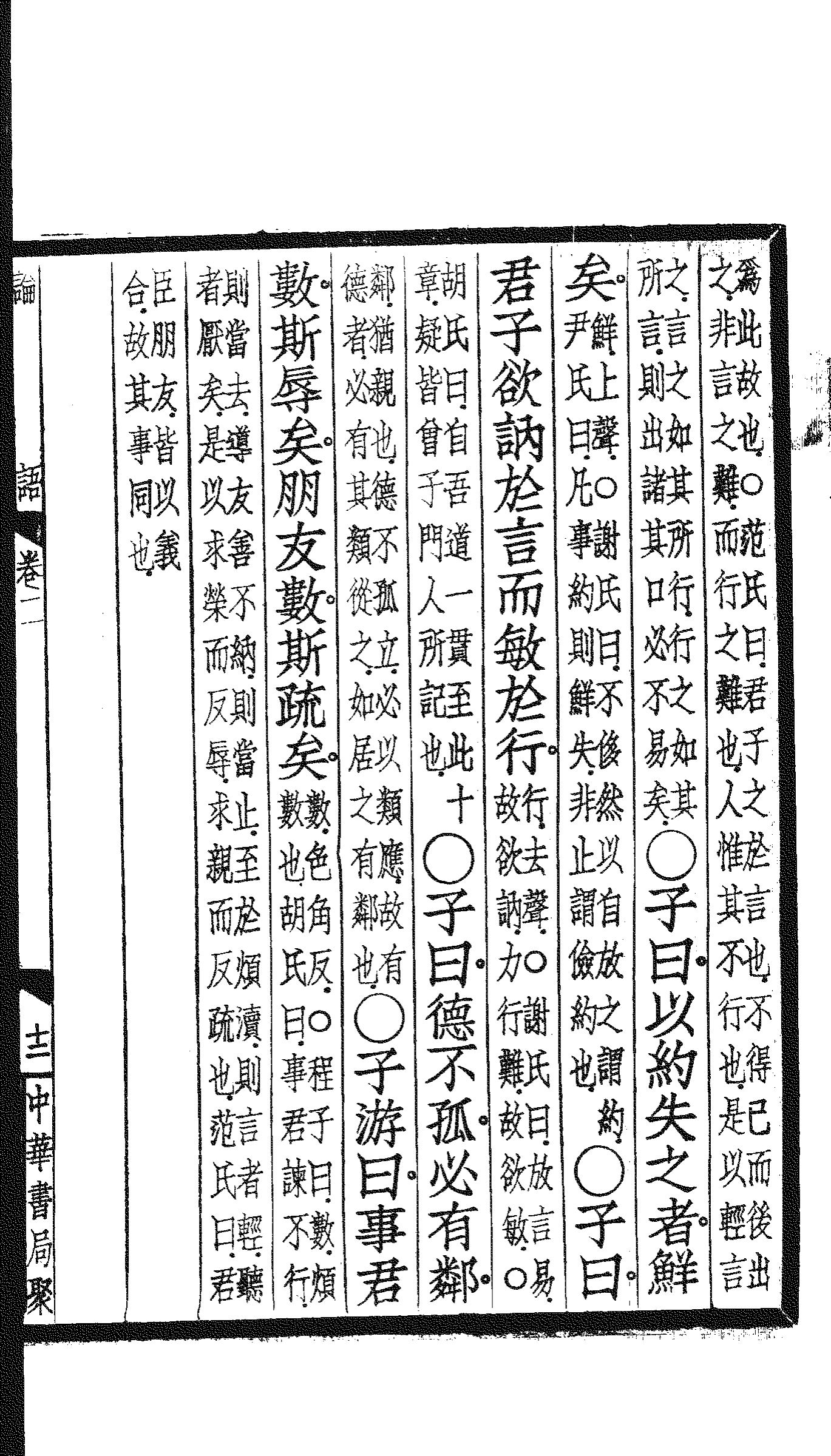
Yikonglu, Analects Li ren (Book 4) 4.25 “Virtue is not solitary; it is sure to have neighbours”, https://yikonglu.com/en/lunyu/li-ren/25.html, version 2026-11-05.Last checked: 2026-11-05. Changes are logged on theerrata page.
Found an error in this chapter? Email us; once checked, it goes on the errata page under your username: 
