 一孔录
子曰:不仁者不可以久处约,不可以长处乐。仁者安仁,知者利仁。The Master said: Those who are not humane cannot long endure hardship, nor long enjoy happiness. The humane rest in humaneness; the wise profit from humaneness.
Tap any sentence of the original to copy it with its source.
白Plain Chinese
孔子说:没有仁德的人,不能长久地处在穷困中,也不能长久地处在安乐中。有仁德的人安于仁,聪明的人知道仁对自己有利,便去行仁。
A plain modern-Chinese rendering following Yikonglu's reading.
常The common reading
Poverty can corrupt people and so can wealth; judge people over the long run.
注Key words in the commentary
“乐”音洛 — le read luo; “约,穷困也” — yue means poverty and hardship; “利,犹贪也,盖深知笃好而必欲得之也” — li means craving: knowing it deeply, loving it earnestly, and determined to have it; “不仁之人,失其本心,久约必滥,久乐必淫” — the inhumane have lost their original heart: long in hardship they run wild, long in pleasure they overindulge; “惟仁者则安其仁而无适不然,知者则利于仁而不易所守……皆非外物所能夺矣” — the humane rest in humaneness wherever they are, and the wise benefit from it and do not change what they hold to; nothing outside can take it from them.
家What other commentators say
Xie Liangzuo: “仁者心无内外远近精粗之间,非有所存而自不亡,非有所理而自不乱,如目视而耳听,手持而足行也” — for the humane there is no gap of inner and outer, near and far, coarse and fine; nothing is held yet nothing is lost, nothing is arranged yet nothing is disordered, like eyes seeing, ears hearing, hands holding and feet walking; “安仁则一,利仁则二” — resting in humaneness is one, profiting from it is two (the passage “知者谓之有所见则可……未能无意也” in between is left out of the video).
读How Yikonglu reads it
Long hardship makes people overstep, long pleasure makes them indulge; whether outside things can take a person away depends on whether the original heart is there. Today: someone out of work for six months still gets up at seven, shaves, and goes out for a run.
家Other commentaries
Our base text is Zhu Xi's Collected Commentaries (above). Here are other commentaries side by side: for old commentaries, the first line of the sub-commentary with a link to the woodblock scan; for modern editions, one short quoted translation for comparison. The “compared with Zhu Xi” notes are written by Yikonglu, not quoted.
皇侃《论语义疏》Liang dynasty · Zhibuzu Zhai edition · juan 二
“此明不仁之人居世無宜也。”……
Compared with Zhu Xi
| Commentary | Point | Relation | Confidence | Note |
|---|---|---|---|---|
| 杨伯峻《论语译注》 | same | fairly sure | 不仁者不能久处贫困安乐,仁者安仁、智者利仁;朱以本心、笃好解释,杨译以仁的效用说明利。 | |
| 钱穆《论语新解》 | same | fairly sure | 同释约为穷困,安仁自然而利仁为知仁可好欲有之;均非把利仁解为借仁谋外在功利。钱进一步以心境安住发明。 |
核Check every citation
Every commentary line quoted in the video: the original wording, who said it, and the page in the base edition. “Paraphrase” marks our summary, not the commentator's words. About this edition
| Quoted text | Source | Page |
|---|---|---|
| “约,穷困也。利,犹贪也,盖深知笃好而必欲得之也。不仁之人,失其本心,久约必滥,久乐必淫” | Zhu Xi's commentary | page 51 |
| “惟仁者则安其仁而无适不然,知者则利于仁而不易所守,盖虽深浅之不同,然皆非外物所能夺矣” | Zhu Xi's commentary | page 51 |
| “仁者心无内外远近精粗之间,非有所存而自不亡,非有所理而自不乱,如目视而耳听,手持而足行也……安仁则一,利仁则二” | Xie Liangzuo, quoted by Zhu Xi | page 51 |
音Pronunciation
| Character | In the line | Read as |
|---|---|---|
| 处 | 择不处仁、久处约、长处乐 | chǔ |
| 知 | 焉得知、知者利仁、不得为知 | zhì |
| 乐 | 长处乐、久乐必淫 | lè |
页Pages of the base edition
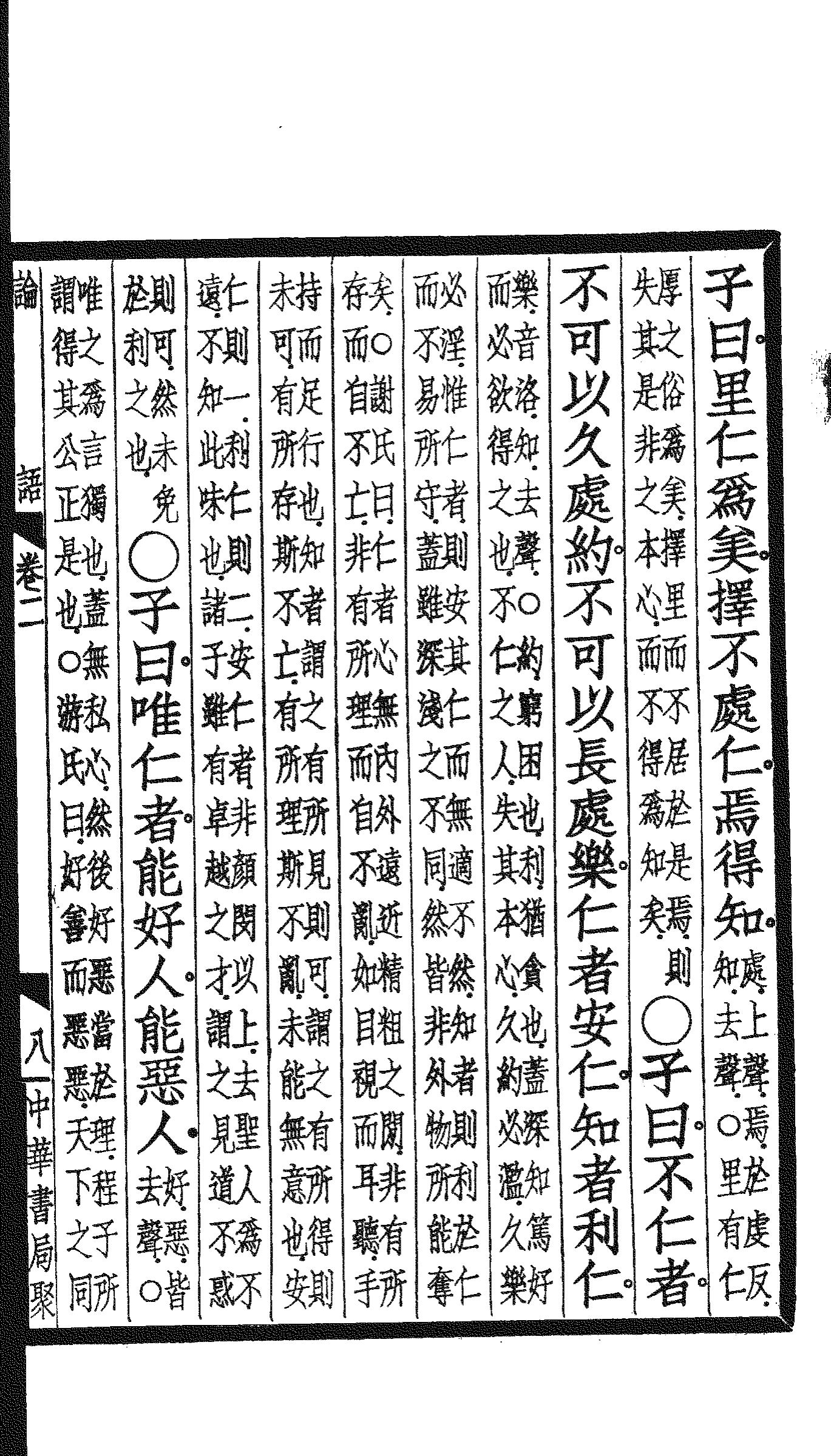
Yikonglu, Analects Li ren (Book 4) 4.2 “The inhumane cannot long endure hardship”, https://yikonglu.com/en/lunyu/li-ren/2.html, version 2026-11-04.Last checked: 2026-11-04. Changes are logged on theerrata page.
Found an error in this chapter? Email us; once checked, it goes on the errata page under your username: 
