 一孔录
子曰:我未见好仁者、恶不仁者。好仁者,无以尚之;恶不仁者,其为仁矣,不使不仁者加乎其身。有能一日用其力于仁矣乎?我未见力不足者。盖有之矣,我未之见也。The Master said: I have not seen one who loves humaneness or one who hates what is not humane. One who loves humaneness puts nothing above it; one who hates what is not humane practises humaneness by not letting the inhumane touch his person. Is there anyone who can spend his strength on humaneness for a single day? I have not seen one whose strength was not enough. Perhaps there are such, but I have not seen them.
Tap any sentence of the original to copy it with its source.
白Plain Chinese
孔子说:我没有见过喜爱仁的人和厌恶不仁的人。喜爱仁的人,没有什么能比得过仁;厌恶不仁的人,他行仁,就是不让不仁的东西沾到身上。有谁能一天把力气用在仁上吗?我没见过力气不够的。大概也有吧,只是我没见过。
A plain modern-Chinese rendering following Yikonglu's reading.
常The common reading
Failing at it is a matter of ability?
注Key words in the commentary
hao (love) and wu (hate) in the departing tone; “好仁者真知仁之可好,故天下之物无以加之” — one who loves humaneness truly knows it is lovable, so nothing in the world can be put above it; “恶不仁者……必能绝去不仁之事,而不使少有及于其身” — one who hates the inhumane can cut it off entirely and not let the least of it reach him; “此皆成德之事,故难得而见之也” — both are matters of perfected virtue, hence rarely seen; “为仁在己,欲之则是,而志之所至,气必至焉” — humaneness lies with oneself: want it and it is there; where the will goes, the strength follows; “盖,疑辞。有之,谓有用力而力不足者” — gai expresses doubt; “there are such” means people who try but whose strength fails.
家What other commentators say
Zhu Xi on “perhaps there are such”: “人之气质不同,故疑亦容或有此昏弱之甚……盖不敢终以为易,而又叹人之莫肯用力于仁也” — people differ in endowment, so perhaps a few are that dull and weak; he would not call it easy after all, and also sighs that people will not spend their strength on humaneness.
读How Yikonglu reads it
Where the heart goes, the strength goes; the hard part is not strength but willingness. Today: the person with no time to exercise scrolls the phone for two hours before bed.
家Other commentaries
Our base text is Zhu Xi's Collected Commentaries (above). Here are other commentaries side by side: for old commentaries, the first line of the sub-commentary with a link to the woodblock scan; for modern editions, one short quoted translation for comparison. The “compared with Zhu Xi” notes are written by Yikonglu, not quoted.
皇侃《论语义疏》Liang dynasty · Zhibuzu Zhai edition · juan 二
“云我未見好仁也者,歎世衰道喪,仁道絕也。”……
Compared with Zhu Xi
| Commentary | Point | Relation | Confidence | Note |
|---|---|---|---|---|
| 钱穆《论语新解》 | differs | fairly sure | 钱不赞成好仁恶不仁分成优劣两等人,强调同一好恶之心;朱分说两类成德之人。好仁则天下事物无以加于仁的解释相近。 | |
| 杨伯峻《论语译注》 | same | settled | 好仁以仁为最高,恶不仁使恶不加身;盖杨译大概有力不足者,朱亦疑盖有而未见,不可读成肯定人人已尽力。 |
核Check every citation
Every commentary line quoted in the video: the original wording, who said it, and the page in the base edition. “Paraphrase” marks our summary, not the commentator's words. About this edition
| Quoted text | Source | Page |
|---|---|---|
| “好仁者真知仁之可好,故天下之物无以加之。恶不仁者真知不仁之可恶,故其所以为仁者,必能绝去不仁之事,而不使少有及于其身。此皆成德之事,故难得而见之也” | Zhu Xi's commentary | page 53 |
| “为仁在己,欲之则是,而志之所至,气必至焉。故仁虽难能,而至之亦易也” | Zhu Xi's commentary | page 53 |
| “盖,疑辞。有之,谓有用力而力不足者。盖人之气质不同,故疑亦容或有此昏弱之甚,欲进而不能者,但我偶未之见耳。盖不敢终以为易,而又叹人之莫肯用力于仁也” | Zhu Xi's commentary | page 53 |
音Pronunciation
| Character | In the line | Read as |
|---|---|---|
| 恶 | 人之所恶、恶不仁者、好仁恶不仁 | wù |
| 好 | 好仁者、好仁恶不仁 | hào |
| 尚 | 无以尚之 | shàng |
页Pages of the base edition
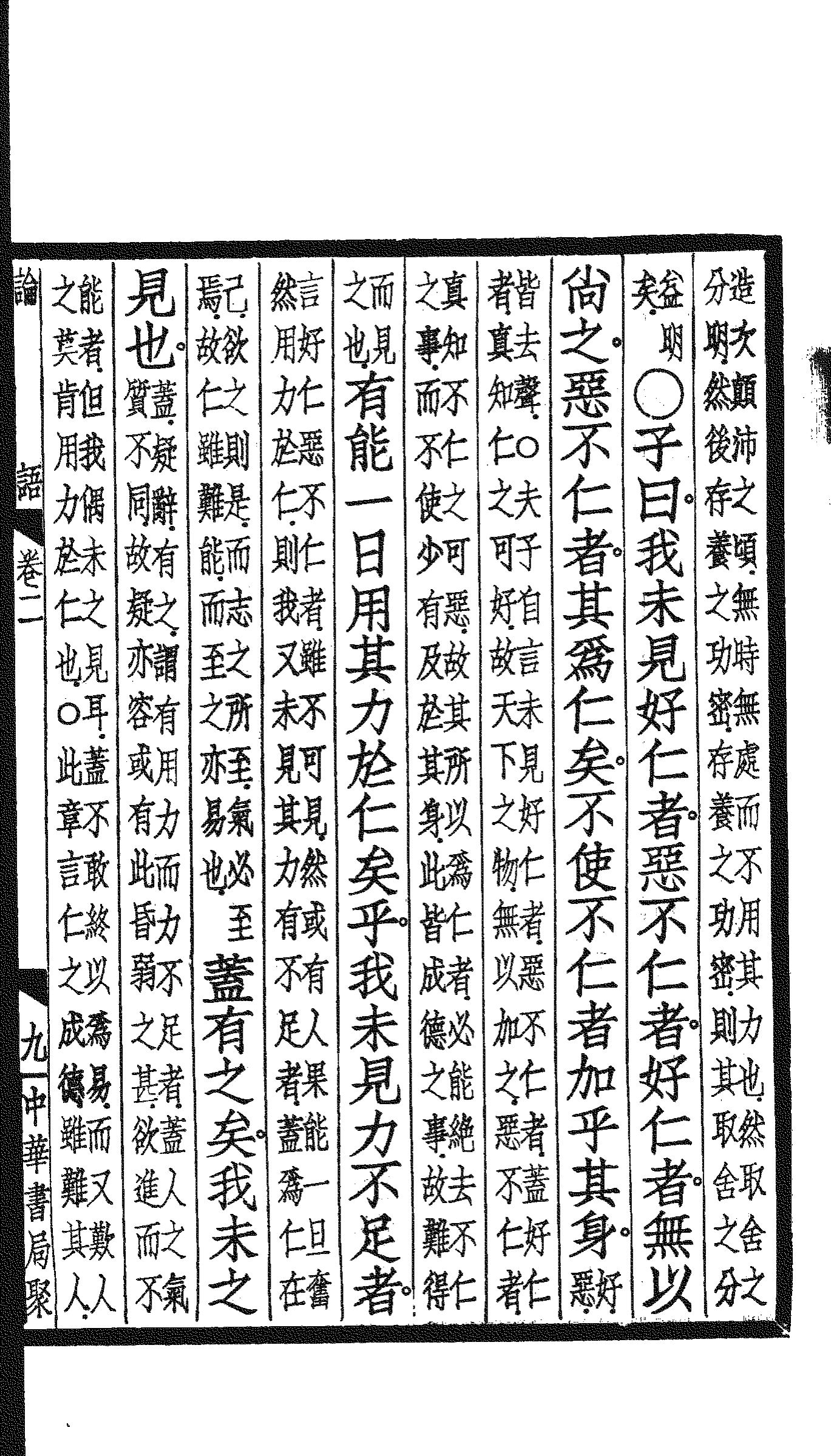
Yikonglu, Analects Li ren (Book 4) 4.6 “I have not seen one who loves humaneness”, https://yikonglu.com/en/lunyu/li-ren/6.html, version 2026-11-04.Last checked: 2026-11-04. Changes are logged on theerrata page.
Found an error in this chapter? Email us; once checked, it goes on the errata page under your username: 
