 一孔录
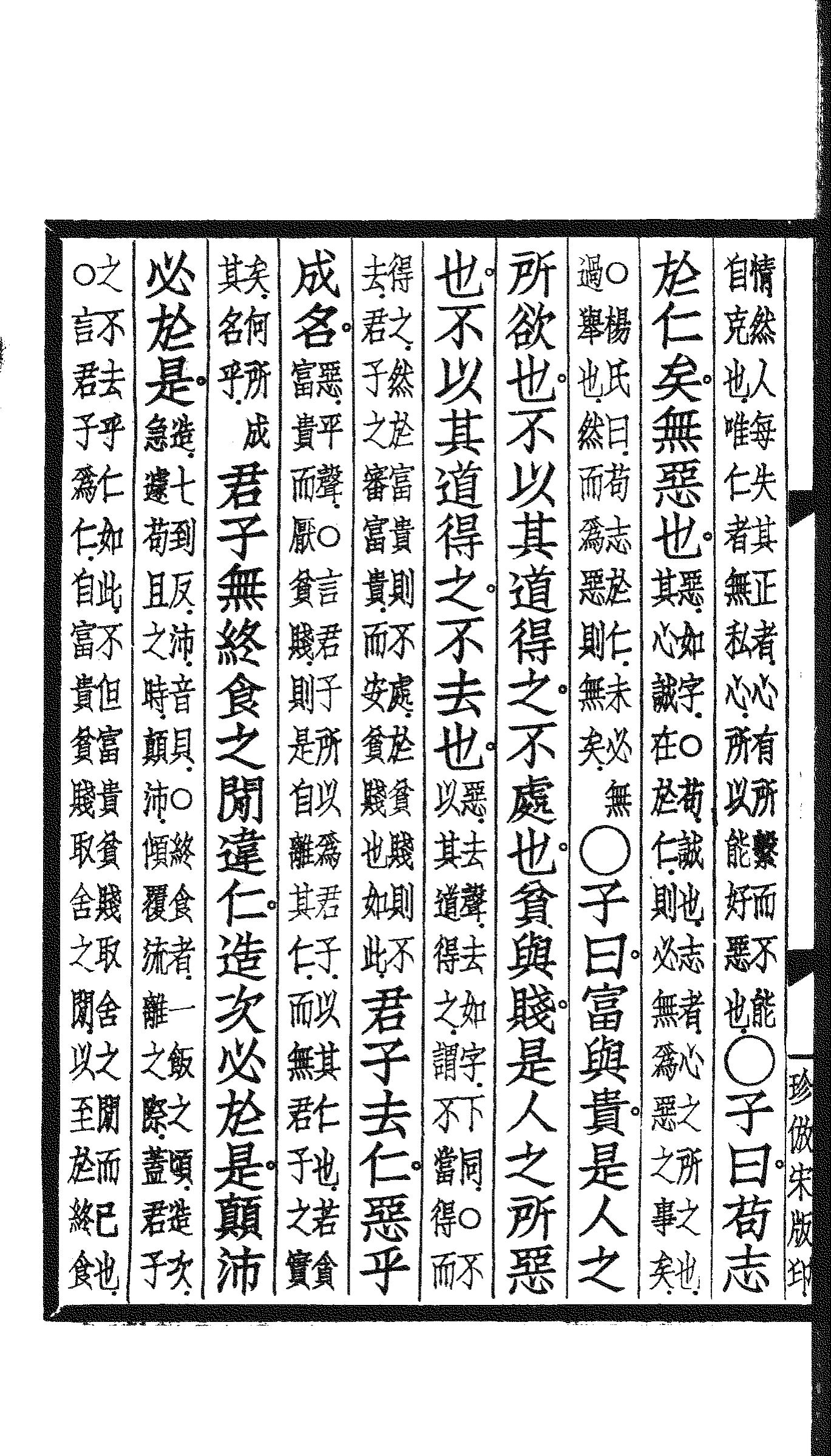
子曰:富与贵,是人之所欲也;不以其道得之,不处也。贫与贱,是人之所恶也;不以其道得之,不去也。君子去仁,恶乎成名?君子无终食之间违仁,造次必于是,颠沛必于是。The Master said: Wealth and rank are what people want; if not obtained by the proper way, one does not keep them. Poverty and lowliness are what people hate; if not come by through the proper way, one does not escape them. If a gentleman leaves humaneness, how can he make a name? A gentleman does not depart from humaneness even for the space of a meal; in haste he holds to it, in upheaval he holds to it.
Tap any sentence of the original to copy it with its source.
白Plain Chinese
孔子说:富和贵,是人人想要的,不用正当的方法得到,就不接受。贫和贱,是人人厌恶的,不用正当的方法摆脱,就不摆脱。君子离开了仁,凭什么成就君子的名声?君子连吃一顿饭的工夫也不离开仁,匆忙的时候是这样,颠沛流离的时候也是这样。
A plain modern-Chinese rendering following Yikonglu's reading.
常The common reading
“Not by the proper way” read the same both times — then why not escape a poverty one did not deserve?
注Key words in the commentary
wu (hate) in the departing tone; “不以其道得之,谓不当得而得之” — “not by the proper way” means getting what one should not get; “于富贵则不处,于贫贱则不去,君子之审富贵而安贫贱也如此” — he does not keep such wealth and does not dodge such poverty: this is how a gentleman weighs wealth and rests in poverty; wu (how) read wu; “若贪富贵而厌贫贱,则是自离其仁,而无君子之实矣” — to crave wealth and loathe poverty is to leave one's own humaneness, with nothing of the gentleman left; “终食者,一饭之顷。造次,急遽苟且之时。颠沛,倾覆流离之际” — a meal is the time of one meal; zaoci is a moment of haste; dianpei is a time of upheaval and displacement.
家What other commentators say
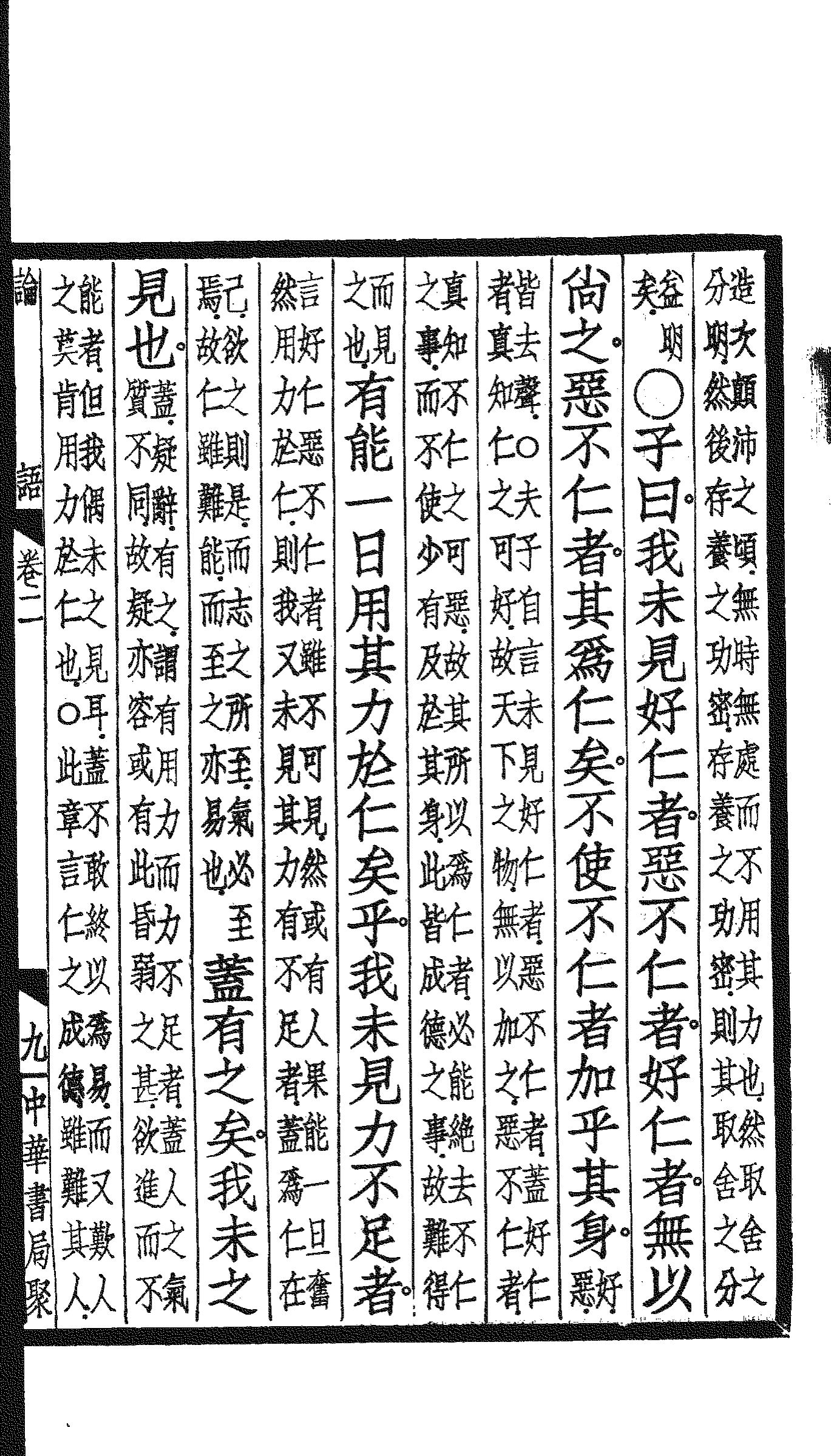
Zhu Xi at the end of the chapter: “取舍之分明,然后存养之功密;存养之功密,则其取舍之分益明矣” — when the line between taking and refusing is clear, the work of preserving and nurturing becomes close; when that work is close, the line becomes clearer still.
读How Yikonglu reads it
Do not take wealth that should not come, and do not dodge an undeserved poverty by crooked means; the big choices and the small daily work make each other. Today: the bus brakes hard, and the young man's first grab is to steady the old woman beside him.
家Other commentaries
Our base text is Zhu Xi's Collected Commentaries (above). Here are other commentaries side by side: for old commentaries, the first line of the sub-commentary with a link to the woodblock scan; for modern editions, one short quoted translation for comparison. The “compared with Zhu Xi” notes are written by Yikonglu, not quoted.
皇侃《论语义疏》Liang dynasty · Zhibuzu Zhai edition · juan 二
“云富與貴是人之所欲也者,富者財多,貴者位高。”……
Compared with Zhu Xi
| Commentary | Point | Relation | Confidence | Note |
|---|---|---|---|---|
| 钱穆《论语新解》 | differs | fairly sure | 钱将得之连下读,朱将不以其道得之连读;二者均以不应得而得说明富贵不处、贫贱不去,仁不随境转的大旨相同。 | |
| 杨伯峻《论语译注》 | 贫贱得之 | word sense | settled | 杨认为得当作去,按整章精神译不以不正当手段摆脱贫贱;朱保留得字,解为不当得而得之,处穷达皆不去仁。 |
核Check every citation
Every commentary line quoted in the video: the original wording, who said it, and the page in the base edition. “Paraphrase” marks our summary, not the commentator's words. About this edition
| Quoted text | Source | Page |
|---|---|---|
| “不以其道得之,谓不当得而得之。然于富贵则不处,于贫贱则不去,君子之审富贵而安贫贱也如此” | Zhu Xi's commentary | page 52 |
| “言君子所以为君子,以其仁也。若贪富贵而厌贫贱,则是自离其仁,而无君子之实矣,何所成其名乎” | Zhu Xi's commentary | page 52 |
| “终食者,一饭之顷。造次,急遽苟且之时。颠沛,倾覆流离之际。盖君子之不去乎仁如此,不但富贵贫贱取舍之间而已也” | Zhu Xi's commentary | page 52 |
| “然取舍之分明,然后存养之功密;存养之功密,则其取舍之分益明矣” | Zhu Xi's commentary | page 53 |
音Pronunciation
| Character | In the line | Read as |
|---|---|---|
| 恶 | 人之所恶、恶不仁者、好仁恶不仁 | wù |
| 恶 | 恶乎成名 | wū |
| 处 | 不处也 | chǔ |
| 造 | 造次 | zào |
| 沛 | 颠沛 | pèi |
页Pages of the base edition
Yikonglu, Analects Li ren (Book 4) 4.5 “Wealth and rank are what people want”, https://yikonglu.com/en/lunyu/li-ren/5.html, version 2026-11-04.Last checked: 2026-11-04. Changes are logged on theerrata page.
Found an error in this chapter? Email us; once checked, it goes on the errata page under your username: 
