 一孔录
子曰:人之过也,各于其党。观过,斯知仁矣。The Master said: People's faults each belong to their kind. Look at the fault, and you will know the humaneness.
Tap any sentence of the original to copy it with its source.
白Plain Chinese
孔子说:人的过错,各属于一定的类别。看一个人犯的是什么错,就知道他是不是仁了。
A plain modern-Chinese rendering following Yikonglu's reading.
常The common reading
So one fault is enough to judge a person?
注Key words in the commentary
“党,类也” — dang means kind, type; Zhu Xi's own note: “此亦但言人虽有过,犹可即此而知其厚薄,非谓必俟其有过,而后贤否可知也” — this only says that even in a person's faults one can see whether he is generous or mean; it does not mean one must wait for a fault before judging worth.
家What other commentators say
Cheng Yi: “君子常失于厚,小人常失于薄;君子过于爱,小人过于忍” — the gentleman errs on the side of generosity, the petty man on the side of meanness; the gentleman errs in loving too much, the petty man in being too hard; Yin Tun: “于此观之,则人之仁不仁可知矣” — seen this way, whether a person is humane can be known; Wu cites Wu You of the Later Han: “掾以亲故,受污辱之名,所谓观过知仁是也” — the clerk took the shame for his parent's sake; this is what “look at the fault and know the humaneness” means.
读How Yikonglu reads it
Whether a fault leans too generous or too mean shows whether one is humane. Today: two people are half an hour late — one took a fallen old man to hospital, one overslept.
家Other commentaries
Our base text is Zhu Xi's Collected Commentaries (above). Here are other commentaries side by side: for old commentaries, the first line of the sub-commentary with a link to the woodblock scan; for modern editions, one short quoted translation for comparison. The “compared with Zhu Xi” notes are written by Yikonglu, not quoted.
皇侃《论语义疏》Liang dynasty · Zhibuzu Zhai edition · juan 二
“云民之過也各於其黨者,過,失也。”……
Compared with Zhu Xi
| Commentary | Point | Relation | Confidence | Note |
|---|---|---|---|---|
| 杨伯峻《论语译注》 | differs | settled | 杨以仁通人,由过失了解其人;朱仍作仁德,观君子小人各类过失而察其仁不仁。 | |
| 钱穆《论语新解》 | same | fairly sure | 同释党为类,从过失见厚薄爱忍而知仁不仁。钱更分仁心与成德之仁,朱亦说明非一定待过后才可知贤否。 |
核Check every citation
Every commentary line quoted in the video: the original wording, who said it, and the page in the base edition. “Paraphrase” marks our summary, not the commentator's words. About this edition
| Quoted text | Source | Page |
|---|---|---|
| “党,类也。人之过也,各于其类。君子常失于厚,小人常失于薄;君子过于爱,小人过于忍” | 朱注;朱注引程子 | page 54 |
| “于此观之,则人之仁不仁可知矣……后汉吴祐谓:掾以亲故,受污辱之名,所谓观过知仁是也” | 朱注引尹氏、吴氏 | page 54 |
| “此亦但言人虽有过,犹可即此而知其厚薄,非谓必俟其有过,而后贤否可知也” | 朱注(愚按) | page 54 |
音Pronunciation
| Character | In the line | Read as |
|---|---|---|
| 党 | 各于其党 | dǎng |
页Pages of the base edition
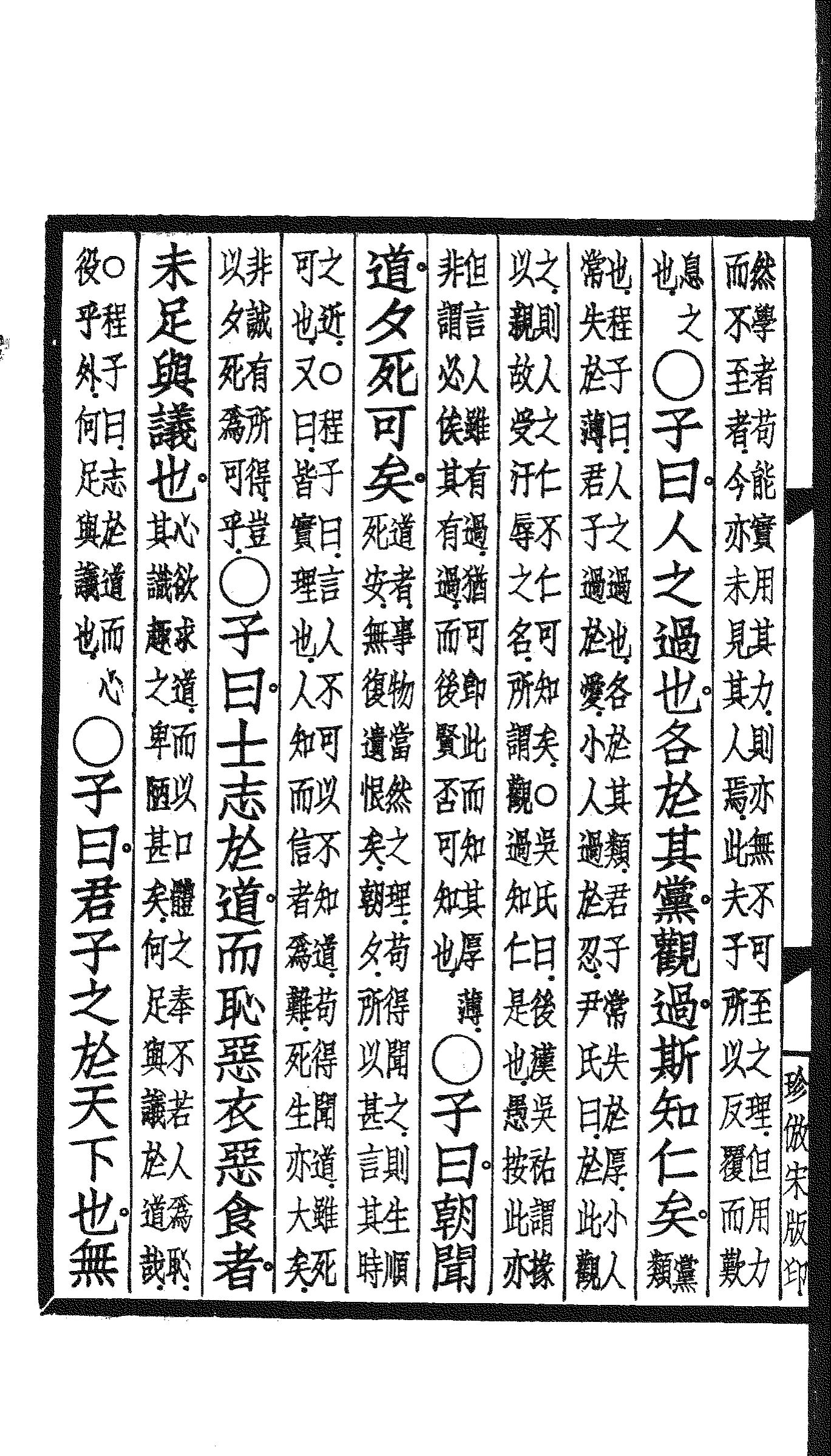
Yikonglu, Analects Li ren (Book 4) 4.7 “People's faults each follow their kind”, https://yikonglu.com/en/lunyu/li-ren/7.html, version 2026-11-04.Last checked: 2026-11-04. Changes are logged on theerrata page.
Found an error in this chapter? Email us; once checked, it goes on the errata page under your username: