 一孔录
子曰:吾未见刚者。或对曰:申枨。子曰:枨也欲,焉得刚?The Master said: I have never seen anyone who is truly firm. Someone answered: Shen Cheng. The Master said: Cheng has desires; how can he be firm?
Tap any sentence of the original to copy it with its source.
白Plain Chinese
孔子说:我没见过真正刚的人。有人回答:申枨就是。孔子说:申枨欲望多,哪里刚得起来?
A plain modern-Chinese rendering following Yikonglu's reading.
常The common reading
Taking a hard temper and refusing to yield to anyone as “firmness”.
注Key words in the commentary
Cheng (枨) read chéng; yan (焉) read yān; “刚,坚强不屈之意,最人所难能者” — firmness means strong and unbending, the hardest thing for people to manage; “欲,多嗜欲也。多嗜欲,则不得为刚矣” — desire means many cravings; with many cravings one cannot be firm.
家What other commentators say
The Cheng brothers: “人有欲则无刚,刚则不屈于欲” — with desires one has no firmness; the firm do not bend to desire. Xie Liangzuo: “刚与欲正相反。能胜物之谓刚,故常伸于万物之上;为物揜之谓欲,故常屈于万物之下” — firmness and desire are exact opposites; being able to overcome things is firmness, so it always stands above all things; being covered by things is desire, so it always bends beneath them; “其为人得非悻悻自好者乎?故或者疑以为刚,然不知此其所以为欲尔” — was he not a prickly, self-regarding man? So some took him for firm, not knowing that this was exactly his desire.
读How Yikonglu reads it
Firmness holds things down; desire is being covered by things. Looking hard and loving to win may mean being led by one's own desires. Today: the person who speaks most aggressively in meetings and yields to no one cannot walk past a mall sale.
家Other commentaries
Our base text is Zhu Xi's Collected Commentaries (above). Here are other commentaries side by side: for old commentaries, the first line of the sub-commentary with a link to the woodblock scan; for modern editions, one short quoted translation for comparison. The “compared with Zhu Xi” notes are written by Yikonglu, not quoted.
皇侃《论语义疏》Liang dynasty · 1750 Japanese woodblock edition · juan 三
“云吾未見剛者者,剛謂性無慾者也。”……
Compared with Zhu Xi
| Commentary | Point | Relation | Confidence | Note |
|---|---|---|---|---|
| 钱穆《论语新解》 | same | fairly sure | 同解刚为不屈于外物,多嗜欲则不能刚。钱特别说明无欲不即等于刚,避免从必要条件反推充分条件。 |
核Check every citation
Every commentary line quoted in the video: the original wording, who said it, and the page in the base edition. “Paraphrase” marks our summary, not the commentator's words. About this edition
| Quoted text | Source | Page |
|---|---|---|
| “刚,坚强不屈之意,最人所难能者,故夫子叹其未见……欲,多嗜欲也。多嗜欲,则不得为刚矣。程子曰:人有欲则无刚,刚则不屈于欲” | 朱注;朱注引程子 | page 66 |
| “刚与欲正相反。能胜物之谓刚,故常伸于万物之上;为物揜之谓欲,故常屈于万物之下……枨之欲不可知,其为人得非悻悻自好者乎?故或者疑以为刚,然不知此其所以为欲尔” | Xie Liangzuo, quoted by Zhu Xi | page 66 |
音Pronunciation
| Character | In the line | Read as |
|---|---|---|
| 枨 | 申枨 | chéng |
| 焉 | 焉得刚 | yān |
页Pages of the base edition
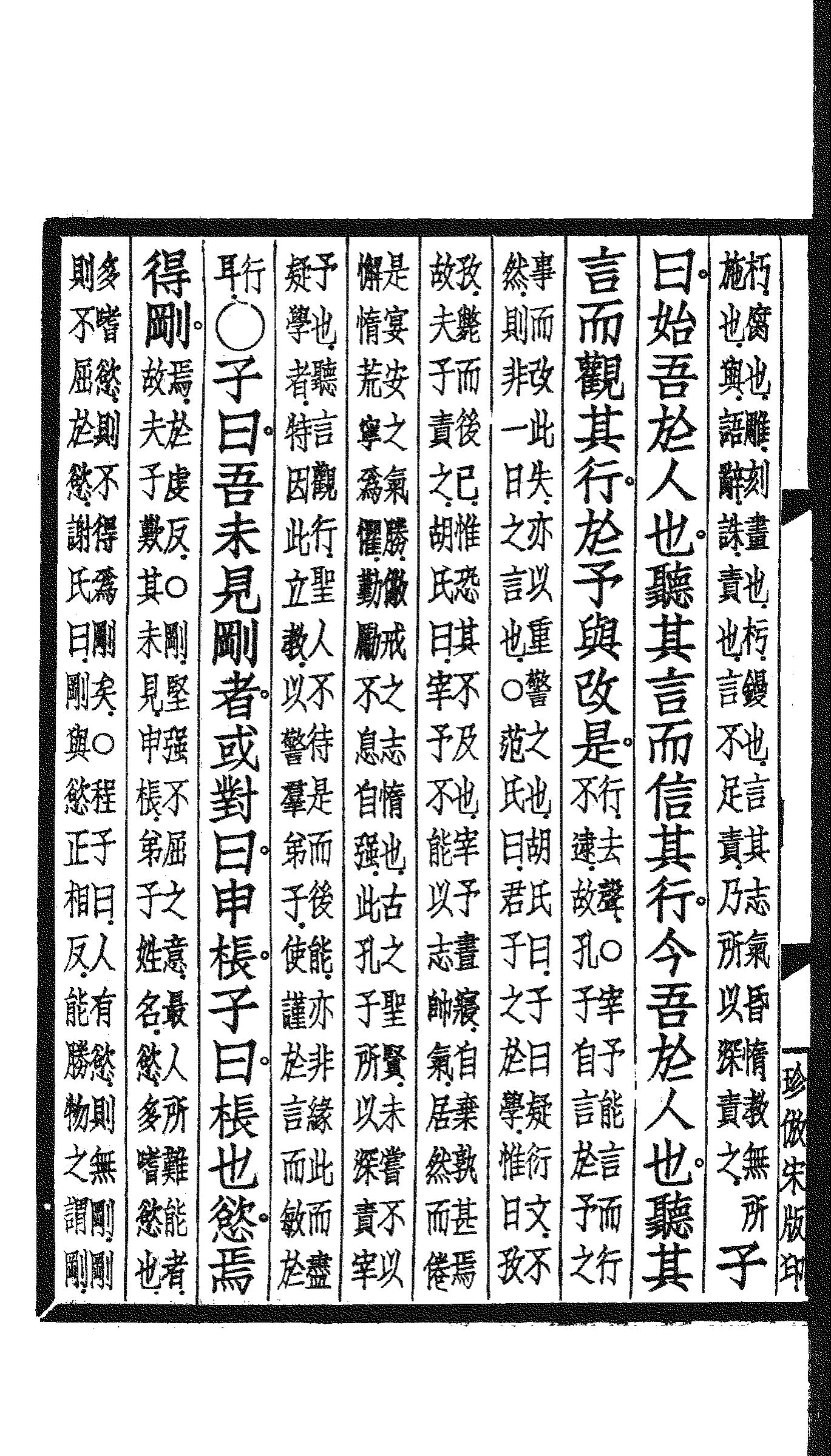
Yikonglu, Analects 公冶长第五 5.10 “I have never seen anyone who is truly firm”, https://yikonglu.com/en/lunyu/gong-ye-chang/10.html, version 2026-11-05.Last checked: 2026-11-05. Changes are logged on theerrata page.
Found an error in this chapter? Email us; once checked, it goes on the errata page under your username: