 一孔录
子谓子贡曰:女与回也孰愈?对曰:赐也何敢望回?回也闻一以知十,赐也闻一以知二。子曰:弗如也!吾与女弗如也。The Master said to Zigong: Who is better, you or Hui? He replied: How would I dare to look up to Hui? Hui hears one thing and knows ten; I hear one thing and know two. The Master said: You are not his equal. I grant that you are not his equal.
Tap any sentence of the original to copy it with its source.
白Plain Chinese
孔子问子贡:你和颜回比,谁强?子贡回答:我哪敢跟颜回比?他听到开头就能看到结尾,我听到一点只能推出另一点。孔子说:是不如他。我认可你这话,你确实不如他。
A plain modern-Chinese rendering following Yikonglu's reading.
常The common reading
Wu yu ru fu ru ye (吾与女弗如也) read as “neither you nor I is his equal”, Confucius being modest.
注Key words in the commentary
Ru (女) read rǔ; “愈,胜也” — yu means better; “一,数之始。十,数之终。二者,一之对也。颜子明睿所照,即始而见终;子贡推测而知,因此而识彼” — one is the beginning of numbers, ten the end, two the counterpart of one; Yan Hui's clear insight saw the end from the beginning; Zigong knew by inference, recognising that from this; “与,许也” — yu means to grant.
家What other commentators say
Zhu Xi cites Hu Yin: “子贡方人,夫子既语以不暇,又问其与回孰愈,以观其自知之如何” — Zigong liked comparing people; the Master had told him he had no time for that, and then asked who was better, he or Hui, to see how well he knew himself; “夫子以其自知之明,而又不难于自屈,故既然之,又重许之” — because he knew himself clearly and did not find it hard to yield, the Master both agreed and emphatically granted it.
读How Yikonglu reads it
Confucius's question tests whether Zigong sees himself clearly. He does, and does not find it hard to bow, so Confucius first says “you are not his equal” and then solemnly affirms him. Today: a coach asks two players who is stronger, and one points at the other without a second thought.
家Other commentaries
Our base text is Zhu Xi's Collected Commentaries (above). Here are other commentaries side by side: for old commentaries, the first line of the sub-commentary with a link to the woodblock scan; for modern editions, one short quoted translation for comparison. The “compared with Zhu Xi” notes are written by Yikonglu, not quoted.
皇侃《论语义疏》Liang dynasty · 1750 Japanese woodblock edition · juan 三
“云子謂子貢曰汝與回也孰愈者,孰,誰也;愈,勝也。”……
Compared with Zhu Xi
| Commentary | Point | Relation | Confidence | Note |
|---|---|---|---|---|
| 钱穆《论语新解》 | differs | fairly sure | 吾与女弗如的与字不同:钱取我同你皆不如回;朱取许,赞许子贡能自知不如。闻一知十与知二的全体、推彼之分相近。 |
核Check every citation
Every commentary line quoted in the video: the original wording, who said it, and the page in the base edition. “Paraphrase” marks our summary, not the commentator's words. About this edition
| Quoted text | Source | Page |
|---|---|---|
| “愈,胜也。一,数之始。十,数之终。二者,一之对也。颜子明睿所照,即始而见终;子贡推测而知,因此而识彼” | Zhu Xi's commentary | page 65 |
| “与,许也。子贡方人,夫子既语以不暇,又问其与回孰愈,以观其自知之如何……夫子以其自知之明,而又不难于自屈,故既然之,又重许之。此其所以终闻性与天道,不特闻一知二而已也” | 朱注;朱注引胡氏 | page 65 |
音Pronunciation
| Character | In the line | Read as |
|---|---|---|
| 女 | 女与回、吾与女 | rǔ |
| 与 | 吾与女弗如也 | yǔ |
页Pages of the base edition
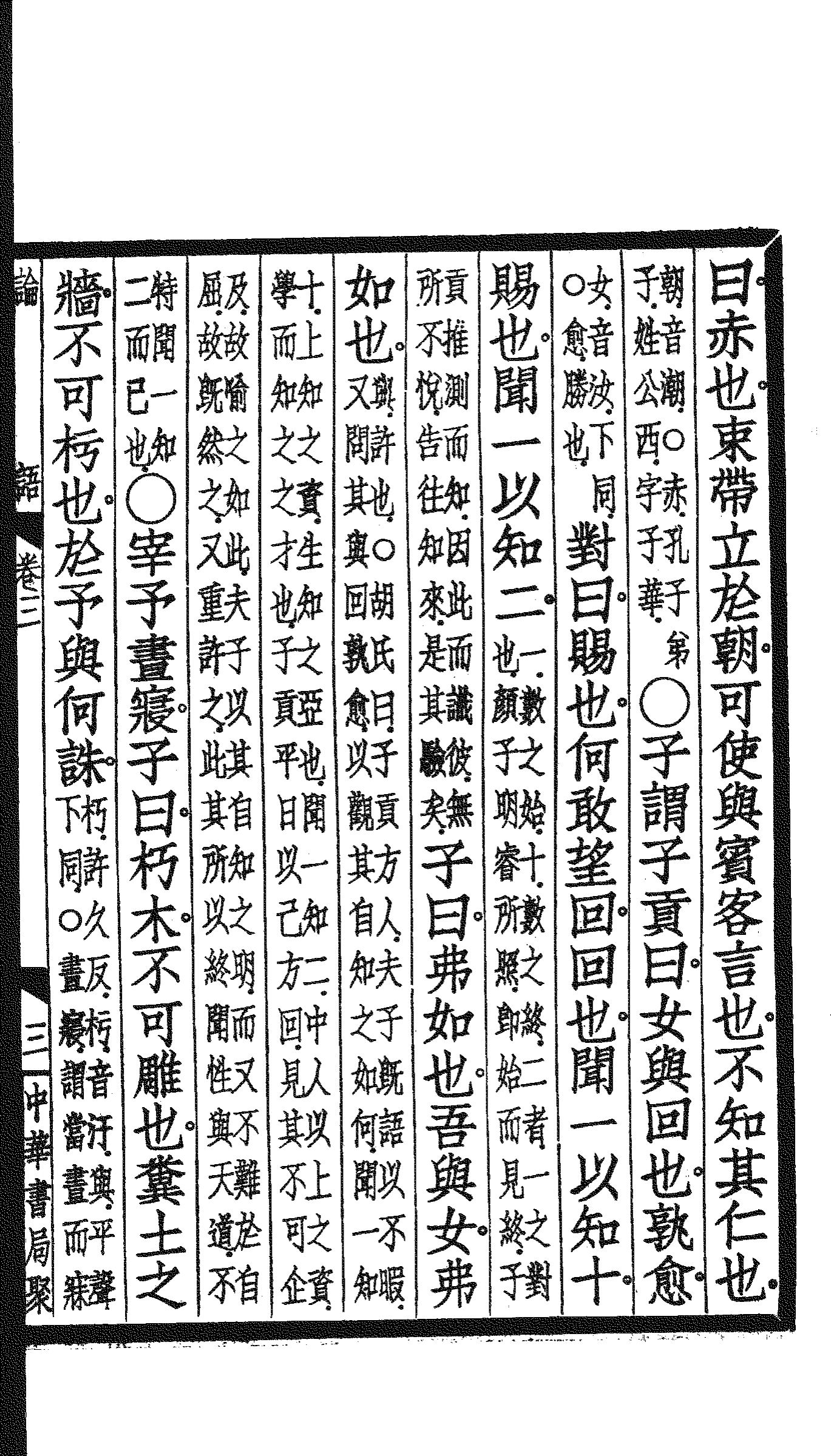
Yikonglu, Analects 公冶长第五 5.8 “Who is better, you or Hui?”, https://yikonglu.com/en/lunyu/gong-ye-chang/8.html, version 2026-11-05.Last checked: 2026-11-05. Changes are logged on theerrata page.
Found an error in this chapter? Email us; once checked, it goes on the errata page under your username: