 一孔录
孟武伯问:子路仁乎?子曰:不知也。又问。子曰:由也,千乘之国,可使治其赋也,不知其仁也。求也何如?子曰:求也,千室之邑,百乘之家,可使为之宰也,不知其仁也。赤也何如?子曰:赤也,束带立于朝,可使与宾客言也,不知其仁也。Meng Wubo asked: Is Zilu humane? The Master said: I do not know. He asked again. The Master said: You could be put in charge of the levies of a state of a thousand chariots; I do not know whether he is humane. What about Qiu? The Master said: Qiu could be made steward of a town of a thousand households or a house of a hundred chariots; I do not know whether he is humane. What about Chi? The Master said: Chi, with his sash tied, standing at court, could be made to speak with guests; I do not know whether he is humane.
Tap any sentence of the original to copy it with its source.
白Plain Chinese
孟武伯问:子路算得上仁吗?孔子说:不知道。他又问。孔子说:仲由嘛,一个出得起千辆兵车的大国,可以让他掌管兵事;仁不仁,我不知道。又问:冉求怎样?孔子说:冉求嘛,千户的大邑、百辆兵车的卿大夫之家,可以让他做总管;仁不仁,我不知道。又问:公西赤怎样?孔子说:公西赤嘛,系上礼带站在朝堂上,可以让他应对宾客;仁不仁,我不知道。
A plain modern-Chinese rendering following Yikonglu's reading.
常The common reading
Confucius refusing to rate his students read as protectiveness or modesty.
注Key words in the commentary
Sheng (乘) read shèng; “赋,兵也。古者以田赋出兵,故谓兵为赋” — fu means troops; in antiquity troops were levied by land tax, so troops were called fu; “宰,邑长家臣之通号” — zai is the general title of a town head or household steward; chao (朝) read cháo; “子路之于仁,盖日月至焉者,或在或亡,不能必其有无,故以不知告之” — Zilu reached humaneness for a day or a month, sometimes present, sometimes absent, and it could not be guaranteed, so Confucius answered “I do not know”; “言子路之才,可见者如此,仁则不能知也” — he spoke of what Zilu's ability visibly was; humaneness could not be known.
家What other commentators say
Zhu Xi gives a single reading only.
读How Yikonglu reads it
Say plainly what visible ability there is; humaneness comes and goes, and one does not vouch for it. Three students, three talents: each line says what they can do, none says they are humane. Today: in a background check, the referee says “I vouch for his skills; his character I can't speak to”.
家Other commentaries
Our base text is Zhu Xi's Collected Commentaries (above). Here are other commentaries side by side: for old commentaries, the first line of the sub-commentary with a link to the woodblock scan; for modern editions, one short quoted translation for comparison. The “compared with Zhu Xi” notes are written by Yikonglu, not quoted.
皇侃《论语义疏》Liang dynasty · 1750 Japanese woodblock edition · juan 三
“云孟武伯問子路仁乎者,武伯問孔子云:弟子中有子路,是仁人不乎?”……
Compared with Zhu Xi
| Commentary | Point | Relation | Confidence | Note |
|---|---|---|---|---|
| 钱穆《论语新解》 | same | fairly sure | 同区分可见的从政才具与不可轻许的仁德;治赋皆指军政,宰及宾客应对亦同训,非因不知仁而否认其才。 |
核Check every citation
Every commentary line quoted in the video: the original wording, who said it, and the page in the base edition. “Paraphrase” marks our summary, not the commentator's words. About this edition
| Quoted text | Source | Page |
|---|---|---|
| “赋,兵也。古者以田赋出兵,故谓兵为赋……宰,邑长家臣之通号……赤,孔子弟子,姓公西,字子华” | Zhu Xi's commentary | page 64 |
| “子路之于仁,盖日月至焉者,或在或亡,不能必其有无,故以不知告之……言子路之才,可见者如此,仁则不能知也” | Zhu Xi's commentary | page 64 |
音Pronunciation
| Character | In the line | Read as |
|---|---|---|
| 乘 | 千乘、百乘 | shèng |
| 赋 | 治其赋 | fù |
| 朝 | 立于朝、治朝 | cháo |
页Pages of the base edition
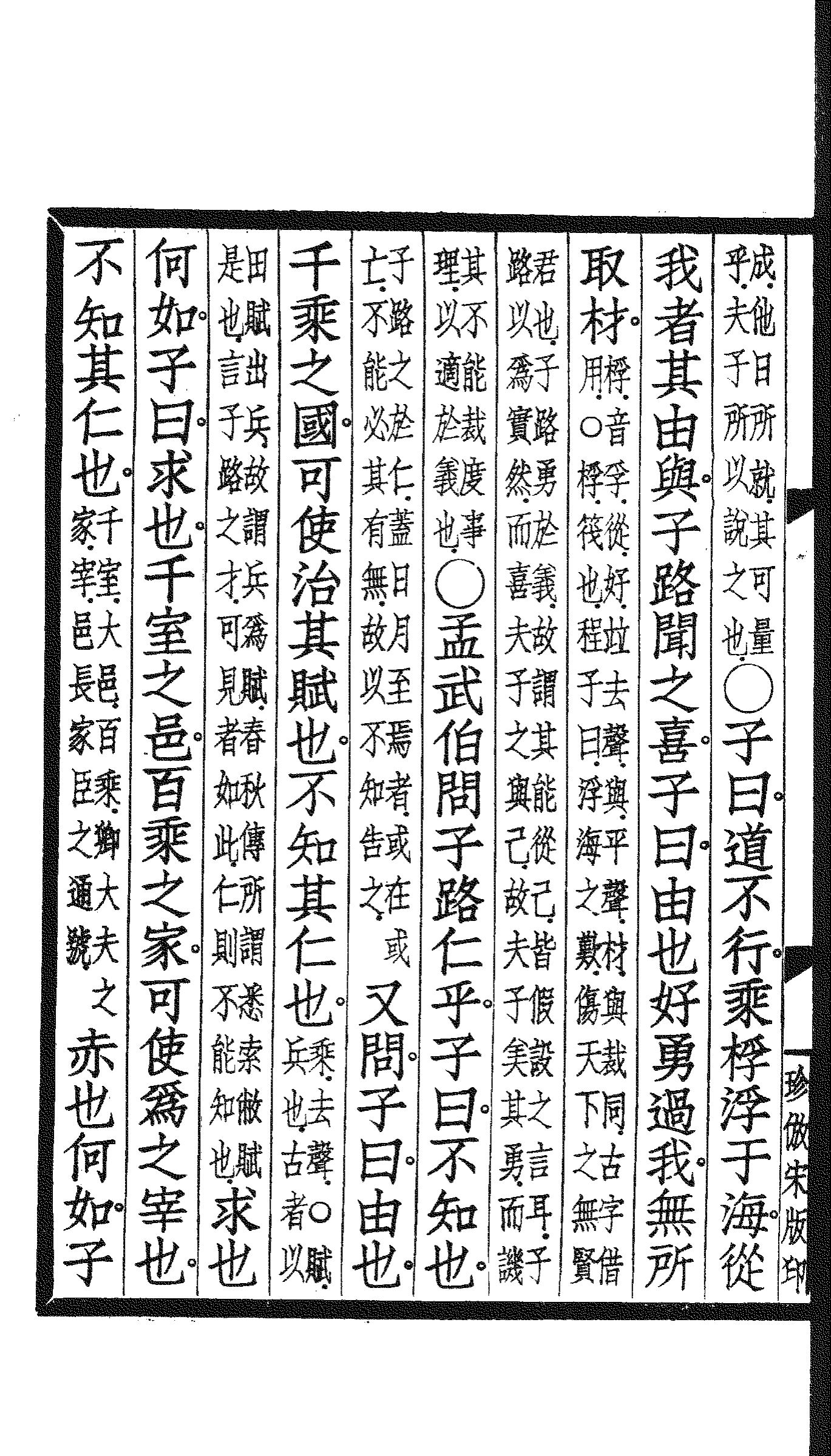
Yikonglu, Analects 公冶长第五 5.7 “Meng Wubo asked whether Zilu was humane”, https://yikonglu.com/en/lunyu/gong-ye-chang/7.html, version 2026-11-05.Last checked: 2026-11-05. Changes are logged on theerrata page.
Found an error in this chapter? Email us; once checked, it goes on the errata page under your username: 
