 一孔录
子谓公冶长:可妻也。虽在缧绁之中,非其罪也。以其子妻之。子谓南容:邦有道不废,邦无道免于刑戮。以其兄之子妻之。The Master said of Gongye Chang: He is fit to be given a wife. Though he was in bonds, it was not his crime. And he gave him his own daughter as wife. The Master said of Nan Rong: When the state has the Way, he will not be cast aside; when the state lacks the Way, he will escape punishment. And he gave him his elder brother's daughter as wife.
Tap any sentence of the original to copy it with its source.
白Plain Chinese
孔子评说公冶长:女儿可以嫁给他。他虽然坐过牢,罪却不在他。于是把自己的女儿许配给他。孔子评说南容:天下有道时,他总会被任用;天下无道时,他也能免遭刑罚杀戮。于是把哥哥的女儿许配给他。
A plain modern-Chinese rendering following Yikonglu's reading.
常The common reading
Confucius married his daughter to a man who had been in prison: read as “he did not mind” or “he was broad-minded”.
注Key words in the commentary
Qi (妻) in the falling tone: to give a daughter in marriage. “缧,黑索也。绁,挛也” — lei is a black rope, xie is a binding; “长之为人无所考,而夫子称其可妻,其必有以取之矣” — nothing is known of Chang's character, but since the Master called him fit to marry, there must have been something to recommend him; “夫有罪无罪,在我而已,岂以自外至者为荣辱哉” — guilt or innocence lies in oneself alone; how could what comes from outside be one's honour or shame? On Nan Rong: “不废,言必见用也……以其谨于言行” — not cast aside means he will surely be employed, because he was careful in word and deed.
家What other commentators say
The Cheng brothers reject the “avoiding suspicion” reading: “此以己之私心窥圣人也。凡人避嫌者,皆内不足也……嫁女必量其才而求配” — this is to peer at the sage with one's own selfish mind; all who avoid suspicion are lacking within; in marrying a daughter one must weigh a man's ability and seek a match.
读How Yikonglu reads it
What matters is not that Confucius was tolerant, but the one judgement “was the crime his or not”: a prison imposed from outside is not his honour or shame. The Nan Rong section says that care in word and deed stands firm in good times and bad. Today: someone once wrongly disciplined and later cleared — some people avoid him, others keep handing him the important work.
家Other commentaries
Our base text is Zhu Xi's Collected Commentaries (above). Here are other commentaries side by side: for old commentaries, the first line of the sub-commentary with a link to the woodblock scan; for modern editions, one short quoted translation for comparison. The “compared with Zhu Xi” notes are written by Yikonglu, not quoted.
皇侃《论语义疏》Liang dynasty · 1750 Japanese woodblock edition · juan 三
“云子謂公冶長可妻也者,公冶長,弟子也。”……
Compared with Zhu Xi
| Commentary | Point | Relation | Confidence | Note |
|---|---|---|---|---|
| 杨伯峻《论语译注》 | same | fairly sure | 杨5.1:同解:缧绁为囚系,非其罪故可妻女;朱以荣辱不可单凭外来遭遇判断,杨注不附知鸟语的传说;杨5.2:同解:南容能用于治世、免祸乱世,妻之者为孔子兄女;朱把本条与公冶长合章,杨另立一章。 | |
| 钱穆《论语新解》 | same | fairly sure | 同以缧绁为拘罪之索、非其罪不妨可妻;南容谨于言行可免刑戮,故以兄女妻之。钱未以妻女之差断公冶南容优劣,朱亦反对此断。 |
核Check every citation
Every commentary line quoted in the video: the original wording, who said it, and the page in the base edition. “Paraphrase” marks our summary, not the commentator's words. About this edition
| Quoted text | Source | Page |
|---|---|---|
| “缧,黑索也。绁,挛也。古者狱中以黑索拘挛罪人。长之为人无所考,而夫子称其可妻,其必有以取之矣” | Zhu Xi's commentary | page 61 |
| “又言其人虽尝陷于缧绁之中,而非其罪,则固无害于可妻也。夫有罪无罪,在我而已,岂以自外至者为荣辱哉” | Zhu Xi's commentary | page 61 |
| “南容,孔子弟子,居南宫。名縚,又名适。字子容……不废,言必见用也。以其谨于言行,故能见用于治朝,免祸于乱世也” | Zhu Xi's commentary | page 61 |
| “或曰:公冶长之贤不及南容,故圣人以其子妻长,而以兄子妻容,盖厚于兄而薄于己也。程子曰:此以己之私心窥圣人也。凡人避嫌者,皆内不足也,圣人自至公,何避嫌之有?况嫁女必量其才而求配,尤不当有所避也……避嫌之事,贤者且不为,况圣人乎” | 朱注;朱注引程子 | page 61 |
音Pronunciation
| Character | In the line | Read as |
|---|---|---|
| 妻 | 可妻、以其子妻之、妻长、妻容 | qì |
| 长 | 公冶长 | cháng |
| 缧 | 缧绁 | léi |
| 绁 | 缧绁 | xiè |
| 戮 | 刑戮 | lù |
页Pages of the base edition
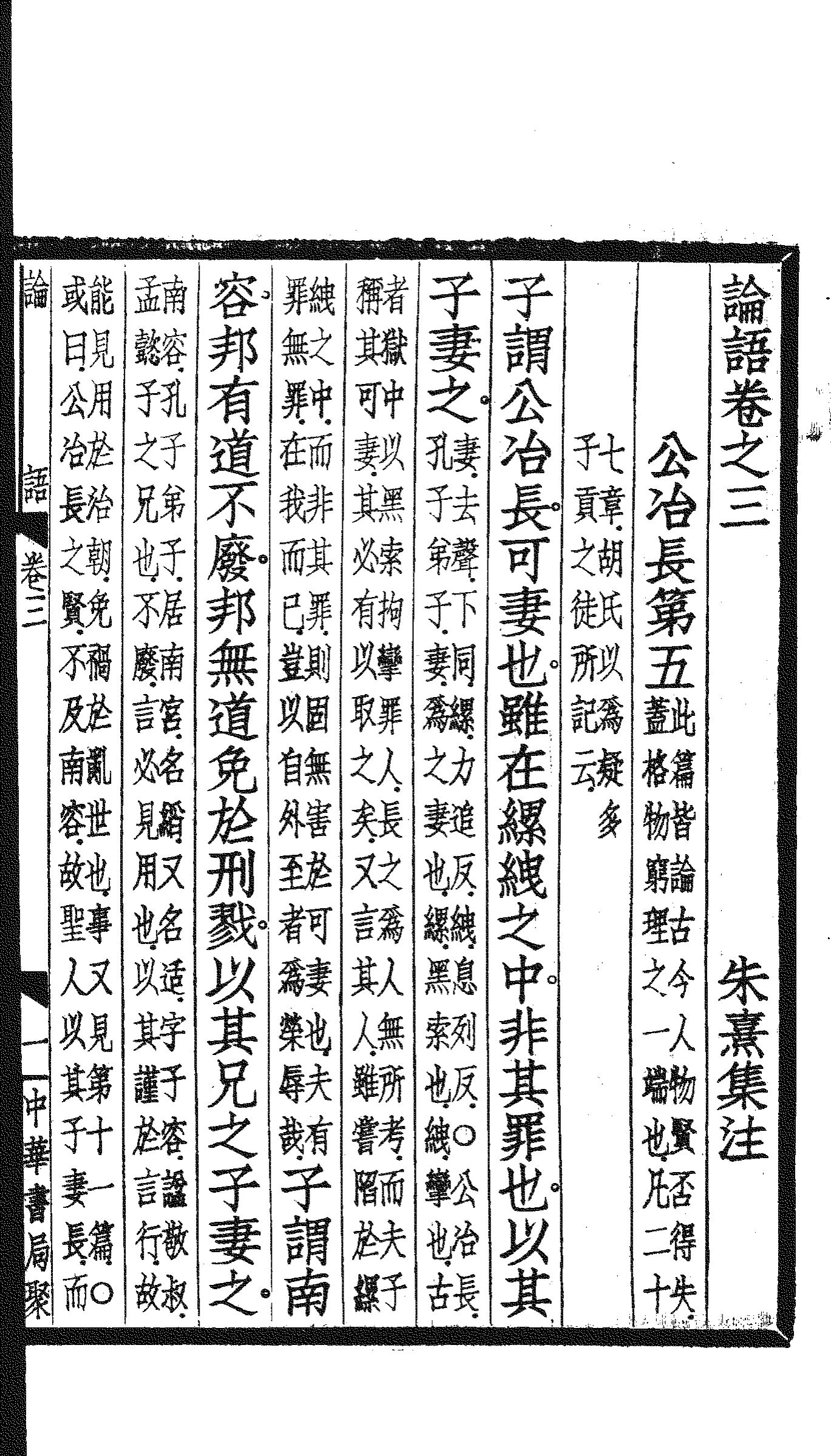
Yikonglu, Analects 公冶长第五 5.1 “Gongye Chang is fit to be given a wife”, https://yikonglu.com/en/lunyu/gong-ye-chang/1.html, version 2026-11-05.Last checked: 2026-11-05. Changes are logged on theerrata page.
Found an error in this chapter? Email us; once checked, it goes on the errata page under your username: 
