 一孔录
子贡曰:我不欲人之加诸我也,吾亦欲无加诸人。子曰:赐也,非尔所及也。Zigong said: What I do not wish others to do to me, I also wish not to do to others. The Master said: Ci, that is not something you have reached.
Tap any sentence of the original to copy it with its source.
白Plain Chinese
子贡说:我不愿别人加在我身上的事,我也不想加到别人身上。孔子说:赐啊,这还不是你够得着的。
A plain modern-Chinese rendering following Yikonglu's reading.
常The common reading
Read as another version of “do not do to others what you would not want done to yourself”, something anyone can do.
注Key words in the commentary
“子贡言我所不欲人加于我之事,我亦不欲以此加之于人。此仁者之事,不待勉强,故夫子以为非子贡所及” — Zigong said that what he did not want others to do to him, he did not want to do to others; this is the work of the humane, needing no effort, so the Master judged it beyond Zigong; “愚谓无者自然而然,勿者禁止之谓,此所以为仁恕之别” — in my view, wu (无, there is none) is what happens of itself, wu (勿, do not) is prohibition; this is the difference between humaneness and reciprocity.
家What other commentators say
The Cheng brothers: “我不欲人之加诸我,吾亦欲无加诸人,仁也;施诸己而不愿,亦勿施于人,恕也。恕则子贡或能勉之,仁则非所及矣” — what I do not want done to me, I also wish there to be none of from me to others: that is humaneness; what one would not want done to oneself, do not do to others: that is reciprocity. Reciprocity Zigong might manage with effort; humaneness is beyond him.
读How Yikonglu reads it
The difference is one character, wu “there is none” against wu “do not”: having no such impulse at all is humaneness; having it and restraining it is reciprocity. What Zigong described is the humane person's naturalness, which he has not reached. Today: someone who hates being woken by messages at night schedules every message after 10 pm to send the next morning.
家Other commentaries
Our base text is Zhu Xi's Collected Commentaries (above). Here are other commentaries side by side: for old commentaries, the first line of the sub-commentary with a link to the woodblock scan; for modern editions, one short quoted translation for comparison. The “compared with Zhu Xi” notes are written by Yikonglu, not quoted.
皇侃《论语义疏》Liang dynasty · 1750 Japanese woodblock edition · juan 三
“云子貢曰云云者,子貢自願無世人以非理加陵於我也。”……
Compared with Zhu Xi
| Commentary | Point | Relation | Confidence | Note |
|---|---|---|---|---|
| 钱穆《论语新解》 | 非尔所及 | differs | fairly sure | 钱重上句,谓不能确保别人不以非义加己;朱重下句,以无加诸人是仁者自然不待勉强、子贡未及。 |
核Check every citation
Every commentary line quoted in the video: the original wording, who said it, and the page in the base edition. “Paraphrase” marks our summary, not the commentator's words. About this edition
| Quoted text | Source | Page |
|---|---|---|
| “子贡言我所不欲人加于我之事,我亦不欲以此加之于人。此仁者之事,不待勉强,故夫子以为非子贡所及。程子曰:……恕则子贡或能勉之,仁则非所及矣” | 朱注;朱注引程子 | page 67 |
| “愚谓无者自然而然,勿者禁止之谓,此所以为仁恕之别” | Zhu Xi's commentary | page 67 |
页Pages of the base edition
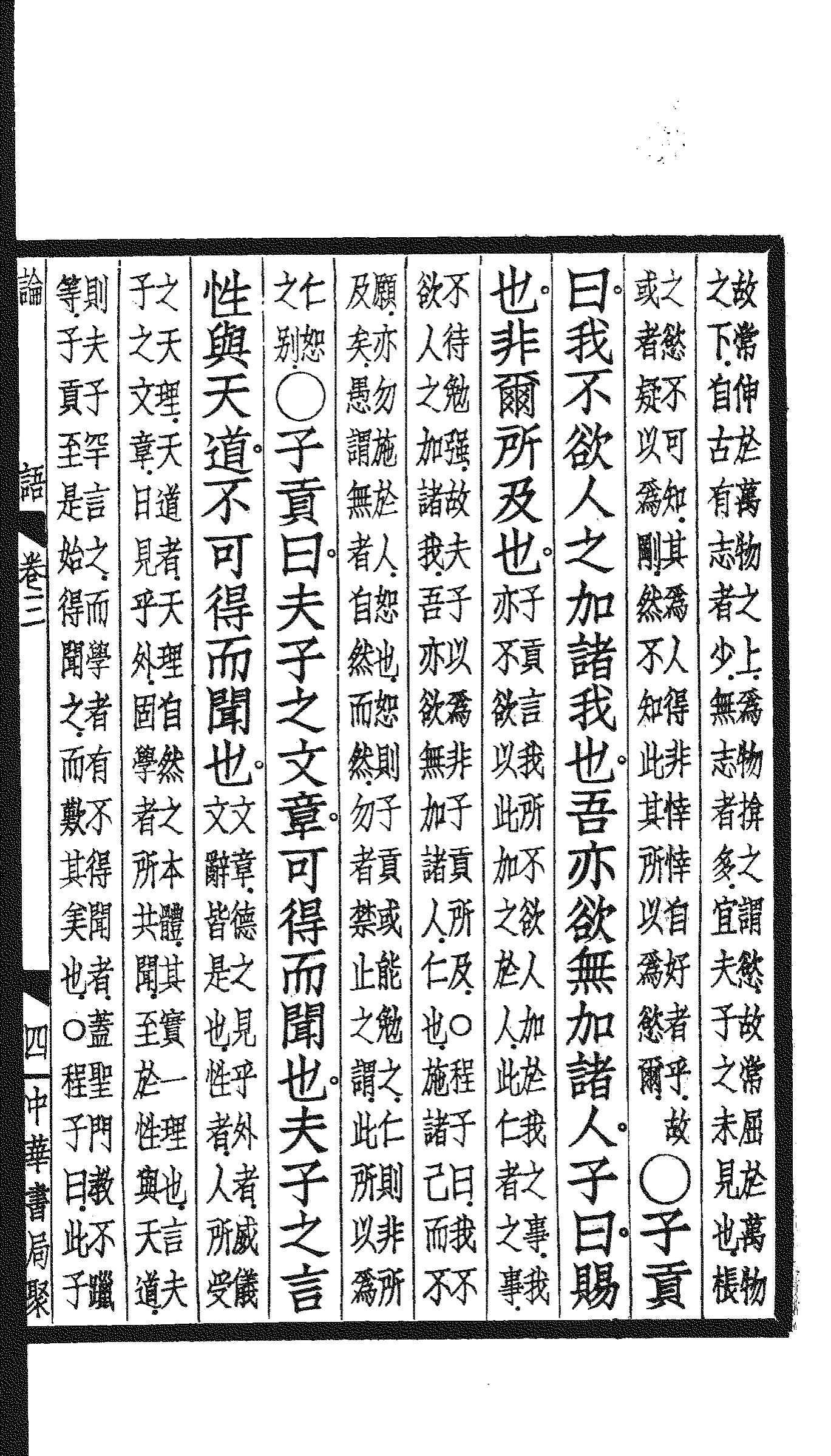
Yikonglu, Analects 公冶长第五 5.11 “What I do not wish others to do to me”, https://yikonglu.com/en/lunyu/gong-ye-chang/11.html, version 2026-11-05.Last checked: 2026-11-05. Changes are logged on theerrata page.
Found an error in this chapter? Email us; once checked, it goes on the errata page under your username: 
