 一孔录
宰予昼寝。子曰:朽木不可雕也,粪土之墙不可杇也,于予与何诛?子曰:始吾于人也,听其言而信其行;今吾于人也,听其言而观其行。于予与改是。Zai Yu slept in the daytime. The Master said: Rotten wood cannot be carved; a wall of dung cannot be plastered. As for Yu, what is the use of scolding him? The Master said: At first, with people, I heard their words and trusted their conduct. Now, with people, I hear their words and watch their conduct. It was Yu who made me change.
Tap any sentence of the original to copy it with its source.
白Plain Chinese
宰予大白天睡觉。孔子说:烂了的木头没法雕刻,粪土垒的墙没法抹平;对宰予,我还责备他什么呢?孔子又说:从前我看人,听了他的话就信他会照着做;如今我看人,听了他的话还要看他做没做。是宰予让我改了这个做法。
A plain modern-Chinese rendering following Yikonglu's reading.
常The common reading
Read as Confucius scolding a student far too harshly over a nap.
注Key words in the commentary
“昼寝,谓当昼而寐” — daytime sleeping means sleeping in broad day; “朽,腐也。雕,刻画也。杇,镘也” — xiu is rotten, diao is to carve, wu (杇, read wū) is to plaster; “言其志气昏惰,教无所施也” — his will and spirit were dull and idle, so teaching had nothing to work on; “与,语辞。诛,责也。言不足责,乃所以深责之” — yu is a particle; zhu means to rebuke; saying he is not worth rebuking is the deepest rebuke; xing (行) in the falling tone; “宰予能言而行不逮,故孔子自言于予之事而改此失,亦以重警之也” — Zai Yu spoke well but his conduct fell short, so Confucius said that through Yu he had corrected this fault, also to warn him severely.
家What other commentators say
Hu Yin: “子曰疑衍文,不然,则非一日之言也” — the second “the Master said” may be an interpolation; otherwise these were words of different days. Fan Zuyu: “君子之于学,惟日孜孜,毙而后已……宰予昼寝,自弃孰甚焉” — the gentleman in learning is diligent every day until death; Zai Yu sleeping in the day — what self-abandonment is greater? Hu Yin: “宰予不能以志帅气,居然而倦。是宴安之气胜,儆戒之志惰也” — Zai Yu could not lead his vital spirit with his will and grew weary; the spirit of ease won and the will to vigilance slackened; “特因此立教,以警群弟子,使谨于言而敏于行耳” — Confucius merely used this to set a teaching and warn all his disciples to be careful in word and quick in deed.
读How Yikonglu reads it
The point is not the nap but a slackened will and words that deeds do not match. “Not worth rebuking” is the heaviest rebuke. Confucius used the occasion to set a rule: hear the words, and also watch the conduct. Today: three gym memberships in a year, and not one visit.
家Other commentaries
Our base text is Zhu Xi's Collected Commentaries (above). Here are other commentaries side by side: for old commentaries, the first line of the sub-commentary with a link to the woodblock scan; for modern editions, one short quoted translation for comparison. The “compared with Zhu Xi” notes are written by Yikonglu, not quoted.
皇侃《论语义疏》Liang dynasty · 1750 Japanese woodblock edition · juan 三
“云宰予晝寢者,寢,眠也。”……
Compared with Zhu Xi
| Commentary | Point | Relation | Confidence | Note |
|---|---|---|---|---|
| 钱穆《论语新解》 | same | fairly sure | 同以昼寝为白日睡眠、朽木粪墙为志气昏惰难施教的比喻;两家均不取画寝室说,后半以听言观行纠能言而行不逮。 |
核Check every citation
Every commentary line quoted in the video: the original wording, who said it, and the page in the base edition. “Paraphrase” marks our summary, not the commentator's words. About this edition
| Quoted text | Source | Page |
|---|---|---|
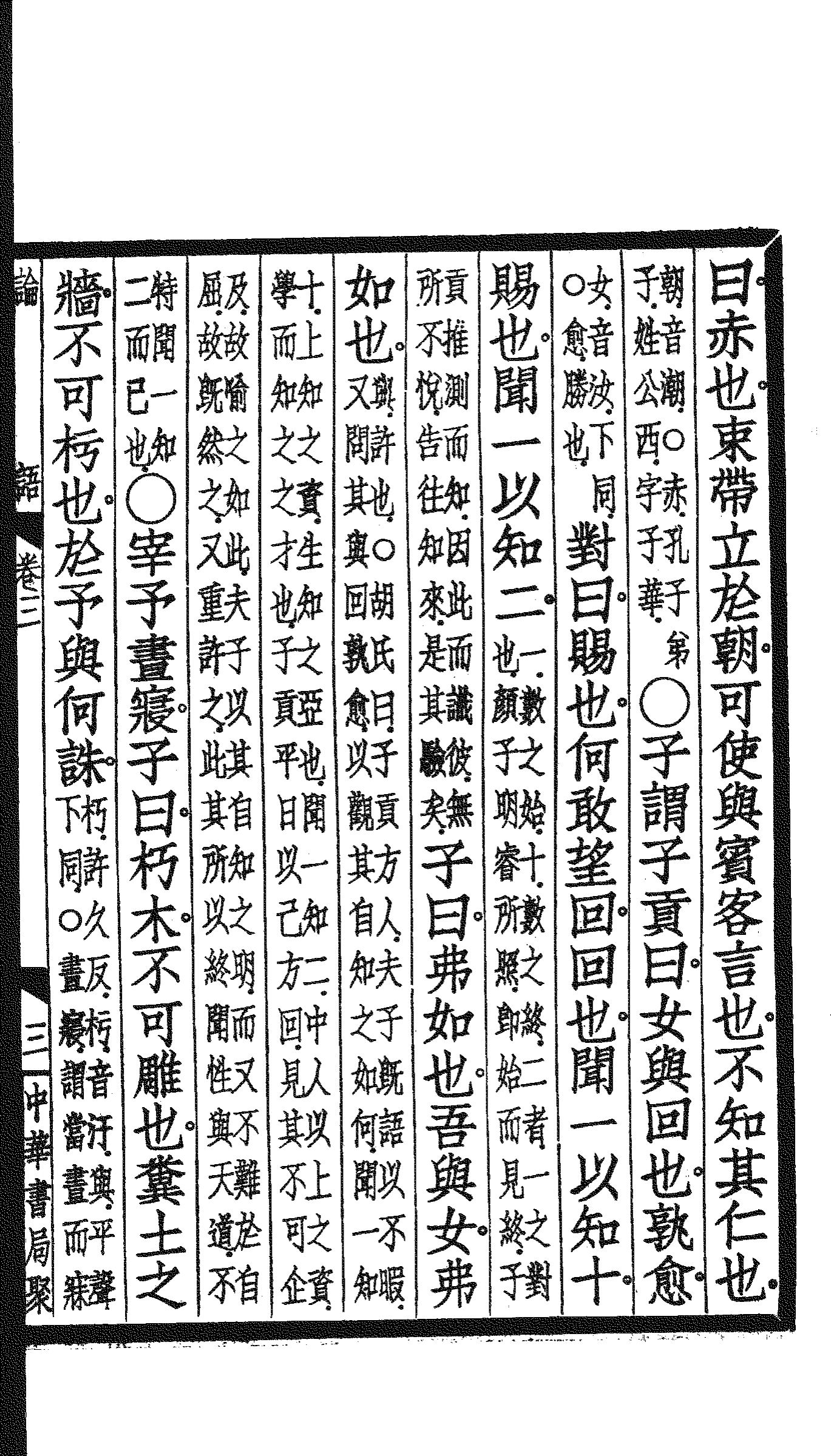
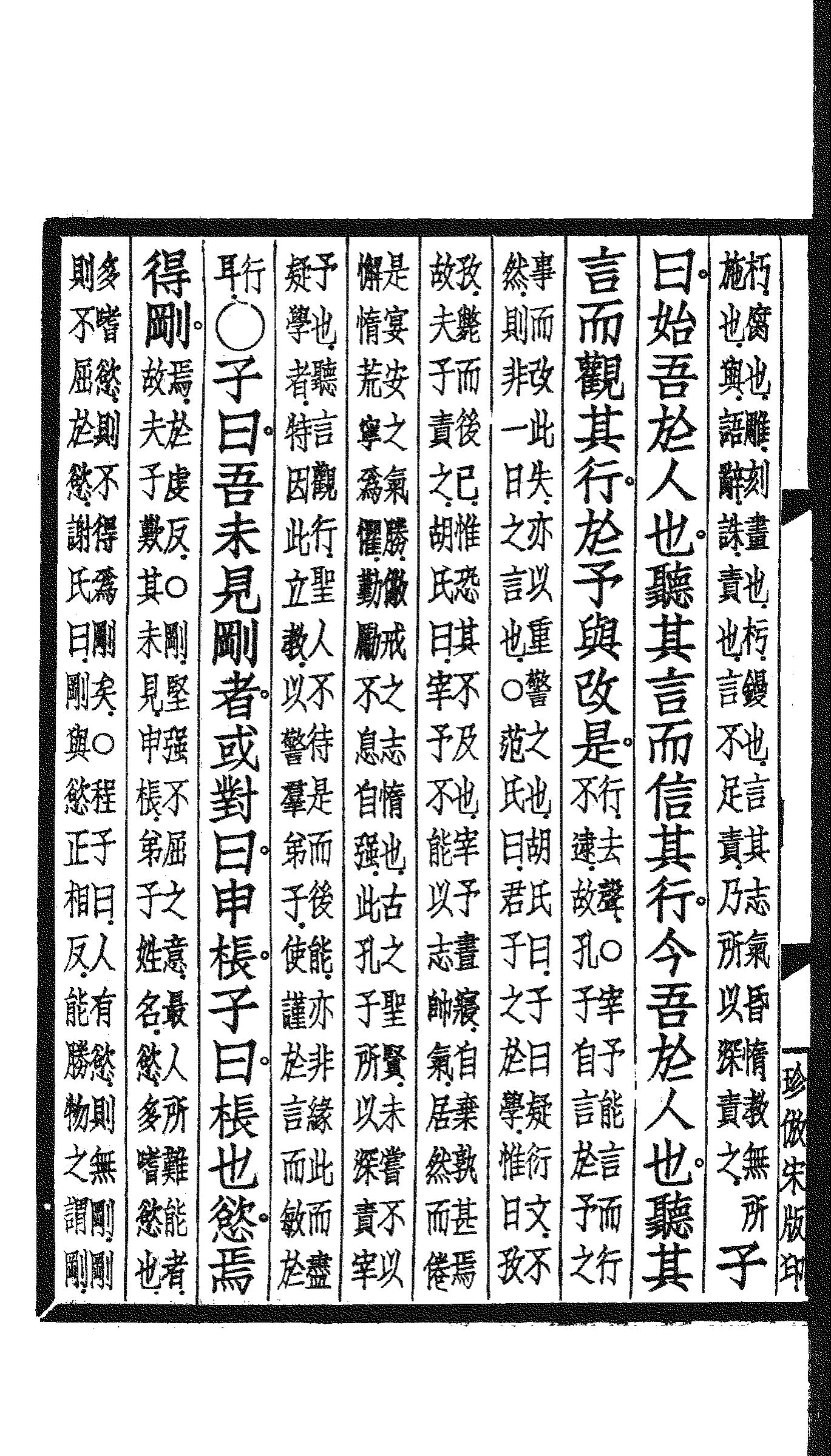
| “昼寝,谓当昼而寐。朽,腐也。雕,刻画也。杇,镘也。言其志气昏惰,教无所施也” | Zhu Xi's commentary | page 65 |
| “与,语辞。诛,责也。言不足责,乃所以深责之” | Zhu Xi's commentary | page 66 |
| “宰予能言而行不逮,故孔子自言于予之事而改此失,亦以重警之也。胡氏曰:子曰疑衍文,不然,则非一日之言也” | 朱注;朱注引胡氏 | page 66 |
| “君子之于学,惟日孜孜,毙而后已,惟恐其不及也。宰予昼寝,自弃孰甚焉,故夫子责之……宰予不能以志帅气,居然而倦。是宴安之气胜,儆戒之志惰也” | 朱注引范氏、胡氏 | page 66 |
| “听言观行,圣人不待是而后能,亦非缘此而尽疑学者。特因此立教,以警群弟子,使谨于言而敏于行耳” | 朱注(胡氏语续) | page 66 |
音Pronunciation
| Character | In the line | Read as |
|---|---|---|
| 朽 | 朽木、朽腐也 | xiǔ |
| 杇 | 不可杇也、杇镘也 | wū |
| 与 | 于予与何诛、于予与改是 | yú |
| 诛 | 何诛 | zhū |
| 行 | 信其行、观其行、行不逮 | xìng |
页Pages of the base edition
Yikonglu, Analects 公冶长第五 5.9 “Zai Yu slept in the daytime”, https://yikonglu.com/en/lunyu/gong-ye-chang/9.html, version 2026-11-05.Last checked: 2026-11-05. Changes are logged on theerrata page.
Found an error in this chapter? Email us; once checked, it goes on the errata page under your username: