 一孔录
或曰:雍也仁而不佞。子曰:焉用佞?御人以口给,屡憎于人。不知其仁,焉用佞?Someone said: Yong is humane but not glib. The Master said: What use is glibness? Those who meet people with a ready tongue are often disliked. I do not know whether he is humane, but what use is glibness?
Tap any sentence of the original to copy it with its source.
白Plain Chinese
有人说:冉雍有仁德,只是不善言辞。孔子说:要能说会道做什么?凭嘴快去应付人,往往招人厌恶。他算不算仁我不敢说,可要口才做什么呢?
A plain modern-Chinese rendering following Yikonglu's reading.
常The common reading
Read as “poor speakers lose out, so train your eloquence”.
注Key words in the commentary
“佞,口才也” — ning is a talent for speech; Zhonggong was “重厚简默,而时人以佞为贤” — weighty, simple and quiet, while people of the time thought glibness a virtue; “御,当也,犹应答也。给,辩也。憎,恶也” — yu is to meet, as in replying; ji is ready argument; zeng is to dislike; “佞人所以应答人者,但以口取辩而无情实,徒多为人所憎恶尔” — the glib answer people with argument from the mouth but no real substance, and only win much dislike; “其不佞乃所以为贤,不足以为病也。再言焉用佞,所以深晓之” — his not being glib is exactly his worth, not a flaw; saying “what use is glibness” twice is to make it deeply clear.
家What other commentators say
Zhu Xi on why Confucius would not grant him humaneness: “仁道至大,非全体而不息者,不足以当之。如颜子亚圣,犹不能无违于三月之后” — the way of humaneness is very great; only one whole and unceasing can match it; even Yan Hui, second to the sage, could not avoid lapsing after three months.
读How Yikonglu reads it
The root problem is “no real substance”: a quick, argumentative tongue with nothing true in it wins more dislike the more it talks. Confucius did not grant Zhonggong humaneness because humaneness is too great to grant lightly. Today: the person who takes on everything, agrees to everything and delivers nothing finds colleagues walking around him three months later.
家Other commentaries
Our base text is Zhu Xi's Collected Commentaries (above). Here are other commentaries side by side: for old commentaries, the first line of the sub-commentary with a link to the woodblock scan; for modern editions, one short quoted translation for comparison. The “compared with Zhu Xi” notes are written by Yikonglu, not quoted.
皇侃《论语义疏》Liang dynasty · 1750 Japanese woodblock edition · juan 三
“云或曰雍也仁而不佞者,或人云弟子雍甚有仁德而不能佞媚求會時也。”……
Compared with Zhu Xi
| Commentary | Point | Relation | Confidence | Note |
|---|---|---|---|---|
| 钱穆《论语新解》 | same | fairly sure | 同以佞为口才,以口给应人易遭厌恶,而不仁之判不可轻许;钱侧重不擅口才不足为仲弓之病,朱亦作此意。 |
核Check every citation
Every commentary line quoted in the video: the original wording, who said it, and the page in the base edition. “Paraphrase” marks our summary, not the commentator's words. About this edition
| Quoted text | Source | Page |
|---|---|---|
| “佞,口才也。仲弓为人重厚简默,而时人以佞为贤,故美其优于德,而病其短于才也……御,当也,犹应答也。给,辩也。憎,恶也” | Zhu Xi's commentary | page 62 |
| “言何用佞乎?佞人所以应答人者,但以口取辩而无情实,徒多为人所憎恶尔。我虽未知仲弓之仁,然其不佞乃所以为贤,不足以为病也。再言焉用佞,所以深晓之” | Zhu Xi's commentary | page 63 |
| “或疑仲弓之贤而夫子不许其仁,何也?曰:仁道至大,非全体而不息者,不足以当之。如颜子亚圣,犹不能无违于三月之后;况仲弓虽贤,未及颜子,圣人固不得而轻许之也” | Zhu Xi's commentary | page 63 |
音Pronunciation
| Character | In the line | Read as |
|---|---|---|
| 焉 | 斯焉取斯、焉用佞 | yān |
| 佞 | 不佞、用佞 | nìng |
| 给 | 口给 | jǐ |
| 憎 | 屡憎、憎恶 | zēng |
页Pages of the base edition
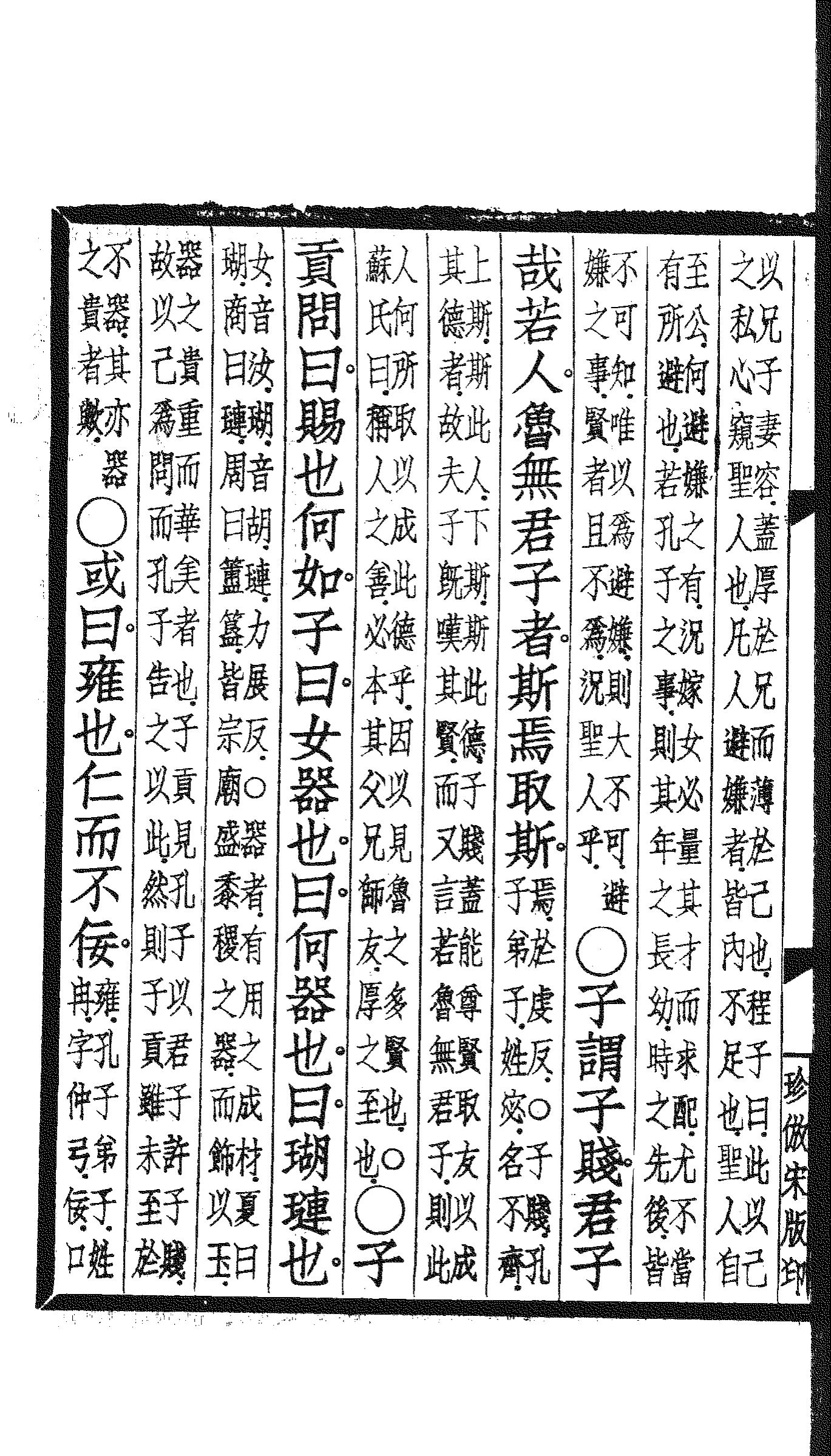
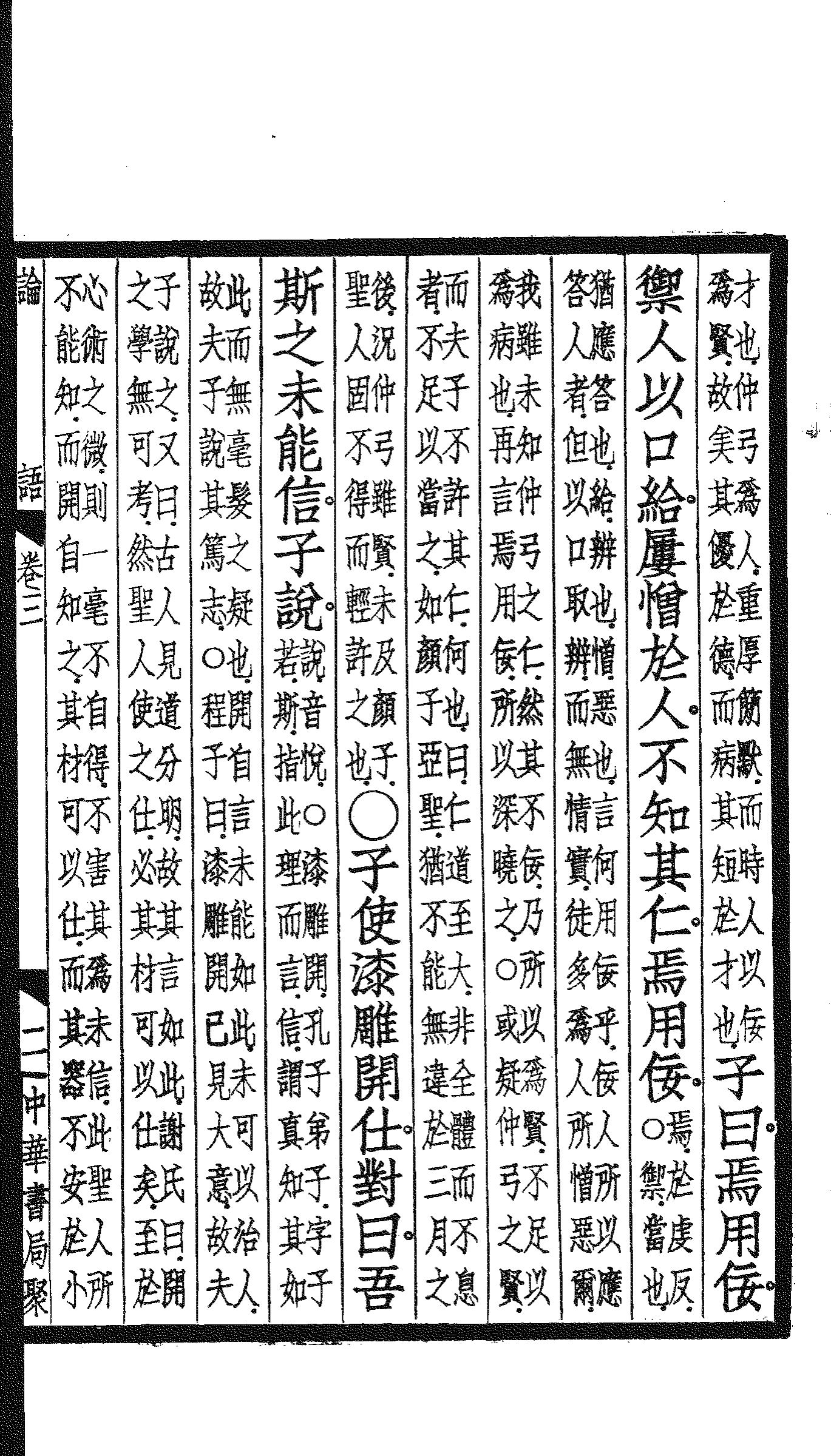
Yikonglu, Analects 公冶长第五 5.4 “Yong is humane but not glib”, https://yikonglu.com/en/lunyu/gong-ye-chang/4.html, version 2026-11-05.Last checked: 2026-11-05. Changes are logged on theerrata page.
Found an error in this chapter? Email us; once checked, it goes on the errata page under your username: