 一孔录
子贡问曰:孔文子何以谓之文也?子曰:敏而好学,不耻下问,是以谓之文也。Zigong asked: Why was Kong Wenzi called “wen”? The Master said: He was quick and loved learning, and was not ashamed to ask those below him; that is why he was called “wen”.
Tap any sentence of the original to copy it with its source.
白Plain Chinese
子贡问:孔文子死后凭什么得了“文”这个谥号?孔子说:他天资聪敏却肯用功,身居高位却不以向下面的人求教为耻,所以谥为“文”。
A plain modern-Chinese rendering following Yikonglu's reading.
常The common reading
Read “not ashamed to ask those below” as a general virtue of diligence, unrelated to Kong Wenzi's character.
注Key words in the commentary
“凡人性敏者多不好学,位高者多耻下问。故谥法有以勤学好问为文者,盖亦人所难也” — people quick by nature mostly do not love learning, and those of high rank are mostly ashamed to ask those below; so the rules for posthumous names count diligent learning and asking as “wen”, for it is hard for people; “孔子不没其善,言能如此,亦足以为文矣,非经天纬地之文也” — Confucius did not bury his good points; being able to do this is enough for “wen”, though not the “wen” that orders heaven and earth.
家What other commentators say
Zhu Xi cites a Master Su on Kong Wenzi's deeds — having Taishu Ji put away his wife, then wanting to attack him, and Confucius ordering his carriage and leaving: “其为人如此而谥曰文,此子贡之所以疑而问也” — such was the man, yet he was named “wen”; that is why Zigong doubted and asked.
读How Yikonglu reads it
Zigong asked because Kong Wenzi's reputation was poor. Confucius answered only with this one rule for posthumous names, neither defending him wholesale nor erasing his merit; “wen” goes only this far, not as far as ordering heaven and earth. Today: a boss with a so-so reputation asks an intern in front of everyone at a meeting, “I don't get this; can you explain?”
家Other commentaries
Our base text is Zhu Xi's Collected Commentaries (above). Here are other commentaries side by side: for old commentaries, the first line of the sub-commentary with a link to the woodblock scan; for modern editions, one short quoted translation for comparison. The “compared with Zhu Xi” notes are written by Yikonglu, not quoted.
皇侃《论语义疏》Liang dynasty · 1750 Japanese woodblock edition · juan 三
“云子貢問云云者,衛大夫孔叔圉以文為諡,子貢疑其大高故問於孔子也。”……
Compared with Zhu Xi
| Commentary | Point | Relation | Confidence | Note |
|---|---|---|---|---|
| 钱穆《论语新解》 | same | fairly sure | 同据敏好学、不耻下问说明可谥文,不以私德之失抹善。钱明说下问不限位年之卑,朱重性敏位高者难能好学下问。 |
核Check every citation
Every commentary line quoted in the video: the original wording, who said it, and the page in the base edition. “Paraphrase” marks our summary, not the commentator's words. About this edition
| Quoted text | Source | Page |
|---|---|---|
| “孔文子,卫大夫,名圉。凡人性敏者多不好学,位高者多耻下问。故谥法有以勤学好问为文者,盖亦人所难也。孔圉得谥为文,以此而已” | Zhu Xi's commentary | page 68 |
| “孔文子使太叔疾出其妻而妻之。疾通于初妻之娣,文子怒,将攻之。访于仲尼,仲尼不对,命驾而行。疾奔宋,文子使疾弟遗室孔姞。其为人如此而谥曰文,此子贡之所以疑而问也” | 朱注引苏氏 | page 68 |
| “孔子不没其善,言能如此,亦足以为文矣,非经天纬地之文也” | 朱注引苏氏(续) | page 68 |
音Pronunciation
| Character | In the line | Read as |
|---|---|---|
| 好 | 敏而好学、不好学、勤学好问 | hào |
页Pages of the base edition
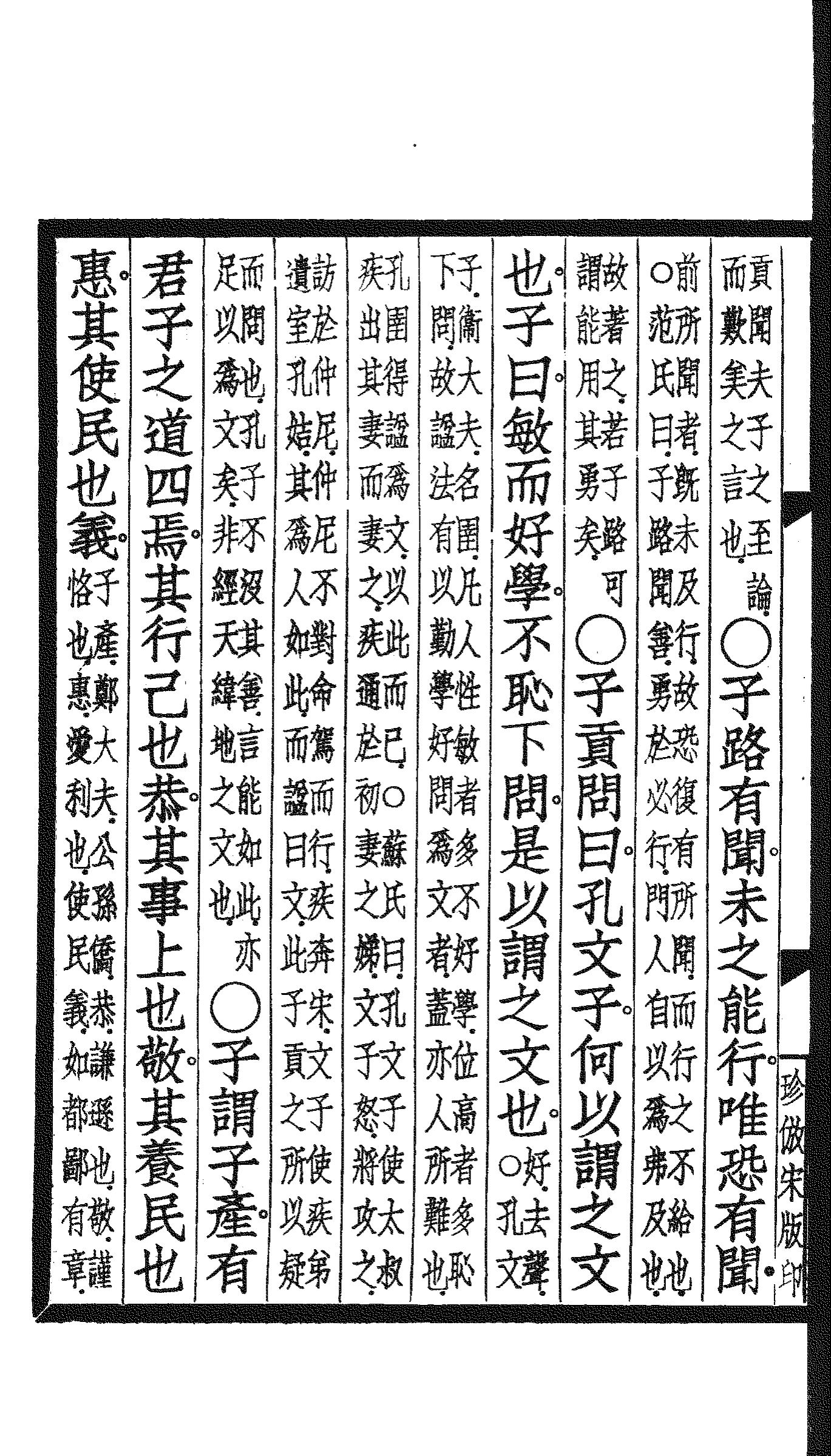
Yikonglu, Analects 公冶长第五 5.14 “Why was Kong Wenzi called “wen”?”, https://yikonglu.com/en/lunyu/gong-ye-chang/14.html, version 2026-11-05.Last checked: 2026-11-05. Changes are logged on theerrata page.
Found an error in this chapter? Email us; once checked, it goes on the errata page under your username: 
