 一孔录
子贡欲去告朔之饩羊。子曰:赐也,尔爱其羊,我爱其礼。Zigong wanted to do away with the sacrificial sheep for announcing the new moon. The Master said: Si, you care about the sheep; I care about the rite.
Tap any sentence of the original to copy it with its source.
常The common reading
If only the outward form is left, why keep it?
注Key words in the commentary
gao read gu in Zhu Xi's note, gao today; xi read xi; “饩,生牲也。鲁自文公始不视朔,而有司犹供此羊” — xi is a live victim; from Duke Wen, Lu's rulers stopped attending the new-moon rite, yet officials still supplied the sheep; “爱,犹惜也。子贡盖惜其无实而妄费” — ai means to begrudge; Zigong begrudged the waste on an empty form; “然礼虽废,羊存,犹得以识之而可复焉。若并去其羊,则此礼遂亡矣” — though the rite had lapsed, with the sheep kept it could still be recognised and restored; remove the sheep and the rite is gone.
家What other commentators say
Yang Shi: “羊存,则告朔之名未泯,而其实因可举” — while the sheep remains, the name of the rite survives, and its substance can be revived.
读How Yikonglu reads it
The sheep marks the rite; keep the marker and the rite can still be recognised and restored. Today: an old shop that makes one pot of the old recipe at the winter solstice, not for sale.
核Check every citation
Every commentary line quoted in the video: the original wording, who said it, and the page in the base edition. “Paraphrase” marks our summary, not the commentator's words. About this edition
| Quoted text | Source | Page |
|---|---|---|
| “古者天子常以季冬,颁来岁十二月之朔于诸侯,诸侯受而藏之祖庙。月朔,则以特羊告庙,请而行之。饩,生牲也。鲁自文公始不视朔,而有司犹供此羊,故子贡欲去之” | Zhu Xi's commentary | page 45 |
| “爱,犹惜也。子贡盖惜其无实而妄费。然礼虽废,羊存,犹得以识之而可复焉。若并去其羊,则此礼遂亡矣,孔子所以惜之” | Zhu Xi's commentary | page 45 |
| “告朔,诸侯所以禀命于君亲,礼之大者。鲁不视朔矣,然羊存,则告朔之名未泯,而其实因可举。此夫子所以惜之也” | Yang Shi, quoted by Zhu Xi | page 45 |
音Pronunciation
| Character | In the line | Read as |
|---|---|---|
| 去 | 欲去告朔之饩羊 | qù |
| 告 | 告朔 | gào |
| 朔 | 告朔 | shuò |
| 饩 | 饩羊 | xì |
页Pages of the base edition
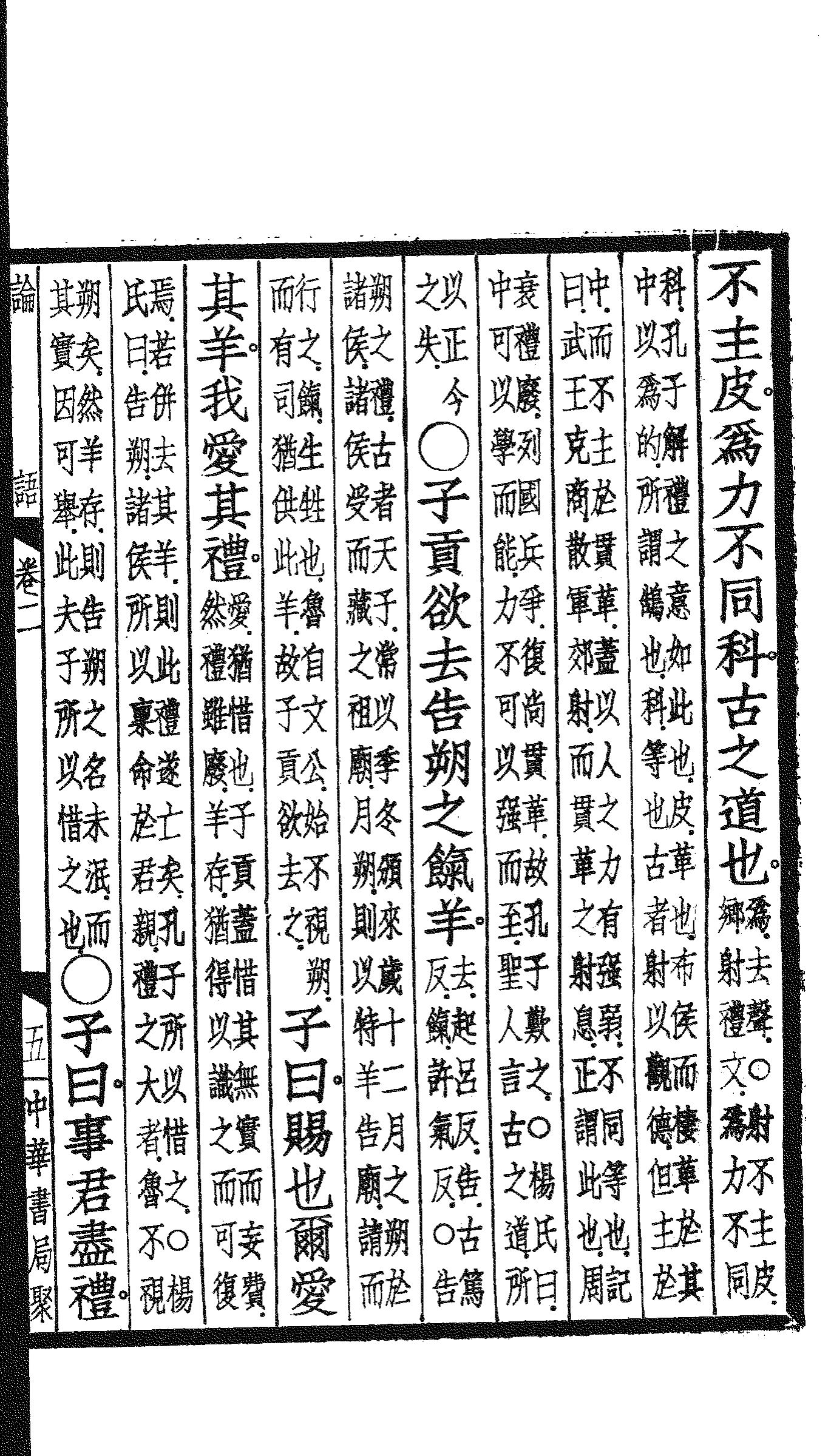
Yikonglu, Analects Ba yi (Book 3) 3.17 “The sheep for announcing the new moon”, https://yikonglu.com/en/lunyu/ba-yi/17.html, version 2026-11-04.Last checked: 2026-11-04. Changes are logged on theerrata page.
Found an error in this chapter? Email us; once checked, it goes on the errata page under your username: 
