 一孔录
子夏问曰:巧笑倩兮,美目盼兮,素以为绚兮。何谓也?子曰:绘事后素。曰:礼后乎?子曰:起予者商也!始可与言诗已矣。Zixia asked: “Her artful smile dimpling, her lovely eyes clear, white to set off the colours” — what does this mean? The Master said: The painting comes after the white ground. He said: Then ritual comes after? The Master said: Shang, you have drawn me out! Now I can talk about the Odes with you.
Tap any sentence of the original to copy it with its source.
常The common reading
Paint first, or prime first?
注Key words in the commentary
“此逸诗也” — this is a lost ode; “素,粉地,画之质也;绚,采色,画之饰也” — su is the white ground, the substance of a painting; xuan is colour, its ornament; “后素,后于素也” — houxu means after the white; Kaogongji: “绘画之事后素功” — painting comes after the white work; “礼必以忠信为质” — ritual must have loyalty and trust as its substance; “起,犹发也” — qi means to draw out.
家What other commentators say
Xie Liangzuo: “子贡因论学而知诗,子夏因论诗而知学” — Zigong came to the Odes through learning, Zixia came to learning through the Odes; Yang Shi: “白受采……苟无其质,礼不虚行” — white takes colour; without substance, ritual does not work empty — and “玩心于章句之末,则其为诗也固而已矣” — fiddling with phrasing makes one's reading of the Odes rigid.
读How Yikonglu reads it
If the ground is not smooth, every colour you put on comes out blotchy.
核Check every citation
Every commentary line quoted in the video: the original wording, who said it, and the page in the base edition. “Paraphrase” marks our summary, not the commentator's words. About this edition
| Quoted text | Source | Page |
|---|---|---|
| “此逸诗也。倩,好口辅也。盼,目黑白分也。素,粉地,画之质也。绚,采色,画之饰也” | Zhu Xi's commentary | page 40 |
| “言人有此倩盼之美质,而又加以华采之饰,如有素地而加采色也。子夏疑其反谓以素为饰,故问之” | Zhu Xi's commentary | page 40 |
| “绘事,绘画之事也。后素,后于素也。考工记曰:绘画之事后素功。谓先以粉地为质,而后施五采,犹人有美质,然后可加文饰” | Zhu Xi's commentary | page 41 |
| “礼必以忠信为质,犹绘事必以粉素为先。起,犹发也。起予,言能起发我之志意” | Zhu Xi's commentary | page 41 |
| “子贡因论学而知诗,子夏因论诗而知学,故皆可与言诗” | Xie Liangzuo, quoted by Zhu Xi | page 41 |
| “(前省“甘受和”三字)白受采,忠信之人可以学礼。苟无其质,礼不虚行……若夫玩心于章句之末,则其为诗也固而已矣。所谓起予,则亦相长之义也” | 朱注引杨氏(中间“此繪事後素之說也……商賜可與言詩者以此”省去) | page 41 |
音Pronunciation
| Character | In the line | Read as |
|---|---|---|
| 倩 | 巧笑倩兮 | qiàn |
| 盼 | 美目盼兮 | pàn |
| 绚 | 素以为绚 | xuàn |
| 绘 | 绘事后素 | huì |
页Pages of the base edition
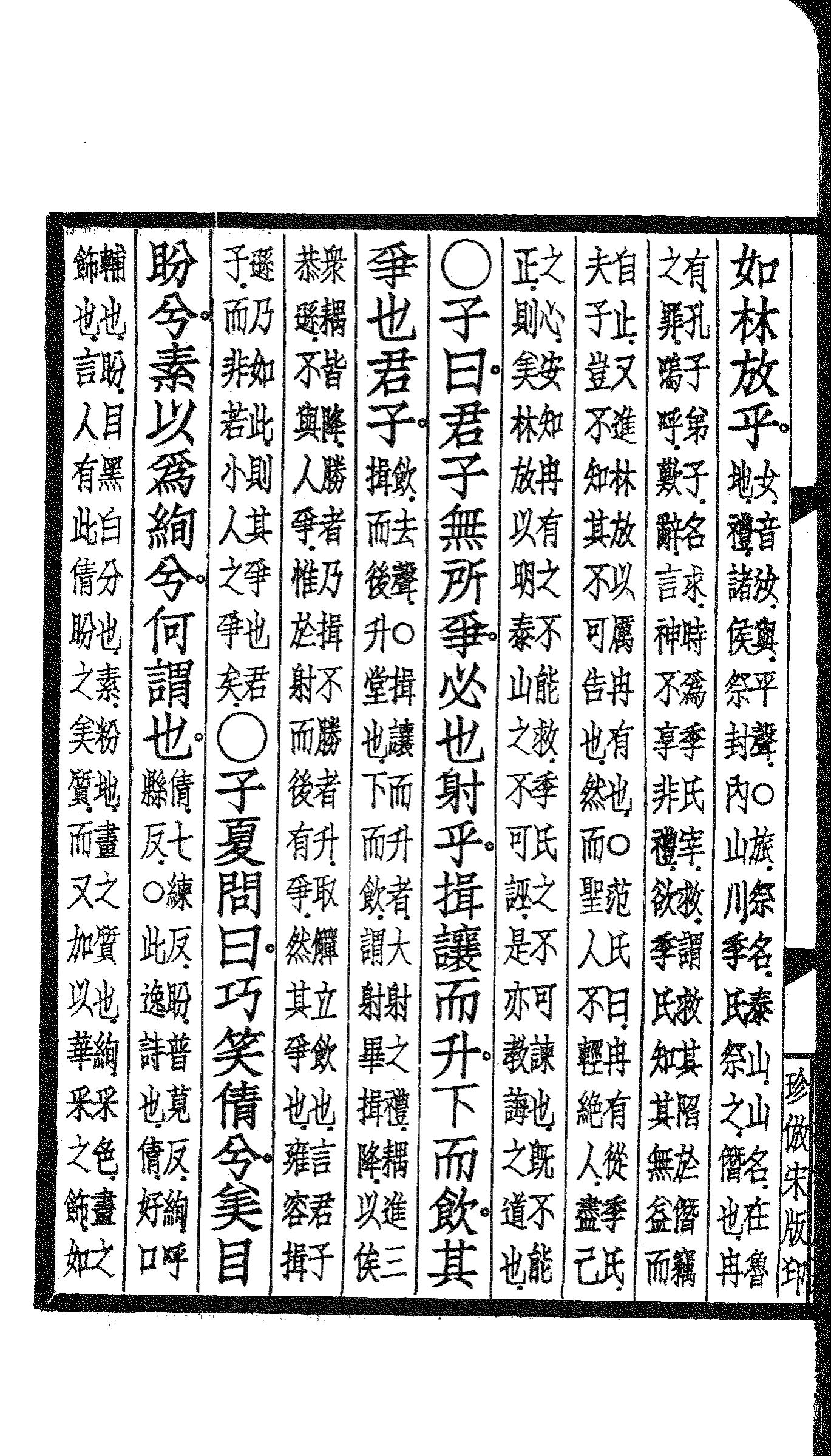
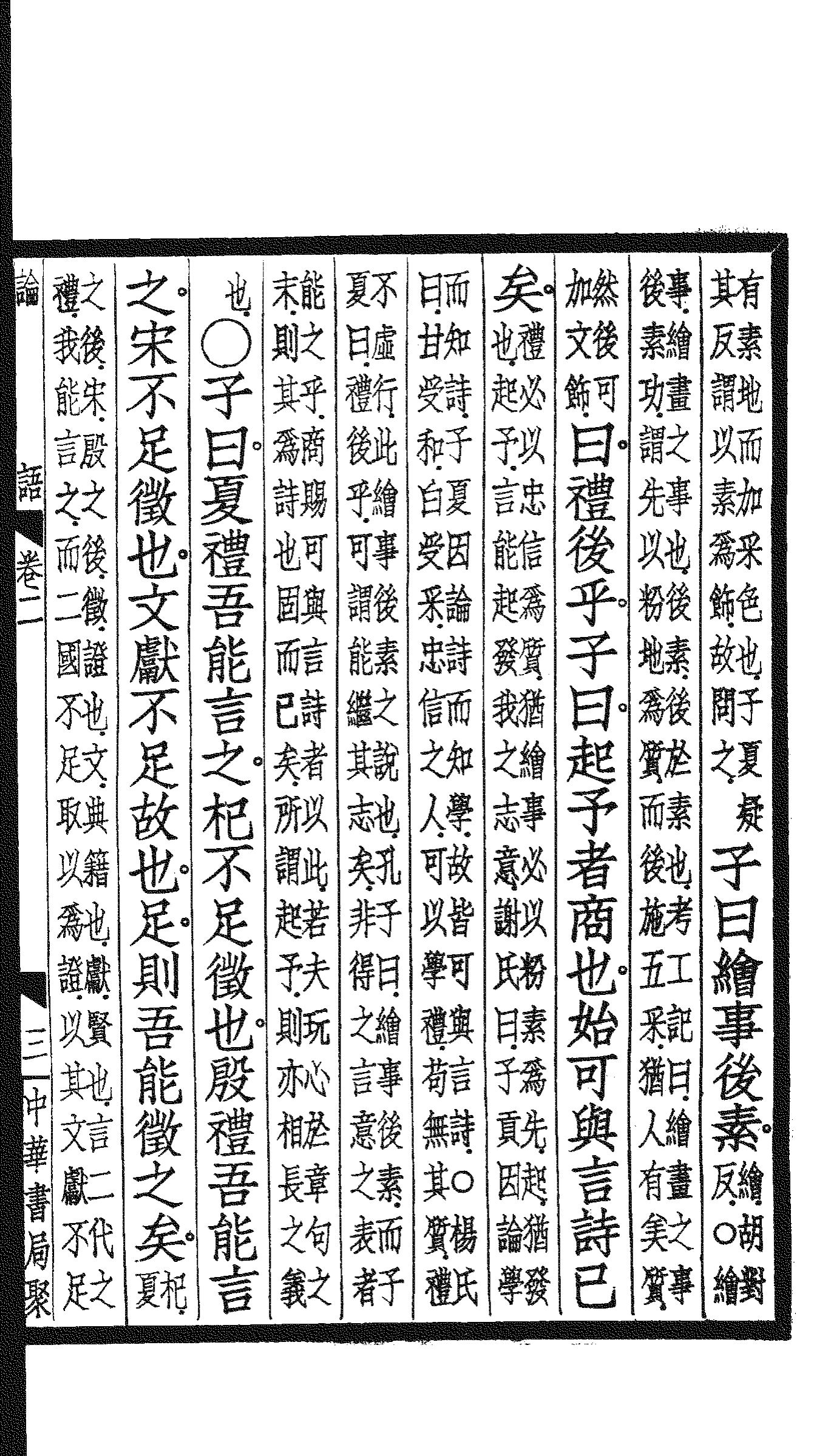
Yikonglu, Analects Ba yi (Book 3) 3.8 “The painting comes after the white ground”, https://yikonglu.com/en/lunyu/ba-yi/8.html, version 2026-11-04.Last checked: 2026-11-04. Changes are logged on theerrata page.
Found an error in this chapter? Email us; once checked, it goes on the errata page under your username: 
看Watch this chapter
This chapter is read in Yikonglu episode “八佾二”:YouTubeBilibili(in mainland China use Bilibili)
