 一孔录
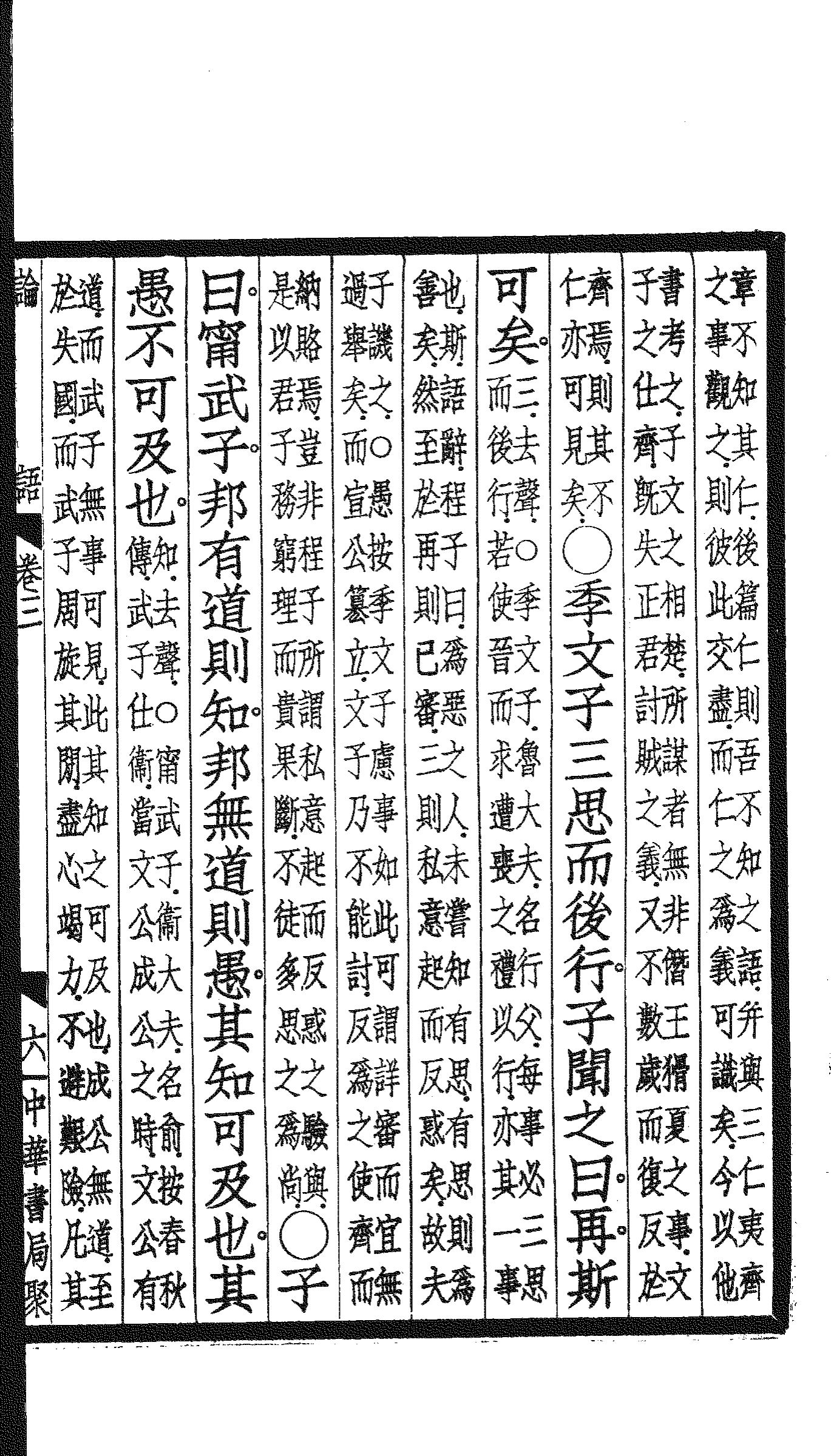
子曰:寗武子邦有道则知,邦无道则愚。其知可及也,其愚不可及也。The Master said: When the state had the Way, Ning Wuzi was wise; when it lacked the Way, he was foolish. His wisdom can be matched; his foolishness cannot.
Tap any sentence of the original to copy it with its source.
白Plain Chinese
孔子说:甯武子在国家清明时,显得聪明;国家昏乱时,显得愚拙。他的聪明,别人赶得上;他那份愚拙,别人赶不上。
A plain modern-Chinese rendering following Yikonglu's reading.
常The common reading
“His foolishness cannot be matched” is used today as an insult — so why is this kind of foolishness harder to learn than cleverness?
注Key words in the commentary
“知” is read as “zhi”, wisdom; “甯” is read nìng.
家What other commentators say
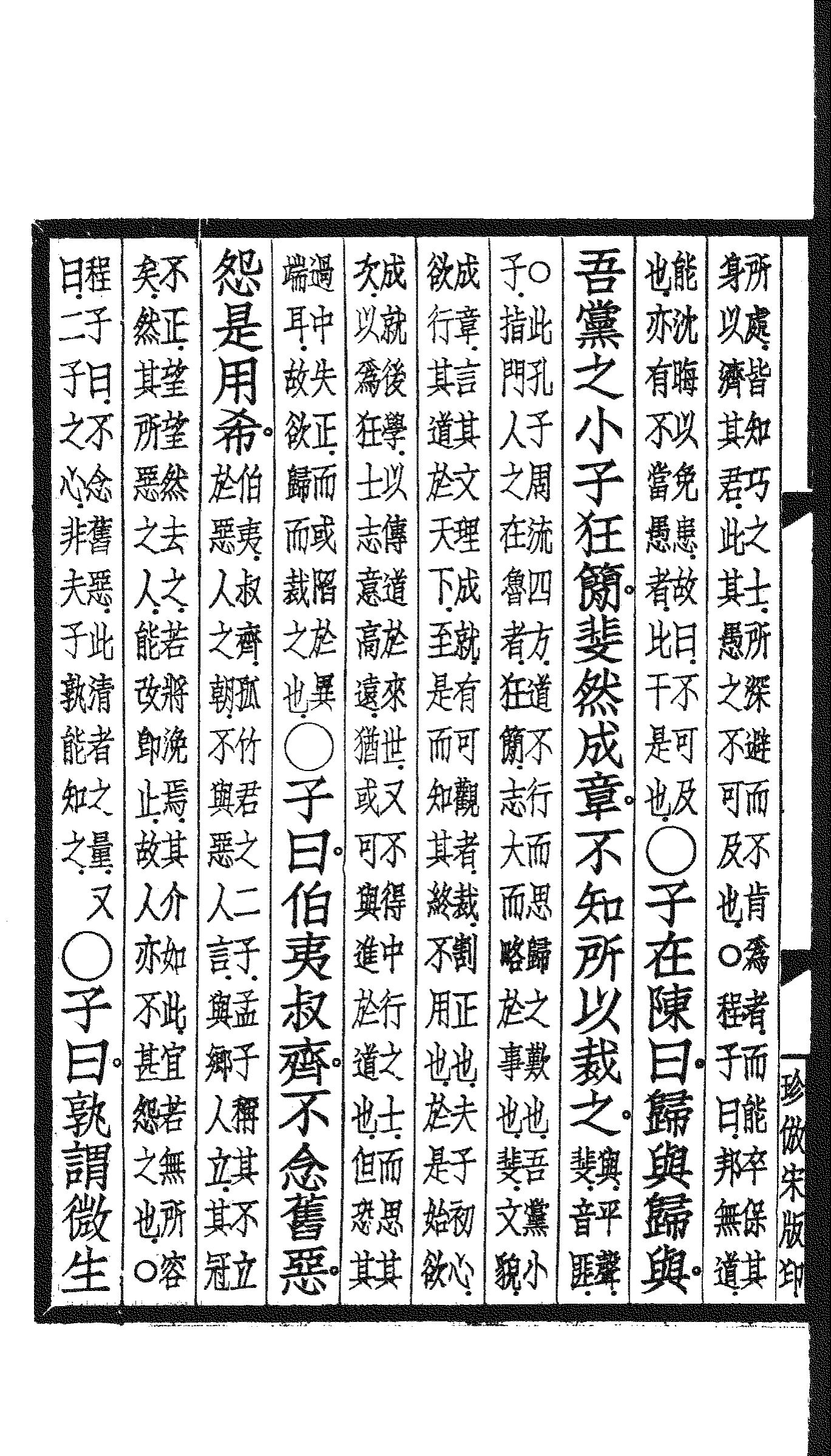
Zhu Xi: Ning Wuzi “仕卫,当文公、成公之时” — served Wei under Dukes Wen and Cheng; under Duke Wen, who had the Way, “无事可见,此其知之可及也” — there was nothing remarkable to see, so his wisdom could be matched; under Duke Cheng, who lacked the Way and lost the state, he “周旋其间,尽心竭力,不避艰险……而能卒保其身以济其君,此其愚之不可及也” — moved through it all, giving his whole heart and strength, not avoiding danger, and in the end kept himself safe and rescued his lord; that is the foolishness that cannot be matched. He cites Master Cheng: “邦无道能沉晦以免患……亦有不当愚者,比干是也” — when the state lacks the Way one may keep a low profile to avoid harm, yet there are some who should not play the fool, such as Bi Gan.
读How Yikonglu reads it
The “foolishness” is taking on what every clever person avoids, while still keeping himself safe and saving his lord; Master Cheng's mention of Bi Gan shows it is not simply feigning stupidity. Today: the year the company hit trouble everyone left, and she stayed to sort out the bad books.
异Textual variants
Where the base edition differs from the common text; the original follows the base edition.
| Base edition | Common text | Note |
|---|---|---|
| 寗武子 | 宁武子 | 底本PDF71寗字保留,不以常用姓氏字替换 |
家Other commentaries
Our base text is Zhu Xi's Collected Commentaries (above). Here are other commentaries side by side: for old commentaries, the first line of the sub-commentary with a link to the woodblock scan; for modern editions, one short quoted translation for comparison. The “compared with Zhu Xi” notes are written by Yikonglu, not quoted.
皇侃《论语义疏》Liang dynasty · 1750 Japanese woodblock edition · juan 三
“此章美武子德也。”……
Compared with Zhu Xi
| Commentary | Point | Relation | Confidence | Note |
|---|---|---|---|---|
| 钱穆《论语新解》 | same | fairly sure | 同认无道时表面愚而能存身济君为难及。钱偏取韬晦沉冥非只免身,朱首论周旋尽力并兼引程子沈晦免患。 |
核Check every citation
Every commentary line quoted in the video: the original wording, who said it, and the page in the base edition. “Paraphrase” marks our summary, not the commentator's words. About this edition
| Quoted text | Source | Page |
|---|---|---|
| “甯武子,卫大夫,名俞。按春秋传,武子仕卫,当文公、成公之时。文公有道,而武子无事可见,此其知之可及也” | Zhu Xi's commentary | page 71 |
| “成公无道,至于失国,而武子周旋其间……此其愚之不可及也” | Zhu Xi's commentary | page 71 |
| “程子曰:邦无道能沉晦以免患,故曰不可及也。亦有不当愚者,比干是也” | Cheng Yi, quoted by Zhu Xi | page 72 |
音Pronunciation
| Character | In the line | Read as |
|---|---|---|
| 知 | 邦有道则知、其知可及、知之可及、知巧之士 | zhì |
页Pages of the base edition
Yikonglu, Analects 公冶长第五 5.20 “Why is this “foolishness” harder to learn than cleverness?”, https://yikonglu.com/en/lunyu/gong-ye-chang/20.html, version 2026-11-05.Last checked: 2026-11-05. Changes are logged on theerrata page.
Found an error in this chapter? Email us; once checked, it goes on the errata page under your username: 
