 一孔录
子张问曰:令尹子文三仕为令尹,无喜色;三已之,无愠色。旧令尹之政,必以告新令尹。何如?子曰:忠矣。曰:仁矣乎?曰:未知,焉得仁?崔子弑齐君,陈文子有马十乘,弃而违之。至于他邦,则曰:犹吾大夫崔子也。违之。之一邦,则又曰:犹吾大夫崔子也。违之。何如?子曰:清矣。曰:仁矣乎?曰:未知。焉得仁?Zizhang asked: Prime Minister Ziwen took office as prime minister three times without a look of joy, and was dismissed three times without a look of resentment. He always told the new prime minister about the affairs of the old. What do you think of him? The Master said: He was loyal. — Was he ren? — I do not know; how could he be ren? — When Cuizi killed the lord of Qi, Chen Wenzi had ten teams of horses; he gave them up and left. On reaching another state he said: “They are like our grandee Cuizi,” and left. On reaching another state he again said: “They are like our grandee Cuizi,” and left. What do you think of him? The Master said: He was pure. — Was he ren? — I do not know; how could he be ren?
Tap any sentence of the original to copy it with its source.
白Plain Chinese
子张问:楚国令尹子文三回出任令尹,不见他面露喜色;三回被免去,也不见他面带恼意;卸任时,总把自己任内的政务原原本本告诉接任的人。这人如何?孔子说:是忠。子张问:够得上仁吗?孔子说:说不准,哪里就谈得上仁?子张又问:崔杼杀了齐庄公,陈文子家有马四十匹,全数舍下,离齐而去;到了另一国,说:“这里当政的,和我们那位崔大夫一样。”又离开;再到一国,又说:“这里当政的,也和崔大夫一样。”又离开。这人如何?孔子说:是清。子张问:够得上仁吗?孔子说:说不准,哪里就谈得上仁?
A plain modern-Chinese rendering following Yikonglu's reading.
常The common reading
Taking office three times without joy, dismissed three times without resentment, and abandoning his fortune to leave a disordered state — how could that not be ren?
注Key words in the commentary
“三已之” — “yi” means to be dismissed; “十乘,四十匹” — ten teams are forty horses; “违,去也” — “wei” means to leave; in “未知,焉得仁” the “知” keeps its ordinary reading, to know.
家What other commentators say
Zhu Xi: of Ziwen, “但许其忠,而未许其仁” — he granted only his loyalty, not his ren; of Wenzi, “特许其清,而不许其仁” — he granted only his purity, not his ren. He cites his teacher: “当理而无私心,则仁矣” — to accord with principle with no selfish mind, that is ren; “子张未识仁体,而悦于苟难,遂以小者信其大者” — Zizhang did not yet know the substance of ren and was taken with hard feats, so he trusted the small to vouch for the great; “以他书考之” — checking other books, Ziwen “所谋者无非僭王猾夏之事” — all he planned was usurping the royal title and troubling the central states, and Wenzi “不数岁而复反于齐” — within a few years went back to Qi.
读How Yikonglu reads it
Loyalty and purity are single virtues; ren asks whether one fully accords with principle and truly has no selfish mind. Trusting small things to vouch for great ones was Zizhang's fault. Today: leaving a job with a clean handover, even the password book left behind, is loyalty to duty — no more than that yet.
家Other commentaries
Our base text is Zhu Xi's Collected Commentaries (above). Here are other commentaries side by side: for old commentaries, the first line of the sub-commentary with a link to the woodblock scan; for modern editions, one short quoted translation for comparison. The “compared with Zhu Xi” notes are written by Yikonglu, not quoted.
皇侃《论语义疏》Liang dynasty · 1750 Japanese woodblock edition · juan 三
“云子張問曰令尹子文者,令尹,楚官名也。”……
Compared with Zhu Xi
| Commentary | Point | Relation | Confidence | Note |
|---|---|---|---|---|
| 钱穆《论语新解》 | differs | fairly sure | 均不因忠清一事即许成德之仁。钱以未知为婉辞并严分一节与全德;朱从未知其动机是否纯天理无私欲说明未许仁。 |
核Check every citation
Every commentary line quoted in the video: the original wording, who said it, and the page in the base edition. “Paraphrase” marks our summary, not the commentator's words. About this edition
| Quoted text | Source | Page |
|---|---|---|
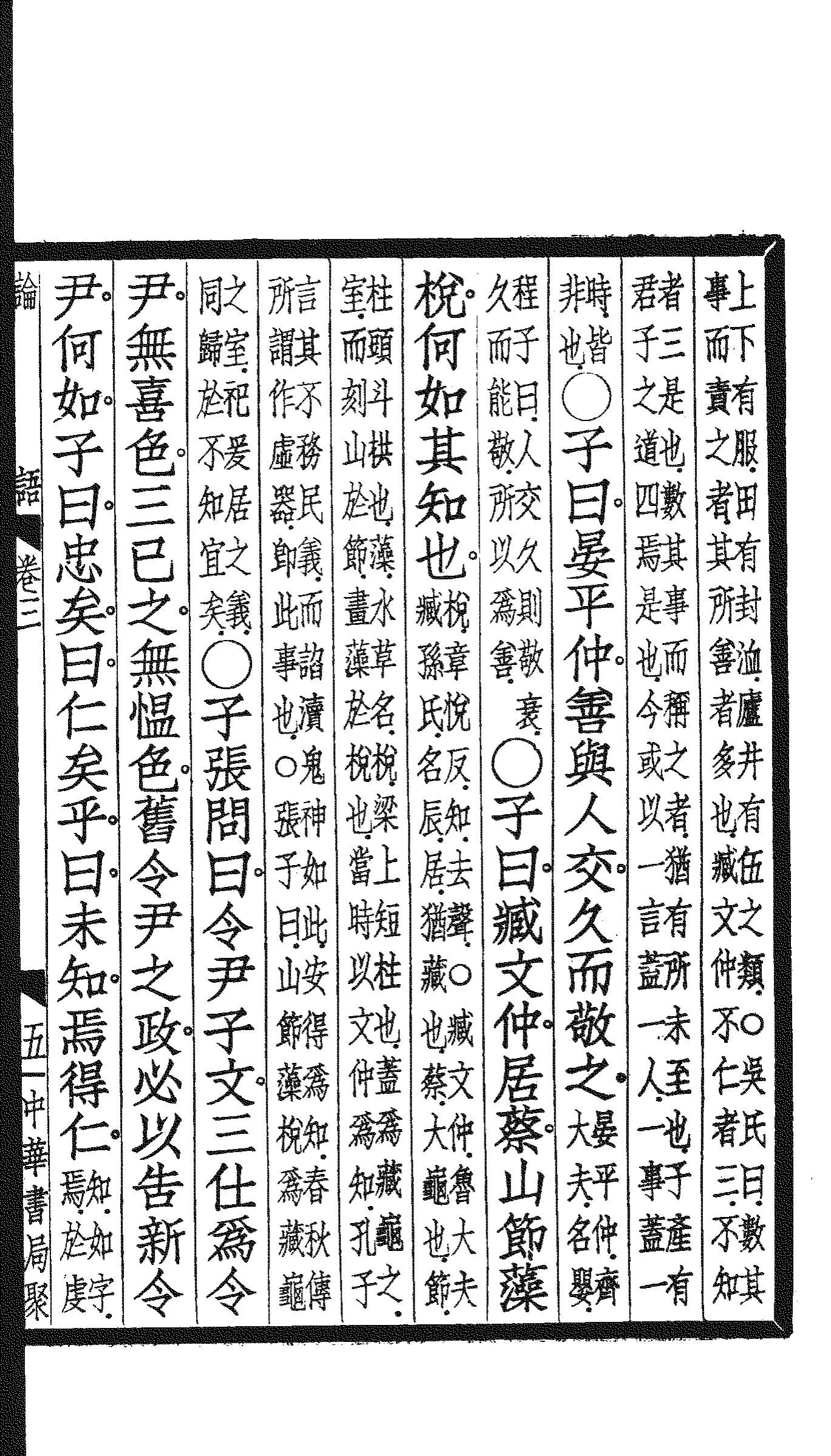
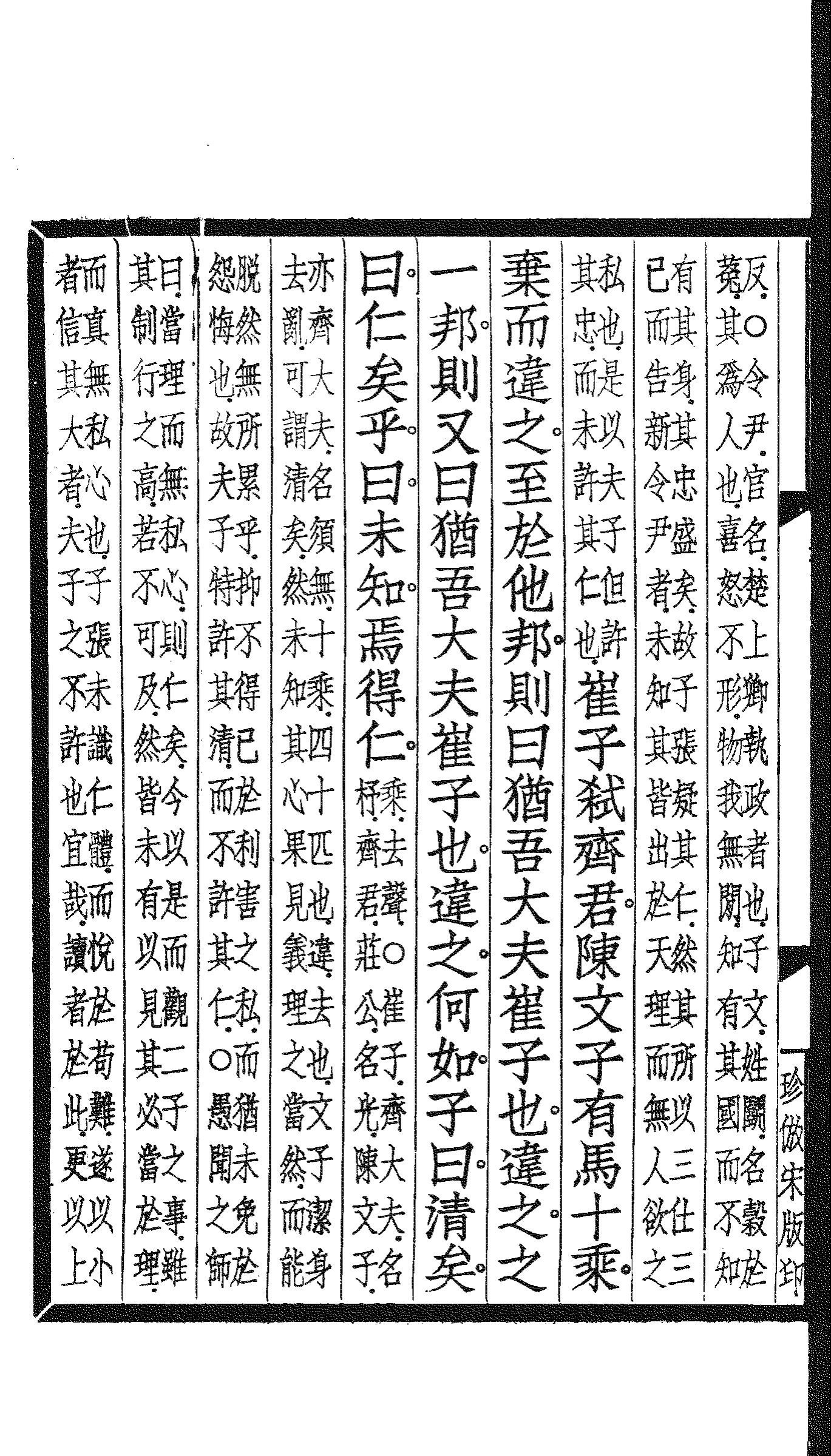
| “令尹,官名,楚上卿执政者也。子文,姓鬬,名穀於菟。其为人也,喜怒不形……是以夫子但许其忠,而未许其仁也” | Zhu Xi's commentary | page 70 |
| “崔子,齐大夫,名杼……故夫子特许其清,而不许其仁” | Zhu Xi's commentary | page 70 |
| “愚闻之师曰:当理而无私心,则仁矣。今以是而观二子之事……夫子之不许也宜哉” | Zhu Xi's commentary | page 70 |
| “今以他书考之,子文之相楚,所谋者无非僭王猾夏之事;文子之仕齐,既失正君讨贼之义,又不数岁而复反于齐焉,则其不仁亦可见矣” | Zhu Xi's commentary | page 71 |
音Pronunciation
| Character | In the line | Read as |
|---|---|---|
| 尹 | 令尹 | yǐn |
| 已 | 三已之 | yǐ |
| 愠 | 无愠色 | yùn |
| 焉 | 焉得仁 | yān |
| 弑 | 崔子弑齐君 | shì |
| 乘 | 十乘 | shèng |
页Pages of the base edition
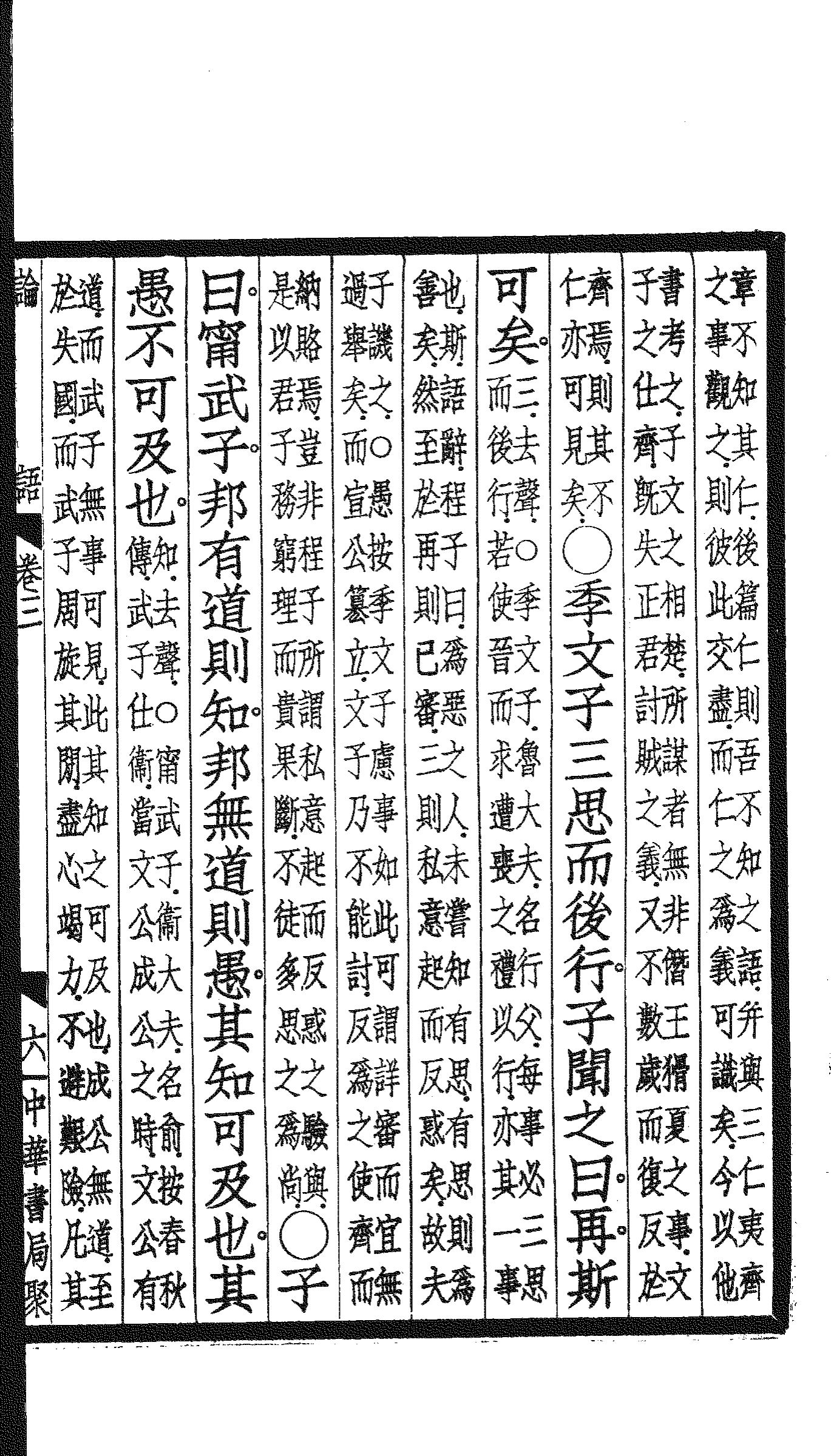
Yikonglu, Analects 公冶长第五 5.18 “Not even this counts as ren?”, https://yikonglu.com/en/lunyu/gong-ye-chang/18.html, version 2026-11-05.Last checked: 2026-11-05. Changes are logged on theerrata page.
Found an error in this chapter? Email us; once checked, it goes on the errata page under your username: