 一孔录
子曰:伯夷、叔齐不念旧恶,怨是用希。The Master said: Bo Yi and Shu Qi did not keep old wrongs in mind, and so resentment was rare.
Tap any sentence of the original to copy it with its source.
白Plain Chinese
孔子说:伯夷、叔齐不记着人家从前的过错,所以别人对他们也就少有怨恨。
A plain modern-Chinese rendering following Yikonglu's reading.
常The common reading
Bo Yi and Shu Qi were so high-minded and aloof — why did no one resent them?
注Key words in the commentary
“怨是用希” — “shi yong” means therefore, “xi” means few; “浼” is read měi, to soil; in “所恶” the “恶” is read wù.
家What other commentators say
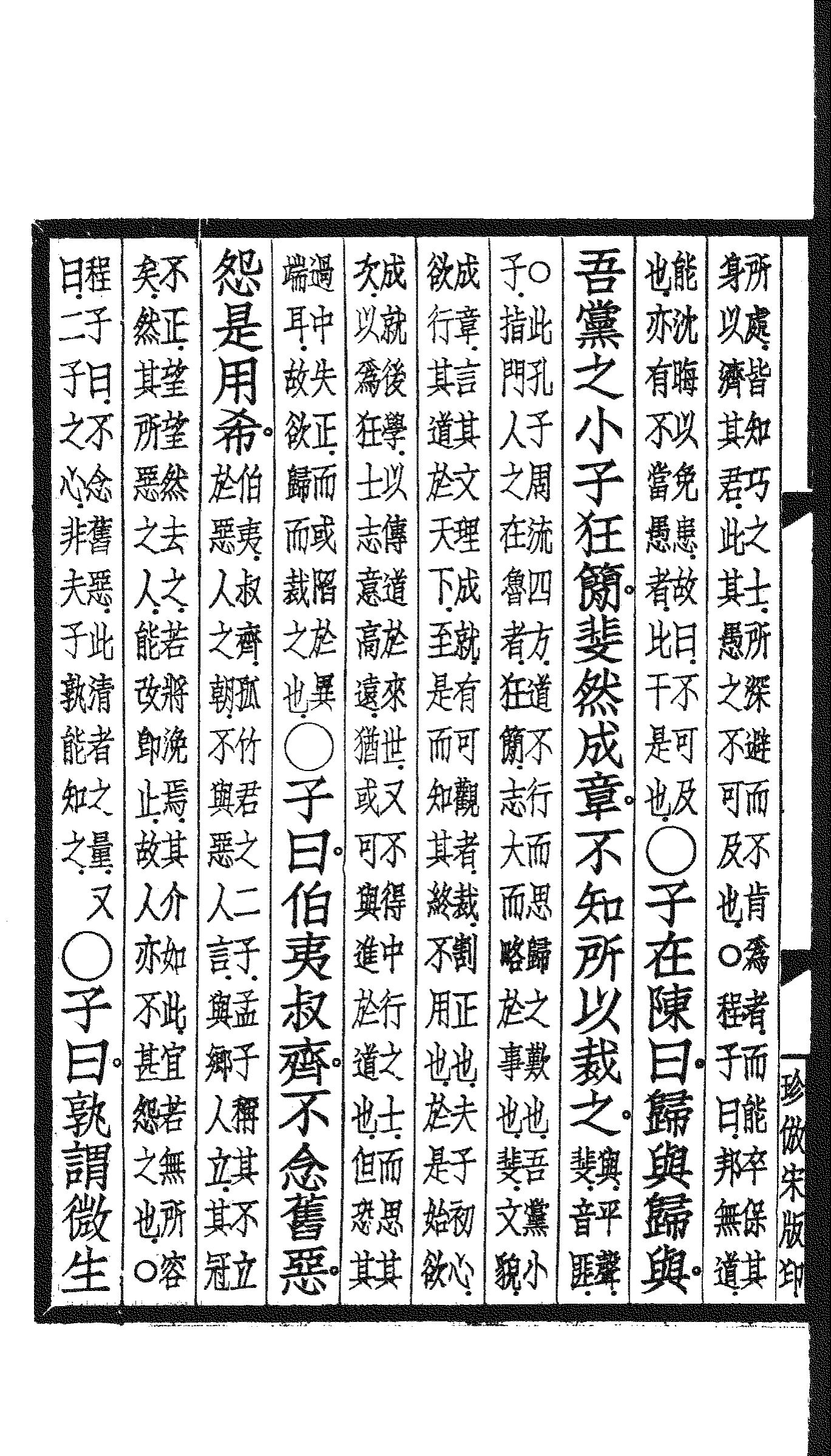
Zhu Xi cites Mencius: “不立于恶人之朝,不与恶人言……望望然去之,若将浼焉。其介如此,宜若无所容矣” — they would not stand at a bad man's court nor speak with a bad man, and left in haste as if he would soil them; so fastidious, you would think no one could live with them; “然其所恶之人,能改即止,故人亦不甚怨之也” — yet once those they disliked mended their ways they stopped, so people did not much resent them. He cites Master Cheng: “不念旧恶,此清者之量” — not keeping old wrongs in mind is the magnanimity of the pure; “二子之心,非夫子孰能知之” — who but the Master could know the hearts of these two?
读How Yikonglu reads it
So fastidious they seemed to tolerate no one, yet they stopped once a person changed, so few resented them; the measure of the pure is not keeping old accounts. Today: the neighbour you once quarrelled with apologised, and you still nod to each other on the stairs.
家Other commentaries
Our base text is Zhu Xi's Collected Commentaries (above). Here are other commentaries side by side: for old commentaries, the first line of the sub-commentary with a link to the woodblock scan; for modern editions, one short quoted translation for comparison. The “compared with Zhu Xi” notes are written by Yikonglu, not quoted.
皇侃《论语义疏》Liang dynasty · 1750 Japanese woodblock edition · juan 三
“此美夷齊之德也。”……
Compared with Zhu Xi
| Commentary | Point | Relation | Confidence | Note |
|---|---|---|---|---|
| 钱穆《论语新解》 | 怨 | differs | fairly sure | 钱谓伯夷叔齐自己不怨、心无滞碍;朱谓他人因二子不念旧恶而少怨二子。 |
核Check every citation
Every commentary line quoted in the video: the original wording, who said it, and the page in the base edition. “Paraphrase” marks our summary, not the commentator's words. About this edition
| Quoted text | Source | Page |
|---|---|---|
| “伯夷、叔齐,孤竹君之二子。孟子称其不立于恶人之朝,不与恶人言。与乡人立,其冠不正,望望然去之,若将浼焉。其介如此,宜若无所容矣” | Zhu Xi's commentary | page 72 |
| “然其所恶之人,能改即止,故人亦不甚怨之也。程子曰:不念旧恶,此清者之量。又曰:二子之心,非夫子孰能知之” | 朱注;朱注引程子 | page 72 |
音Pronunciation
| Character | In the line | Read as |
|---|---|---|
| 恶 | 旧恶、恶人 | è |
页Pages of the base edition
Yikonglu, Analects 公冶长第五 5.22 “Bo Yi and Shu Qi were so aloof — why did no one resent them?”, https://yikonglu.com/en/lunyu/gong-ye-chang/22.html, version 2026-11-05.Last checked: 2026-11-05. Changes are logged on theerrata page.
Found an error in this chapter? Email us; once checked, it goes on the errata page under your username: