 一孔录
子曰:雍也可使南面。仲弓问子桑伯子。子曰:可也简。仲弓曰:居敬而行简,以临其民,不亦可乎?居简而行简,无乃大简乎?子曰:雍之言然。The Master said: Yong could be given the seat facing south. Zhonggong asked about Zisang Bozi. The Master said: He will do; he is simple. Zhonggong said: To dwell in reverence and act simply in governing the people — is that not acceptable? But to dwell in simplicity and act simply — is that not too simple? The Master said: Yong's words are right.
Tap any sentence of the original to copy it with its source.
白Plain Chinese
孔子说:冉雍呀,是可以坐南面、主一方之政的人。仲弓问子桑伯子为人如何。孔子说:还可以,他行事简省。仲弓说:自己存心恭敬,办事简省,用这样的态度来面对百姓,不也行吗?要是存心随便,办事又简省,岂不是太简了?孔子说:冉雍的话对。
A plain modern-Chinese rendering following Yikonglu's reading.
常The common reading
Why can affairs be handled simply, but the heart must not be simple?
注Key words in the commentary
“南面者,人君听治之位” — facing south is the ruler's seat for hearing government; “可者,仅可而有所未尽之辞。简者,不烦之谓” — “will do” means barely acceptable, with something lacking; “simple” means not fussy; the “大” of “大简” is read tài; the “衣” of “不衣冠而处” is in the departing tone, to wear. Zisang Bozi, Hu suspects, is the Zisang Hu mentioned in Zhuangzi.
家What other commentators say
Zhu Xi: “言自处以敬,则中有主而自治严……岂不失之大简,而无法度之可守乎” — if one holds oneself in reverence, there is a master within and self-discipline is strict … otherwise is it not too simple, with no rules to keep? He cites the Kongzi Jiayu: Bozi “不衣冠而处,夫子讥其欲同人道于牛马” — lived without proper clothes and cap; the Master mocked him for wanting to make human ways like those of oxen and horses; and Master Cheng: “居敬则心中无物,故所行自简;居简则先有心于简,而多一简字矣,故曰大简” — dwelling in reverence, the heart holds nothing extra, so action is naturally simple; dwelling in simplicity, one first sets one's mind on simplicity, adding one more “simple”, hence “too simple”.
读How Yikonglu reads it
Two kinds of “simple”: one with a master within, reverent everywhere, so affairs are naturally uncluttered; the other first intends to save effort and lets even oneself off, which becomes too simple. Confucius grants Zhonggong the south-facing seat; Zhonggong uses the question about Bozi to draw the distinction, and Confucius says “Yong's words are right.” Today: the team with the fewest rules is the one whose leader is the most punctual and orderly.
家Other commentaries
Our base text is Zhu Xi's Collected Commentaries (above). Here are other commentaries side by side: for old commentaries, the first line of the sub-commentary with a link to the woodblock scan; for modern editions, one short quoted translation for comparison. The “compared with Zhu Xi” notes are written by Yikonglu, not quoted.
皇侃《论语义疏》Liang dynasty · 1750 Japanese woodblock edition · juan 三
“雍,孔子弟子也。”……
Compared with Zhu Xi
| Commentary | Point | Relation | Confidence | Note |
|---|---|---|---|---|
| 杨伯峻《论语译注》 | 南面 | word sense | settled | 杨6.1:南面:杨泛指天子诸侯卿大夫作长官之位;朱专以人君听治之位说明仲弓有人君度,指称范围不同;杨6.2:简:杨明确取朱说事不烦民不扰;子桑伯子身份杨不采子桑户等考定,朱收胡氏疑为子桑户而非确证。 |
| 钱穆《论语新解》 | same | fairly sure | 同以南面指人君位、可为仅可未尽、简为不烦;均分居敬行简与居简行简,肯定自治严而不扰民。 |
核Check every citation
Every commentary line quoted in the video: the original wording, who said it, and the page in the base edition. “Paraphrase” marks our summary, not the commentator's words. About this edition
| Quoted text | Source | Page |
|---|---|---|
| “南面者,人君听治之位。言仲弓宽洪简重,有人君之度也” | Zhu Xi's commentary | page 75 |
| “子桑伯子,鲁人,胡氏以为疑即庄周所称子桑户者是也。仲弓以夫子许己南面,故问伯子如何。可者,仅可而有所未尽之辞。简者,不烦之谓” | Zhu Xi's commentary | page 75 |
| “言自处以敬,则中有主而自治严……岂不失之大简,而无法度之可守乎” | Zhu Xi's commentary | page 76 |
| “家语记伯子不衣冠而处,夫子讥其欲同人道于牛马。然则伯子盖大简者,而仲弓疑夫子之过许与” | Zhu Xi's commentary | page 76 |
| “仲弓盖未喻夫子可字之意……故夫子然之。程子曰:子桑伯子之简……可谓得其旨矣” | 朱注;朱注引程子 | page 76 |
| “又曰:居敬则心中无物,故所行自简;居简则先有心于简,而多一简字矣,故曰大简” | Cheng Yi, quoted by Zhu Xi | page 76 |
音Pronunciation
| Character | In the line | Read as |
|---|---|---|
| 雍 | 雍也、雍之言然 | yōng |
| 大 | 无乃大简乎、失之大简、大简者、故曰大简 | tài |
页Pages of the base edition
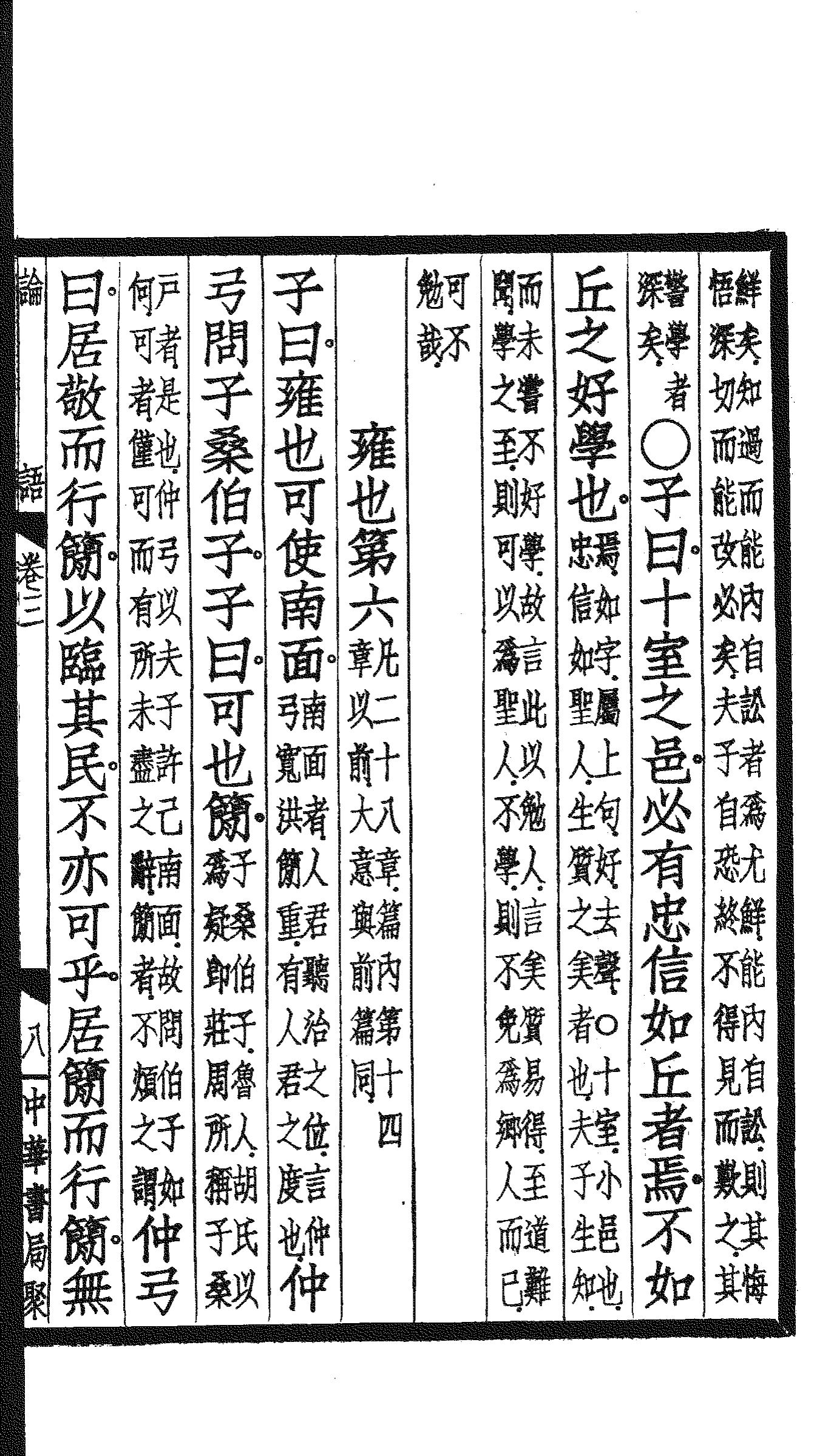
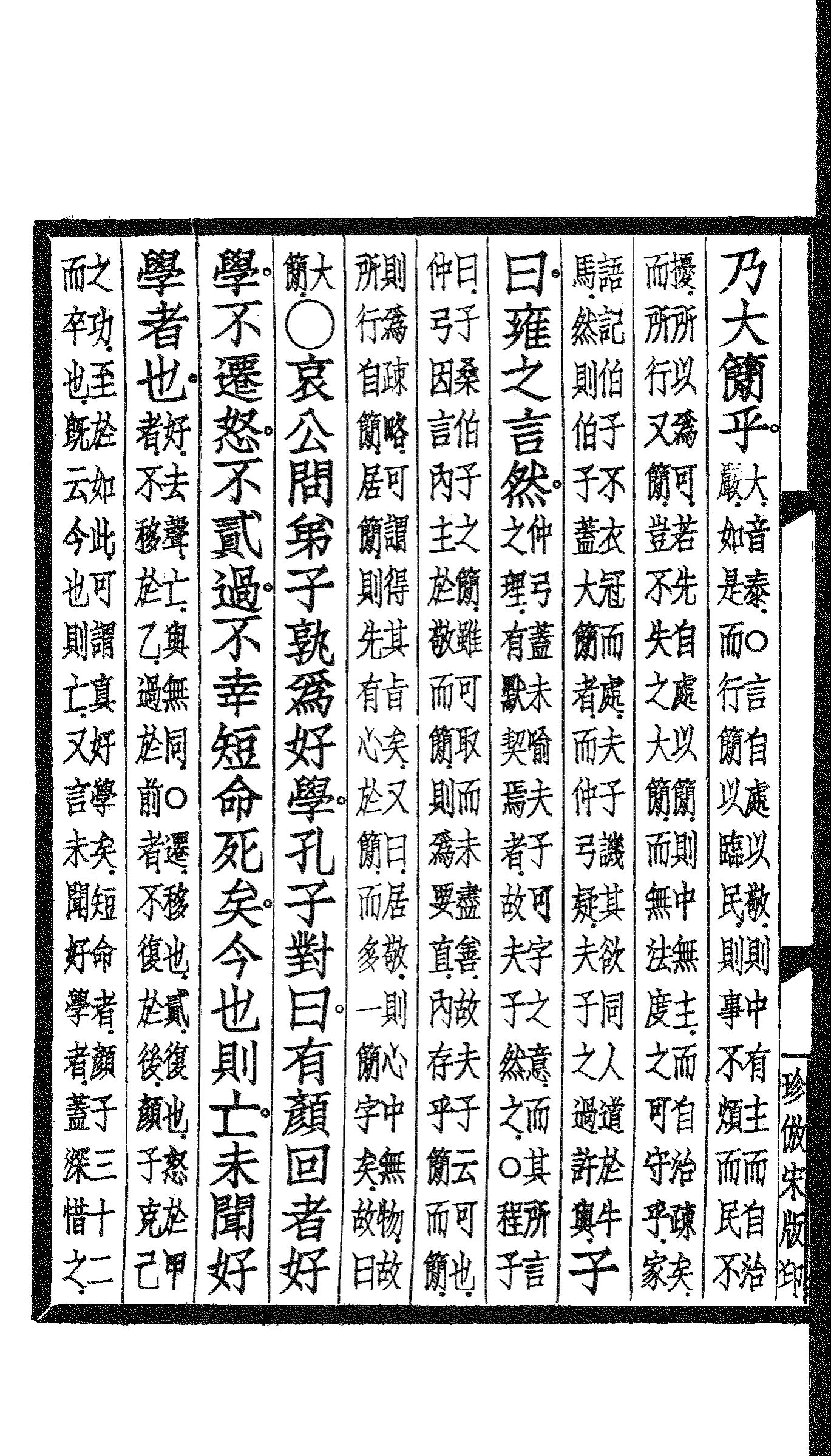
Yikonglu, Analects 雍也第六 6.1 “Why can one's affairs be simple but not one's heart?”, https://yikonglu.com/en/lunyu/yong-ye/1.html, version 2026-11-05.Last checked: 2026-11-05. Changes are logged on theerrata page.
Found an error in this chapter? Email us; once checked, it goes on the errata page under your username: 
