 一孔录
哀公问:弟子孰为好学?孔子对曰:有颜回者好学,不迁怒,不贰过。不幸短命死矣!今也则亡,未闻好学者也。Duke Ai asked: Which of your disciples loves learning? Confucius replied: There was Yan Hui who loved learning. He did not shift his anger, and did not repeat a fault. Unfortunately his life was short and he died. Now there is none; I have not heard of anyone who loves learning.
Tap any sentence of the original to copy it with its source.
白Plain Chinese
哀公问孔子:弟子当中哪个称得上好学?孔子回答:有个叫颜回的好学,生气不迁到别人身上,同样的过错不犯第二回。可惜命短,已经死了!如今再没有这样的人,没听说还有谁好学。
A plain modern-Chinese rendering following Yikonglu's reading.
常The common reading
Why does Confucius' “love of learning” not mean reading a lot?
注Key words in the commentary
“好” in the departing tone; “亡,与无同” — “wang” is the same as “none”; “迁,移也。贰,复也” — “qian” is to move, “er” is to repeat; Yan Hui “三十二而卒” — died at thirty-two (as Zhu Xi records).
家What other commentators say
Master Cheng: “颜子之怒,在物不在己,故不迁。有不善未尝不知,知之未尝复行,不贰过也” — Yanzi's anger lay in the thing, not in himself, so it did not shift; whenever there was something not good he always knew it, and having known it never did it again: that is not repeating a fault; “喜怒在事,则理之当喜怒者也,不在血气则不迁” — when joy and anger lie in the matter, they are what principle calls for; not lying in the blood and breath, they do not shift; “如鉴之照物,妍媸在彼,随物应之而已” — like a mirror reflecting things, beauty and ugliness are in them; it simply responds to each. Master Zhang: “慊于己者,不使萌于再” — what dissatisfies oneself is not allowed to sprout a second time. Master Cheng on learning: “学以至乎圣人之道” — learning is to reach the Way of the sage; “约其情使合于中,正其心,养其性” — restrain the feelings to accord with the mean, rectify the heart, nourish the nature; and he ends mocking “今人乃谓圣本生知,非学可至,而所以为学者,不过记诵文辞之间,其亦异乎颜子之学矣” — people now say sagehood is innate and cannot be reached by learning, and their learning is nothing but memorising and composing — far from Yanzi's learning.
读How Yikonglu reads it
Duke Ai asks about learning; Confucius answers with two matters of self-cultivation. Anger arises with the matter and stops when it is over, not moved on to others; a fault made once is known and not made again. Saying that since Yan Hui's death he has heard of no one who loves learning shows that love of learning lies in governing one's feelings, not in reading much. Today: scolded at work, he still crouches down at the door to tie his child's shoelaces properly.
家Other commentaries
Our base text is Zhu Xi's Collected Commentaries (above). Here are other commentaries side by side: for old commentaries, the first line of the sub-commentary with a link to the woodblock scan; for modern editions, one short quoted translation for comparison. The “compared with Zhu Xi” notes are written by Yikonglu, not quoted.
皇侃《论语义疏》Liang dynasty · 1750 Japanese woodblock edition · juan 三
“云哀公問孔子云:諸弟子之中誰為好學者?”……
Compared with Zhu Xi
| Commentary | Point | Relation | Confidence | Note |
|---|---|---|---|---|
| 钱穆《论语新解》 | same | fairly sure | 同以不迁怒为怒甲不移乙、不贰过为前过不再犯。钱重已见行为,不主取把颜子之过仅说成尚未萌动的念虑微差;朱兼引此层说。 |
核Check every citation
Every commentary line quoted in the video: the original wording, who said it, and the page in the base edition. “Paraphrase” marks our summary, not the commentator's words. About this edition
| Quoted text | Source | Page |
|---|---|---|
| “好,去声。亡,与无同。迁,移也。贰,复也……又以见真好学者之难得也” | Zhu Xi's commentary | page 76 |
| “程子曰:颜子之怒,在物不在己,故不迁。有不善未尝不知,知之未尝复行,不贰过也” | Cheng Yi, quoted by Zhu Xi | page 77 |
| “又曰:喜怒在事……何迁之有?又曰:如颜子地位……便更不萌作。张子曰:慊于己者,不使萌于再” | 朱注引程子、张子 | page 77 |
| “或曰:诗书六艺……其性凿矣” | 朱注引或问、程子 | page 77 |
| “故学者约其情使合于中……则不日而化矣” | 朱注引程子(续) | page 77 |
| “今人乃谓圣本生知,非学可至,而所以为学者,不过记诵文辞之间,其亦异乎颜子之学矣” | 朱注引程子(续) | page 77 |
音Pronunciation
| Character | In the line | Read as |
|---|---|---|
| 好 | 孰为好学、好学、未闻好学、真好学、所好、好之笃 | hào |
| 亡 | 今也则亡 | wú |
页Pages of the base edition
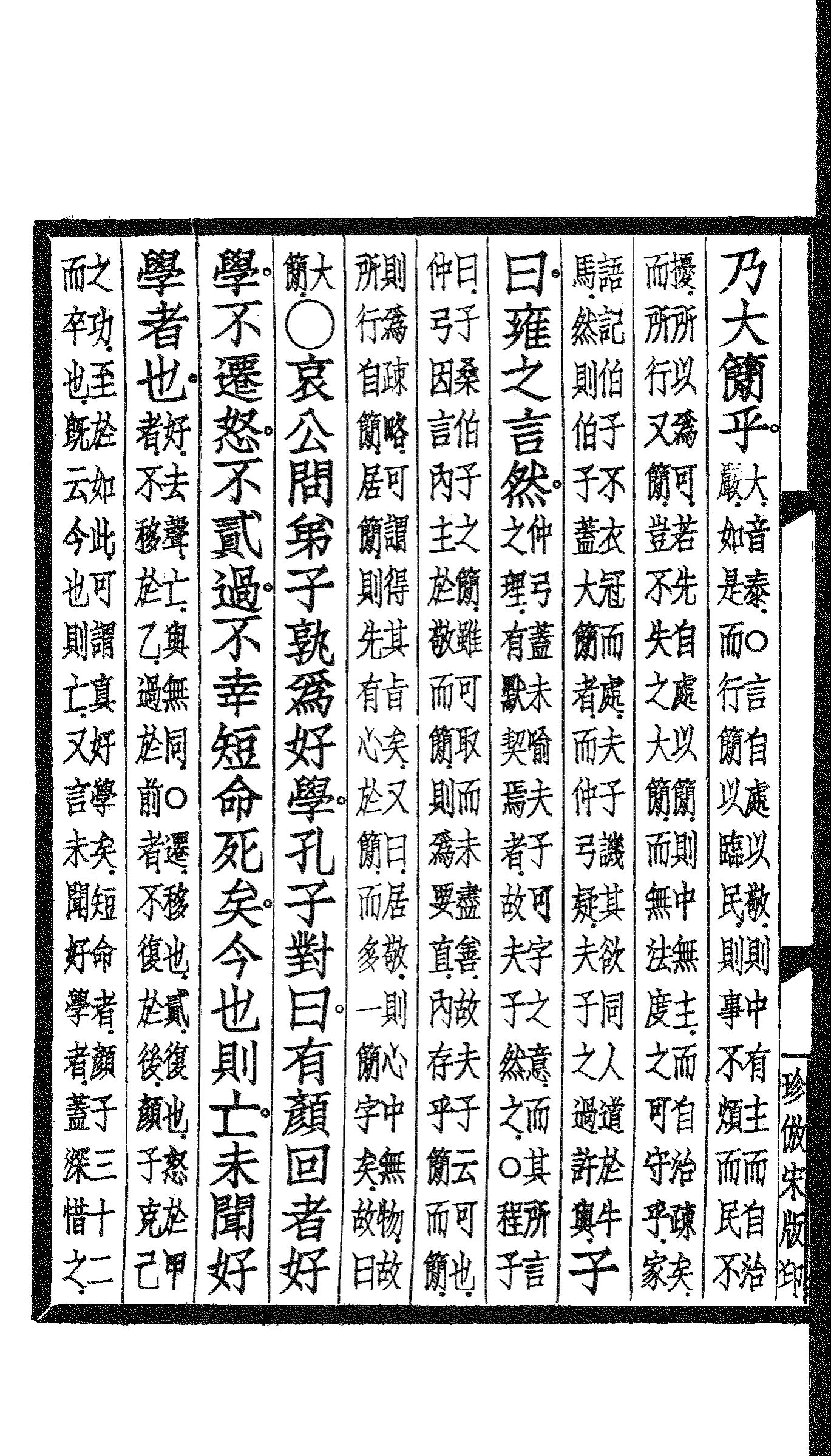
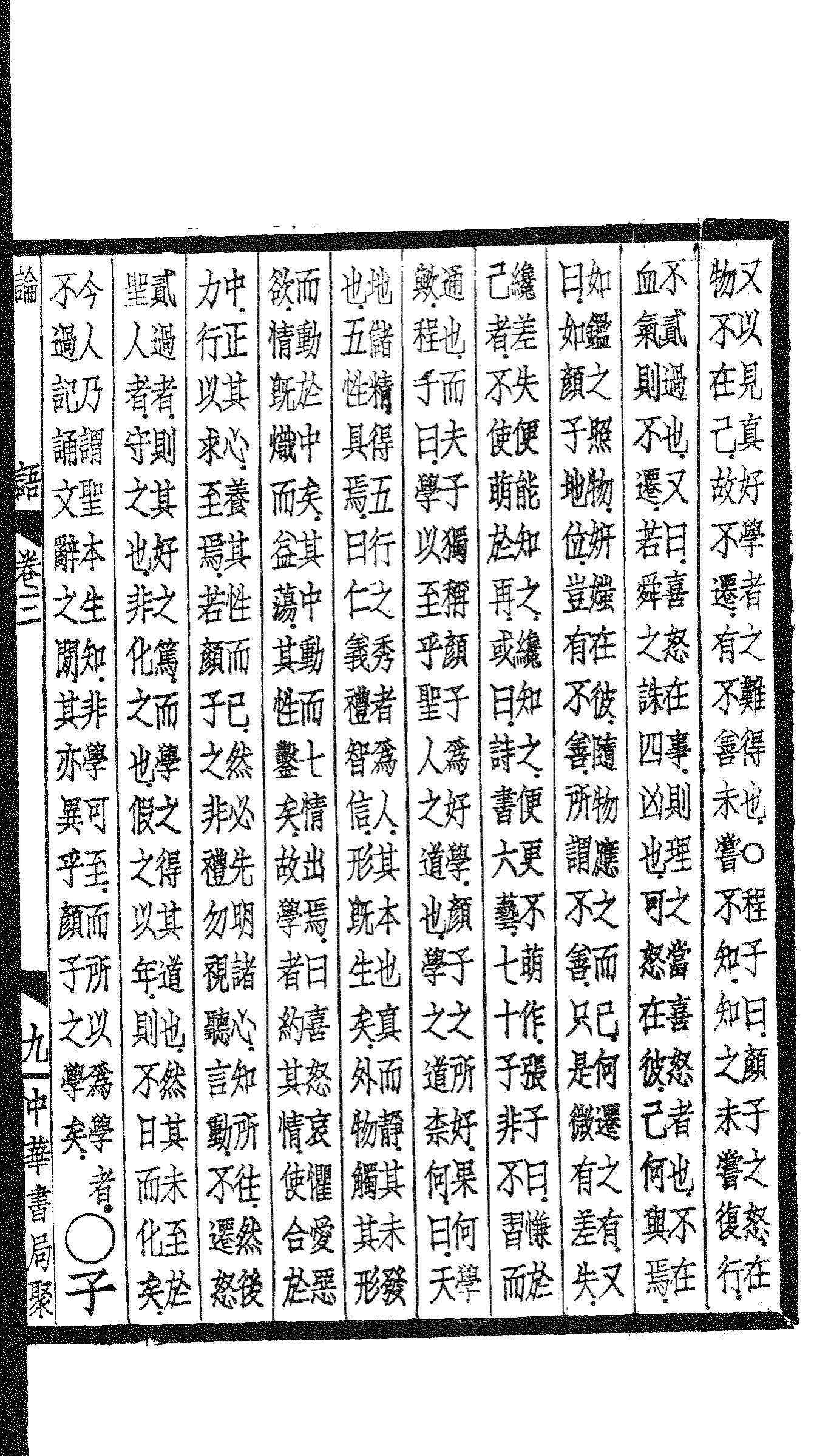
Yikonglu, Analects 雍也第六 6.2 “Why is Confucius' “love of learning” not about reading a lot?”, https://yikonglu.com/en/lunyu/yong-ye/2.html, version 2026-11-05.Last checked: 2026-11-05. Changes are logged on theerrata page.
Found an error in this chapter? Email us; once checked, it goes on the errata page under your username: 
