 一孔录
子曰:孰谓微生高直?或乞醯焉,乞诸其邻而与之。The Master said: Who says Weisheng Gao is upright? Someone asked him for vinegar; he begged it from his neighbour and gave it to them.
Tap any sentence of the original to copy it with its source.
白Plain Chinese
孔子说:哪个说微生高直?有人上门讨一点醋,他自家没有,便去隔壁讨了来,当作自己的给人家。
A plain modern-Chinese rendering following Yikonglu's reading.
常The common reading
He borrowed something on another's behalf — why would that count as not upright?
注Key words in the commentary
“醯” is read xī, vinegar; “乞” is read qǐ; “徇” is read xùn; in “掠美” the “掠” is read lüè.
家What other commentators say
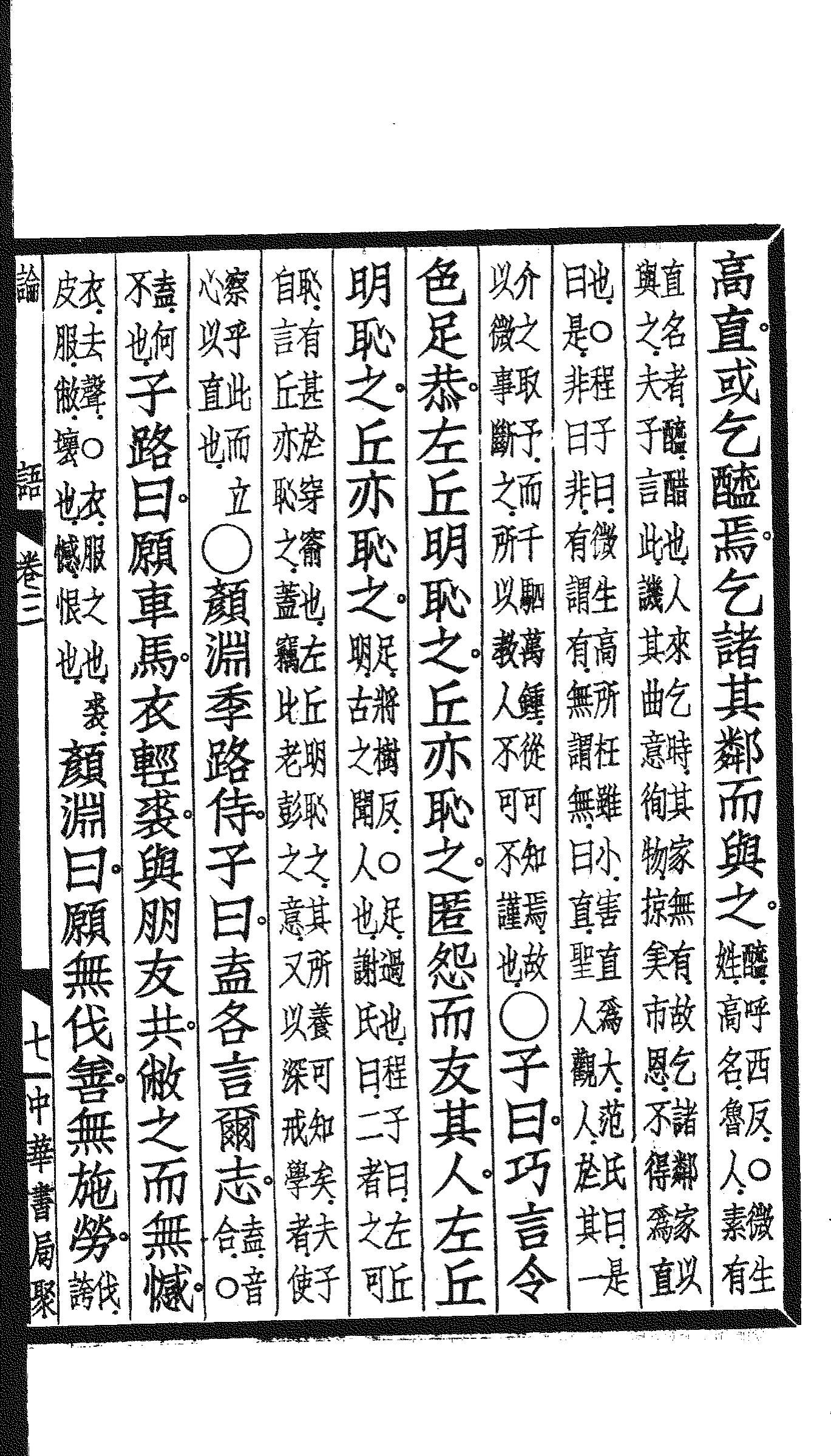
Zhu Xi: “微生姓,高名,鲁人,素有直名者” — surname Weisheng, given name Gao, a man of Lu long reputed upright; “夫子言此,讥其曲意徇物,掠美市恩,不得为直也” — the Master says this to mock him for bending his intent to please others, taking credit and buying goodwill, which cannot be called upright. He cites Master Cheng: “微生高所枉虽小,害直为大” — the bend was small, but the harm to uprightness is great; and Fan: “是曰是,非曰非,有谓有,无谓无,曰直。圣人观人于其一介之取予,而千驷万钟从可知焉” — yes for yes, no for no, have for have, have-not for have-not: that is upright; the sage judges a man by the smallest taking and giving, and from that one knows how he would handle a thousand teams of horses.
读How Yikonglu reads it
Saying “I don't have any” is upright; passing off a borrowed thing as your own is bending to please — a small matter, but Master Cheng says what it harms is uprightness itself. Today: a colleague asks for a charging cable, you borrow one from the next desk and say “Here, use mine.”
家Other commentaries
Our base text is Zhu Xi's Collected Commentaries (above). Here are other commentaries side by side: for old commentaries, the first line of the sub-commentary with a link to the woodblock scan; for modern editions, one short quoted translation for comparison. The “compared with Zhu Xi” notes are written by Yikonglu, not quoted.
皇侃《论语义疏》Liang dynasty · 1750 Japanese woodblock edition · juan 三
“云孰謂微生高直者,于時世人多云微生高用性清直,而孔子譏之,故云孰謂微生高直也。”……
Compared with Zhu Xi
| Commentary | Point | Relation | Confidence | Note |
|---|---|---|---|---|
| 钱穆《论语新解》 | same | fairly sure | 同以无醯不直告、转向邻人乞而与之为曲意徇物市恩,故不足称直;均从小处知人而非以取醯本身为恶。 |
核Check every citation
Every commentary line quoted in the video: the original wording, who said it, and the page in the base edition. “Paraphrase” marks our summary, not the commentator's words. About this edition
| Quoted text | Source | Page |
|---|---|---|
| “微生姓,高名,鲁人,素有直名者。醯,醋也。人来乞时,其家无有,故乞诸邻家以与之。夫子言此,讥其曲意徇物,掠美市恩,不得为直也” | Zhu Xi's commentary | page 73 |
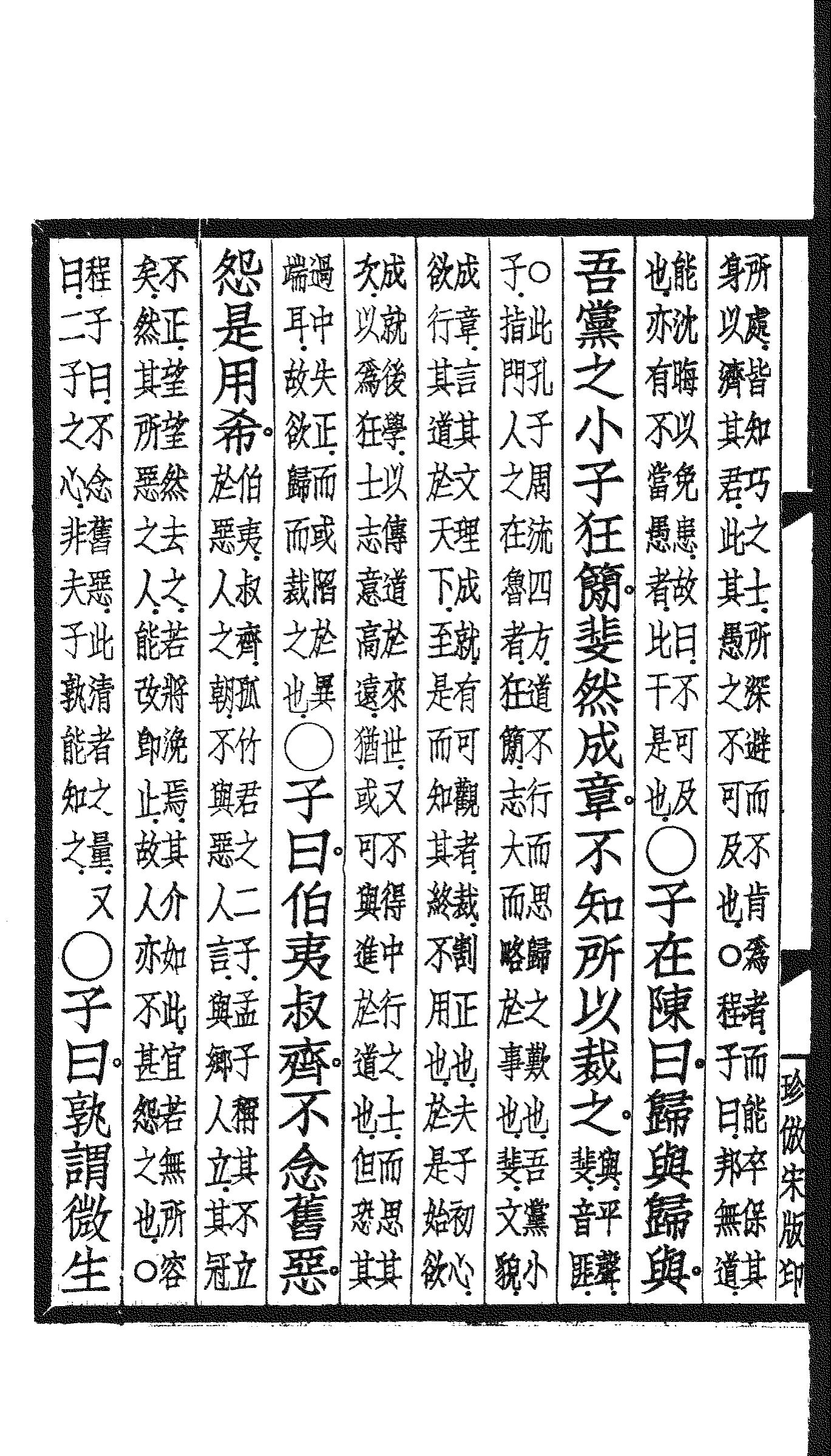
| “程子曰:微生高所枉虽小,害直为大。范氏曰:是曰是,非曰非,有谓有,无谓无,曰直。圣人观人于其一介之取予,而千驷万钟从可知焉。故以微事断之,所以教人不可不谨也” | 朱注引程子、范氏 | page 73 |
音Pronunciation
| Character | In the line | Read as |
|---|---|---|
| 醯 | 乞醯、醯醋也 | xī |
| 乞 | 乞醯、乞诸其邻 | qǐ |
页Pages of the base edition
Yikonglu, Analects 公冶长第五 5.23 “Why is borrowing something for a neighbour not upright?”, https://yikonglu.com/en/lunyu/gong-ye-chang/23.html, version 2026-11-05.Last checked: 2026-11-05. Changes are logged on theerrata page.
Found an error in this chapter? Email us; once checked, it goes on the errata page under your username: 
