 一孔录
颜渊、季路侍。子曰:盍各言尔志?子路曰:愿车马、衣轻裘,与朋友共。敝之而无憾。颜渊曰:愿无伐善,无施劳。子路曰:愿闻子之志。子曰:老者安之,朋友信之,少者怀之。Yan Yuan and Ji Lu were attending. The Master said: Why not each tell me your wishes? Zilu said: I would like to share my carriage, horses, clothes and light furs with my friends, and feel no regret if they wear them out. Yan Yuan said: I would like not to boast of my good points, nor make a show of my merits. Zilu said: We would like to hear your wishes, Master. The Master said: That the old be at ease, friends have trust, and the young be cherished.
Tap any sentence of the original to copy it with its source.
白Plain Chinese
颜渊、子路陪在孔子身边。孔子说:你们何不各自谈谈志向?子路说:我愿把车马、轻暖的皮袍拿出来和朋友一起用,用坏了也不心疼。颜渊说:我愿不夸耀自己的长处,不张扬自己的功劳。子路说:想听听老师的心愿。孔子说:让老人得到安顿,让朋友能够信赖,让年少的得到关怀。
A plain modern-Chinese rendering following Yikonglu's reading.
常The common reading
Why is Confucius' wish greater than those of Zilu and Yan Yuan?
注Key words in the commentary
“盍” — why not; “衣” is read in the departing tone, to wear; “敝” — worn out; “伐” — to boast; “施” — to make a show of. Zhu Xi gives two readings of “劳”: merit (as in “劳而不伐”) or toilsome tasks (not wishing to impose them on others), and says “亦通” — either works.
家What other commentators say
Zhu Xi: “老者养之以安,朋友与之以信,少者怀之以恩” — care for the old so they are at ease, deal with friends in good faith, cherish the young with kindness; another reading, “安之,安我也;信之,信我也;怀之,怀我也。亦通” — the old are at ease with me, friends trust me, the young turn to me, also works. He cites Master Cheng: “夫子安仁,颜渊不违仁,子路求仁” — the Master rests in ren, Yan Yuan does not depart from ren, Zilu seeks ren; “子路、颜渊、孔子之志,皆与物共者也,但有小大之差尔” — all three wishes are about sharing with others, differing only in scale; and “羁靮以御马而不以制牛……须要识得圣贤气象” — bridles are for horses, not oxen... one must learn to recognise the bearing of sages and worthies.
读How Yikonglu reads it
All three share with others, differing in scale: Zilu shares carriage and horses with friends, Yan Yuan does not boast or show off, Confucius lets each find their place, like heaven and earth nurturing without a trace. Today: the auntie in the housing block whom the elderly trust with their keys and to whose door the children run first after school.
家Other commentaries
Our base text is Zhu Xi's Collected Commentaries (above). Here are other commentaries side by side: for old commentaries, the first line of the sub-commentary with a link to the woodblock scan; for modern editions, one short quoted translation for comparison. The “compared with Zhu Xi” notes are written by Yikonglu, not quoted.
皇侃《论语义疏》Liang dynasty · 1750 Japanese woodblock edition · juan 三
“云顔淵季路侍者,季路即子路也。”……
Compared with Zhu Xi
| Commentary | Point | Relation | Confidence | Note |
|---|---|---|---|---|
| 钱穆《论语新解》 | 车马衣裘 | differs | fairly sure | 钱取共敝之相连,并去轻字;朱在共字断句。伐善施劳主训相同,老安友信少怀朱兼存两方向解释。 |
核Check every citation
Every commentary line quoted in the video: the original wording, who said it, and the page in the base edition. “Paraphrase” marks our summary, not the commentator's words. About this edition
| Quoted text | Source | Page |
|---|---|---|
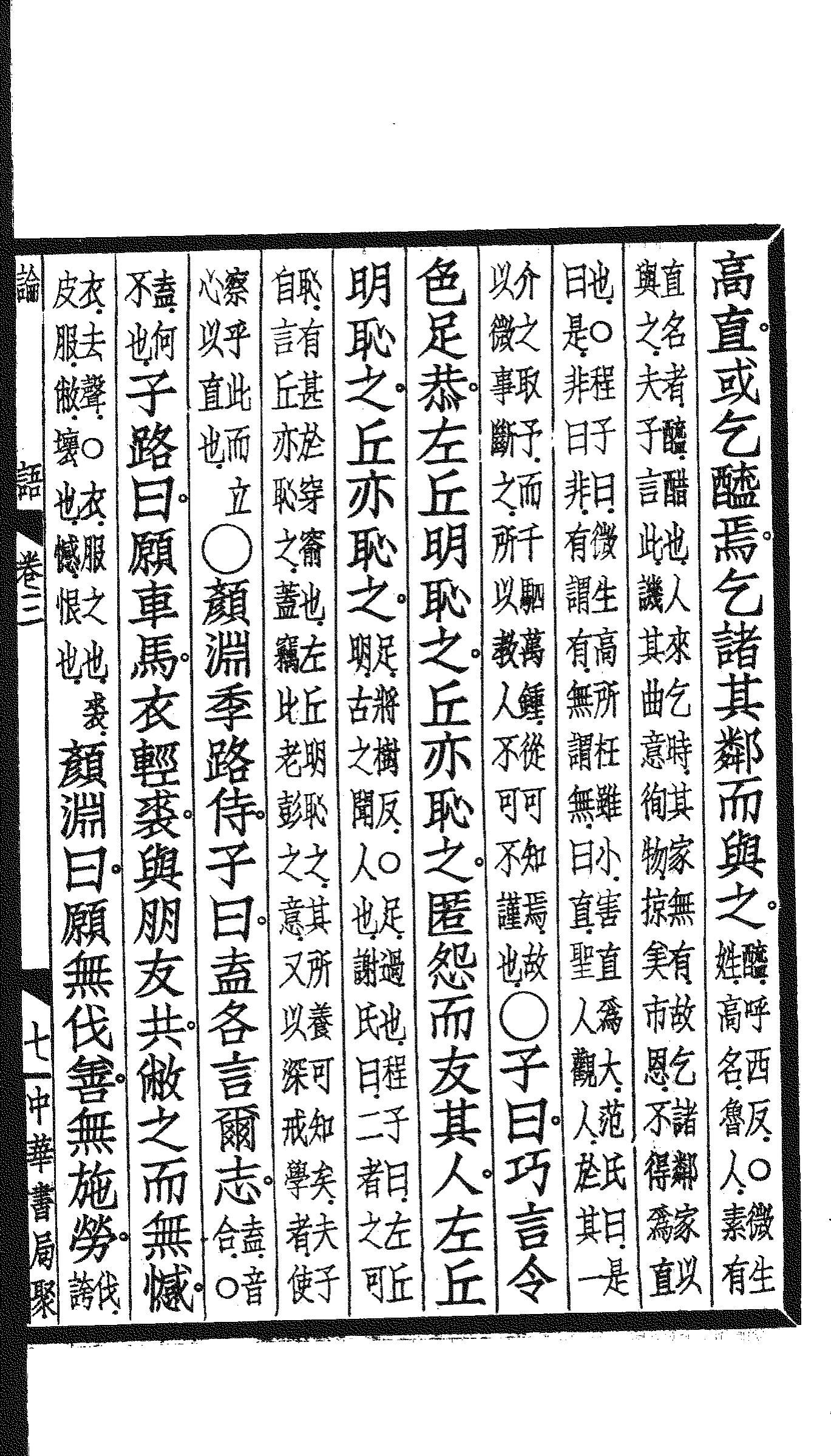
| “盍,何不也。衣,服之也。裘,皮服。敝,坏也。憾,恨也。伐,夸也。善,谓有能。施,亦张大之意。劳,谓有功,易曰劳而不伐是也。或曰:劳,劳事也。劳事非己所欲,故亦不欲施之于人。亦通” | Zhu Xi's commentary | page 73 |
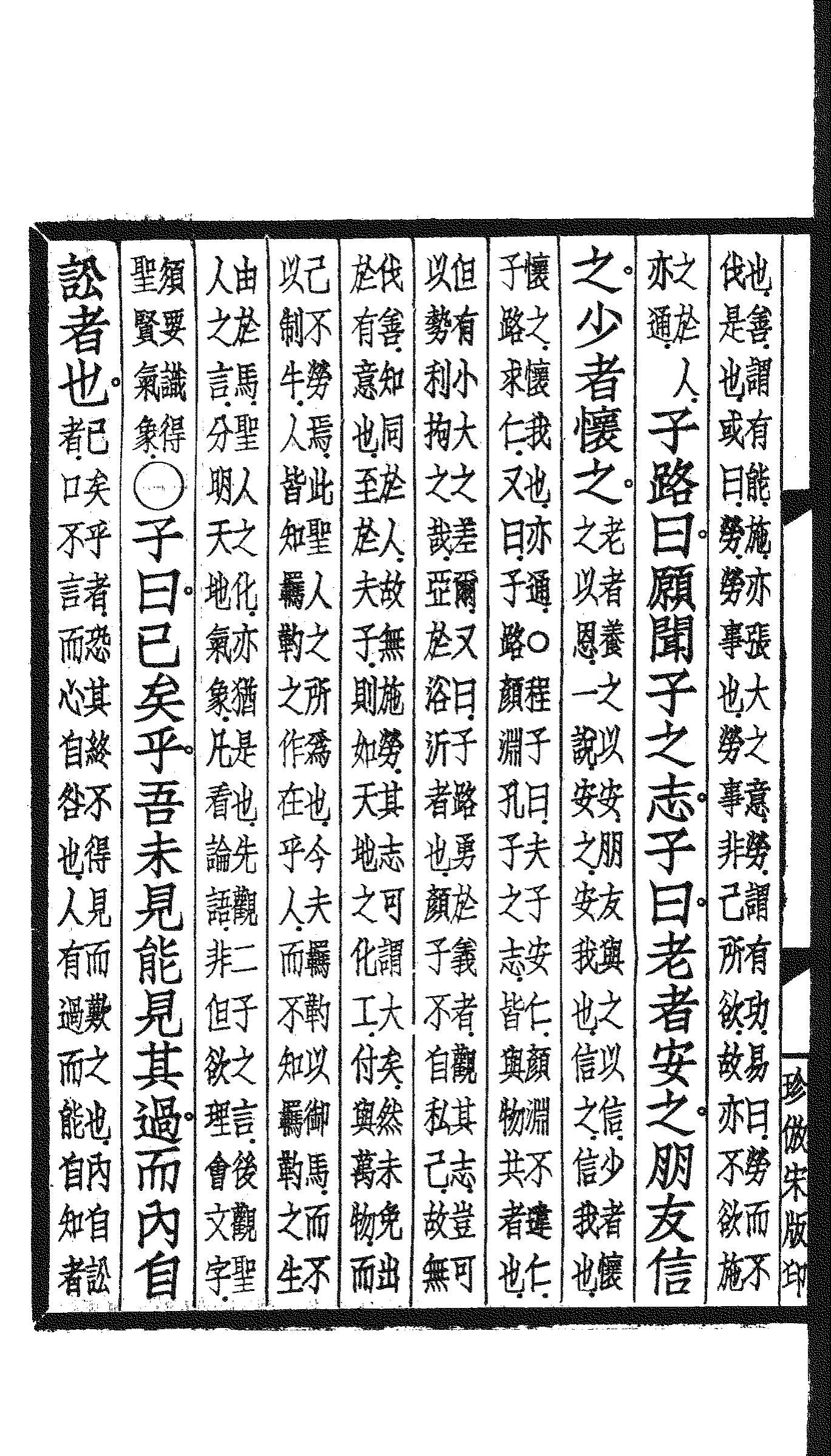
| “老者养之以安,朋友与之以信,少者怀之以恩。一说:安之,安我也;信之,信我也;怀之,怀我也。亦通” | Zhu Xi's commentary | page 74 |
| “程子曰:夫子安仁,颜渊不违仁,子路求仁。又曰:子路、颜渊、孔子之志,皆与物共者也,但有小大之差尔” | Cheng Yi, quoted by Zhu Xi | page 74 |
| “又曰:子路勇于义者……此圣人之所为也” | Cheng Yi, quoted by Zhu Xi | page 74 |
| “今夫羁靮以御马而不以制牛……须要识得圣贤气象” | 朱注引程子(续) | page 74 |
音Pronunciation
| Character | In the line | Read as |
|---|---|---|
| 盍 | 盍各言尔志、盍何不也 | hé |
| 衣 | 衣轻裘、衣服之也 | yì |
| 裘 | 轻裘 | qiú |
| 敝 | 敝之 | bì |
| 憾 | 无憾 | hàn |
| 施 | 无施劳、施之于人 | shī |
| 少 | 少者怀之 | shào |
页Pages of the base edition
Yikonglu, Analects 公冶长第五 5.25 “Why was Confucius' wish greater than Zilu's and Yan Yuan's?”, https://yikonglu.com/en/lunyu/gong-ye-chang/25.html, version 2026-11-05.Last checked: 2026-11-05. Changes are logged on theerrata page.
Found an error in this chapter? Email us; once checked, it goes on the errata page under your username: 
