 一孔录
子曰:已矣乎!吾未见能见其过而内自讼者也。The Master said: It is hopeless! I have yet to see anyone who can see his own faults and bring the charge against himself inwardly.
Tap any sentence of the original to copy it with its source.
白Plain Chinese
孔子说:算了吧!我还没见过能看清自己的过错、又在心里责备自己的人。
A plain modern-Chinese rendering following Yikonglu's reading.
常The common reading
Why is it so hard to see one's own mistakes?
注Key words in the commentary
“讼” originally means to dispute (Shuowen: “讼,争也”); “内自讼” is holding a trial against oneself in one's heart; “咎” is read jiù; “鲜” is read xiǎn, few.
家What other commentators say
Zhu Xi: “已矣乎者,恐其终不得见而叹之也。内自讼者,口不言而心自咎也” — “it is hopeless” is a sigh for fear he will never see such a person; “bringing the charge inwardly” means saying nothing aloud but blaming oneself in the heart; “人有过而能自知者鲜矣,知过而能内自讼者为尤鲜。能内自讼,则其悔悟深切而能改必矣。夫子自恐终不得见而叹之,其警学者深矣” — few people with faults know them; fewer still, knowing them, can arraign themselves inwardly; one who can will repent deeply and surely change; the Master sighs for fear of never seeing it, a deep warning to learners. Zhu Xi cites no other commentator here.
读How Yikonglu reads it
Two levels: knowing one's fault is already rare; knowing it and blaming oneself inwardly is rarer still; only self-arraignment leads to thorough change. Confucius' sigh of “never seen” is a warning to learners. Today: she misreported a figure in a meeting and nobody noticed, and after the meeting she messaged everyone to correct it.
家Other commentaries
Our base text is Zhu Xi's Collected Commentaries (above). Here are other commentaries side by side: for old commentaries, the first line of the sub-commentary with a link to the woodblock scan; for modern editions, one short quoted translation for comparison. The “compared with Zhu Xi” notes are written by Yikonglu, not quoted.
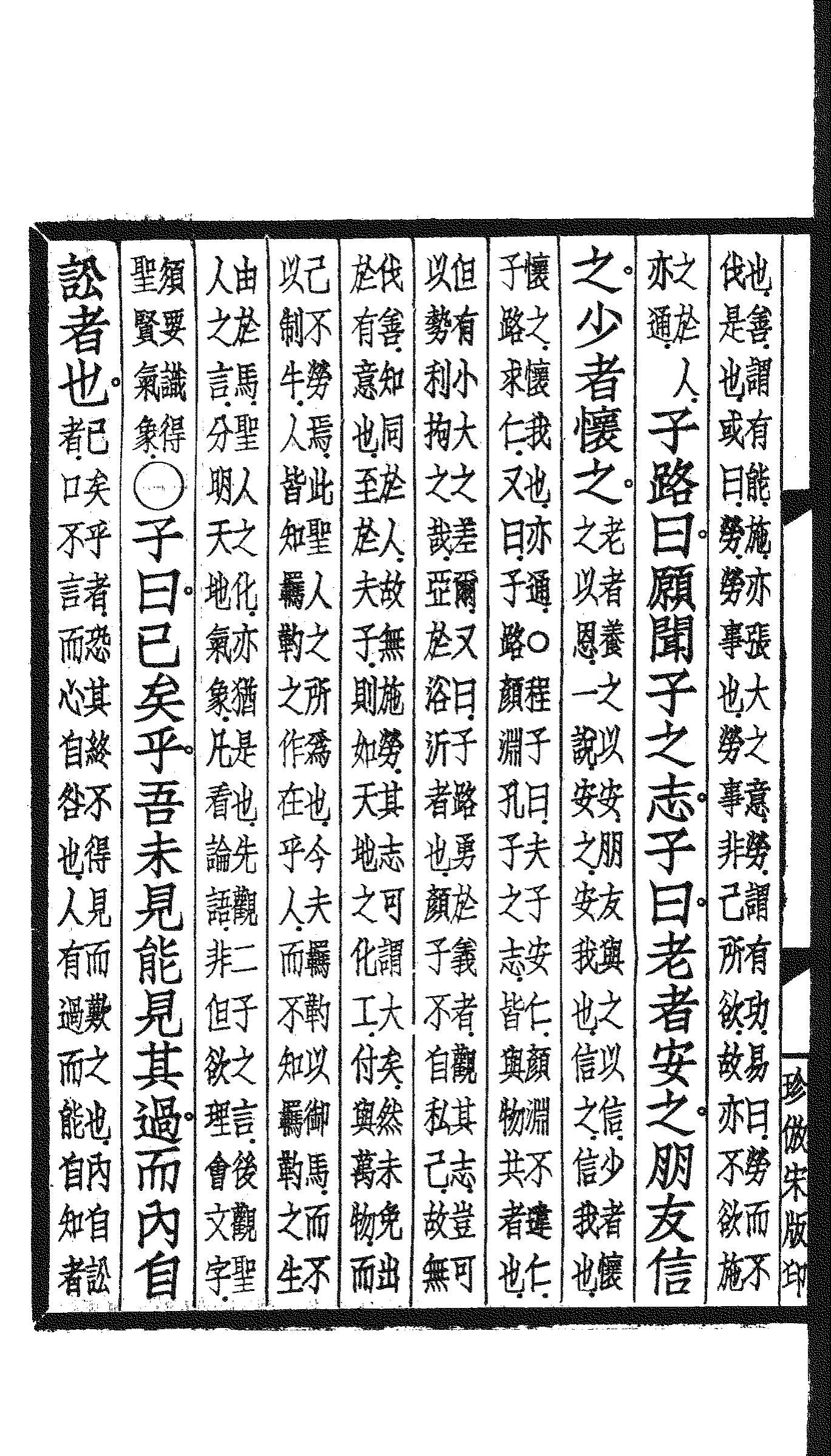
皇侃《论语义疏》Liang dynasty · 1750 Japanese woodblock edition · juan 三
“已,止也。”……
Compared with Zhu Xi
| Commentary | Point | Relation | Confidence | Note |
|---|---|---|---|---|
| 钱穆《论语新解》 | same | fairly sure | 同以已矣乎为恐终不得见而叹、内自讼为自见其过且内心咎责,不止口头认错;钱进一步联系颜子不贰过。 |
核Check every citation
Every commentary line quoted in the video: the original wording, who said it, and the page in the base edition. “Paraphrase” marks our summary, not the commentator's words. About this edition
| Quoted text | Source | Page |
|---|---|---|
| “已矣乎者,恐其终不得见而叹之也。内自讼者,口不言而心自咎也” | Zhu Xi's commentary | page 74 |
| “人有过而能自知者鲜矣,知过而能内自讼者为尤鲜。能内自讼,则其悔悟深切而能改必矣。夫子自恐终不得见而叹之,其警学者深矣” | Zhu Xi's commentary | page 74 |
音Pronunciation
| Character | In the line | Read as |
|---|---|---|
| 已 | 已矣乎 | yǐ |
| 讼 | 内自讼 | sòng |
页Pages of the base edition
Yikonglu, Analects 公冶长第五 5.26 “Why is it so hard to see one's own faults?”, https://yikonglu.com/en/lunyu/gong-ye-chang/26.html, version 2026-11-05.Last checked: 2026-11-05. Changes are logged on theerrata page.
Found an error in this chapter? Email us; once checked, it goes on the errata page under your username: