 一孔录
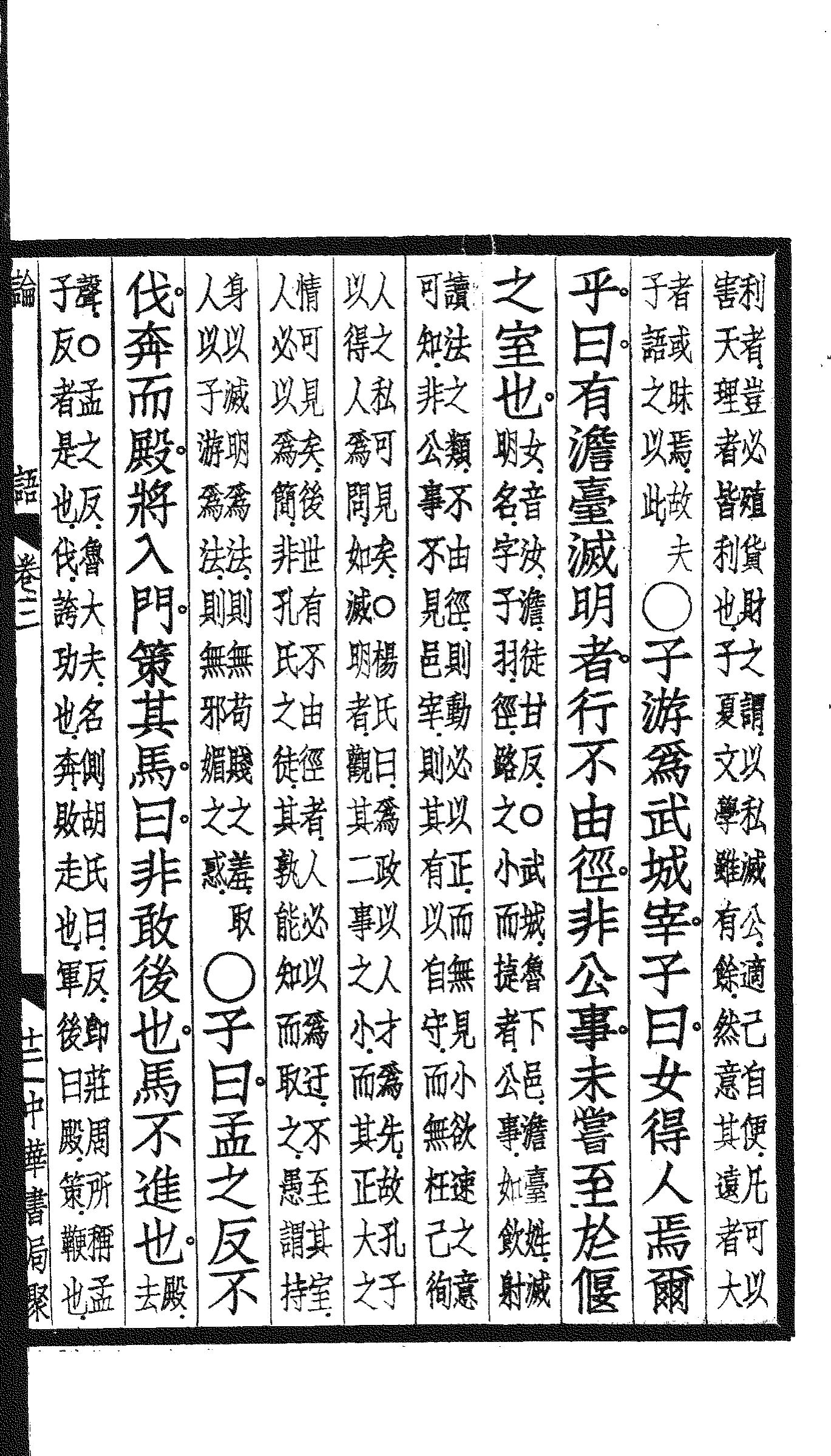
子游为武城宰。子曰:女得人焉尔乎?曰:有澹台灭明者,行不由径。非公事,未尝至于偃之室也。Ziyou was steward of Wucheng. The Master said: Have you found good men there? He said: There is one Tantai Mieming, who never takes a shortcut when walking, and has never come to my rooms except on public business.
Tap any sentence of the original to copy it with its source.
白Plain Chinese
子游做武城的长官。孔子问:你在那里找到人才没有?子游说:有个叫澹台灭明的,走路不抄小道,不是公事,从没到过我屋里。
A plain modern-Chinese rendering following Yikonglu's reading.
常The common reading
Never taking a shortcut: does that count as talent?
注Key words in the commentary
“武城,鲁下邑” — Wucheng was a lesser town of Lu; “澹台姓,灭明名,字子羽” — Tantai is the surname, Mieming the given name, courtesy name Ziyu; “径,路之小而捷者” — “jing” is a small, quick path; “公事,如饮射读法之类” — public business means things like the drinking and archery ceremonies and the reading of the laws.
家What other commentators say
Yang: “为政以人才为先,故孔子以得人为问……非公事不见邑宰,则其有以自守,而无枉己徇人之私可见矣” — in governing, talent comes first, so Confucius asked whether he had found men … not seeing the town steward except on public business shows he could hold to himself, without bending himself to please others. Zhu Xi's note: “持身以灭明为法,则无苟贱之羞;取人以子游为法,则无邪媚之惑” — take Mieming as the model for conducting oneself and one avoids the shame of baseness; take Ziyou as the model for choosing people and one is not misled by flattery.
读How Yikonglu reads it
He never cut through by-paths and never came to the official's door without public business. Someone who holds firm in small things can be relied on in large ones; Ziyou saw that too when judging people.
异Textual variants
Where the base edition differs from the common text; the original follows the base edition.
| Base edition | Common text | Note |
|---|---|---|
| 焉尔乎 | 焉耳乎 | 底本PDF83爾,简化尔;杨本6.14作耳 |
家Other commentaries
Our base text is Zhu Xi's Collected Commentaries (above). Here are other commentaries side by side: for old commentaries, the first line of the sub-commentary with a link to the woodblock scan; for modern editions, one short quoted translation for comparison. The “compared with Zhu Xi” notes are written by Yikonglu, not quoted.
皇侃《论语义疏》Liang dynasty · 1750 Japanese woodblock edition · juan 三
“云子游為武城宰者,子游為武城邑宰也。”……
Compared with Zhu Xi
| Commentary | Point | Relation | Confidence | Note |
|---|---|---|---|---|
| 钱穆《论语新解》 | same | fairly sure | 同以澹台灭明不由捷径、非公事不至邑宰室,见其正大自守不枉己;孔子问得人为重人才而不只问政绩。 |
核Check every citation
Every commentary line quoted in the video: the original wording, who said it, and the page in the base edition. “Paraphrase” marks our summary, not the commentator's words. About this edition
| Quoted text | Source | Page |
|---|---|---|
| “武城,鲁下邑……而无枉己徇人之私可见矣” | Zhu Xi's commentary | page 83 |
| “杨氏曰:为政以人才为先……其孰能知而取之?愚谓持身……则无邪媚之惑” | 朱注引杨氏;朱注 | page 83 |
音Pronunciation
| Character | In the line | Read as |
|---|---|---|
| 女 | 今女画、女为君子儒、女得人焉尔乎 | rǔ |
| 为 | 女为君子儒、无为小人儒、为武城宰 | wéi |
| 澹台 | 澹台灭明 | tán tái |
| 偃 | 至于偃之室 | yǎn |
| 径 | 行不由径 | jìng |
页Pages of the base edition
Yikonglu, Analects 雍也第六 6.12 “Not taking shortcuts: is that talent?”, https://yikonglu.com/en/lunyu/yong-ye/12.html, version 2026-11-05.Last checked: 2026-11-05. Changes are logged on theerrata page.
Found an error in this chapter? Email us; once checked, it goes on the errata page under your username: 
