 一孔录
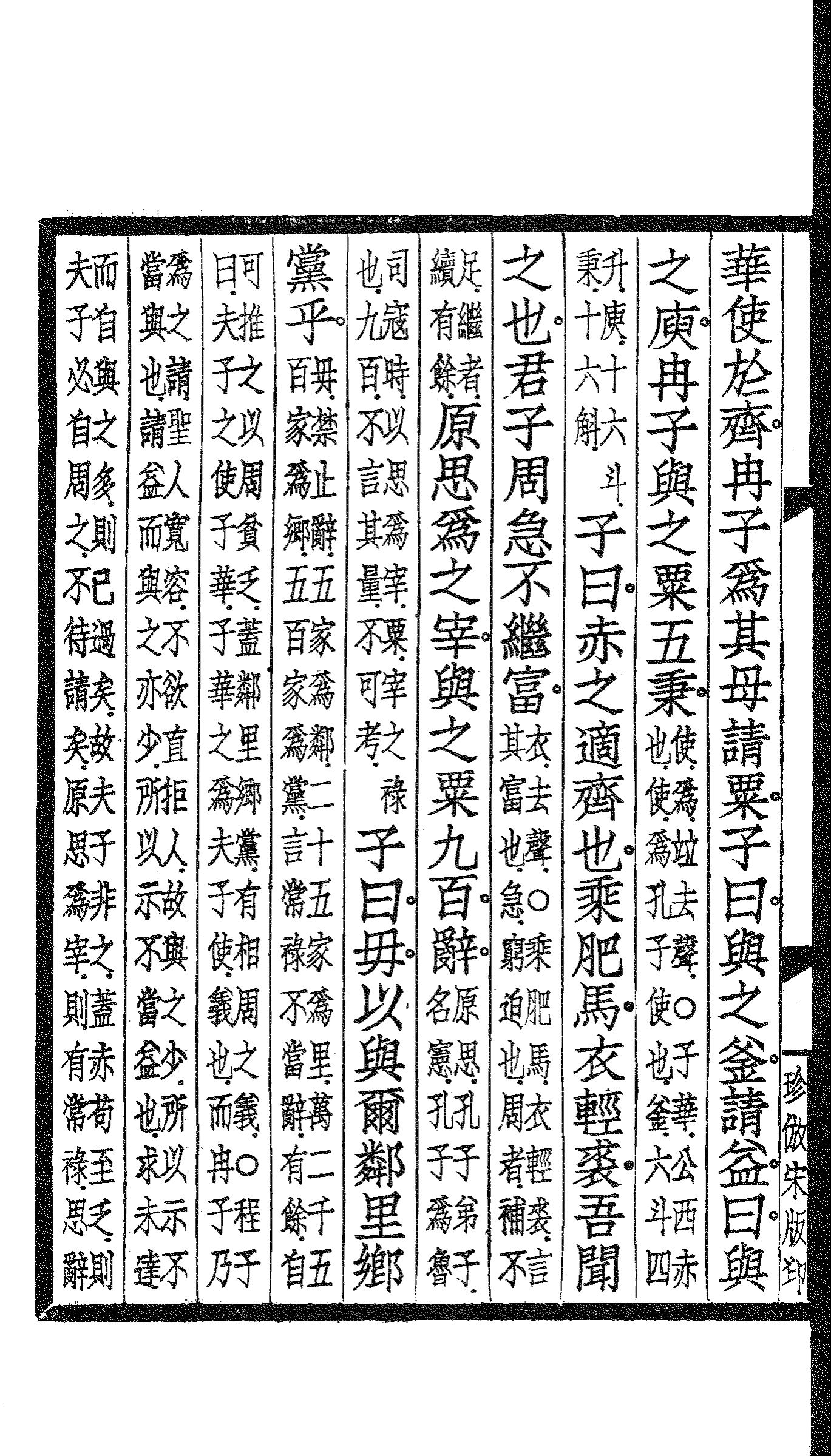
子华使于齐,冉子为其母请粟。子曰:与之釜。请益。曰:与之庾。冉子与之粟五秉。子曰:赤之适齐也,乘肥马,衣轻裘。吾闻之也,君子周急不继富。原思为之宰,与之粟九百,辞。子曰:毋!以与尔邻里乡党乎!Zihua was sent on a mission to Qi, and Ranzi asked for grain for his mother. The Master said: Give her a fu. He asked for more. The Master said: Give her a yu. Ranzi gave her five bing of grain. The Master said: When Chi went to Qi he rode fat horses and wore light furs. I have heard that the gentleman helps the needy, not adds to the rich. When Yuan Si became his steward, he was given nine hundred measures of grain, and declined. The Master said: Don't! Give it to your neighbours and villagers.
Tap any sentence of the original to copy it with its source.
白Plain Chinese
公西赤出使齐国,冉有替他母亲来要粮。孔子说:给她一釜。冉有请求再添些。孔子说:给她一庾。冉有却给了五秉。孔子说:公西赤这次去齐国,驾着肥马,披着轻裘。我听人讲过:君子救人急难,不给富人锦上添花。原思替孔子管家,给他俸粮九百,他推辞不要。孔子说:别推!拿去分给你的邻里乡亲吧!
A plain modern-Chinese rendering following Yikonglu's reading.
常The common reading
Both were gifts of grain — why did Confucius give one little and the other a lot?
注Key words in the commentary
“使、为,并去声” — “shi” and “wei” are both in the departing tone; a fu is six dou four sheng, a yu sixteen dou, a bing sixteen hu; “衣” in the departing tone, to wear; “急,穷迫也。周者,补不足。继者,续有余” — “ji” is dire need; “zhou” is making up a lack; “ji” (continue) is adding to a surplus; “毋,禁止辞” — “wu” is a word of prohibition.
家What other commentators say
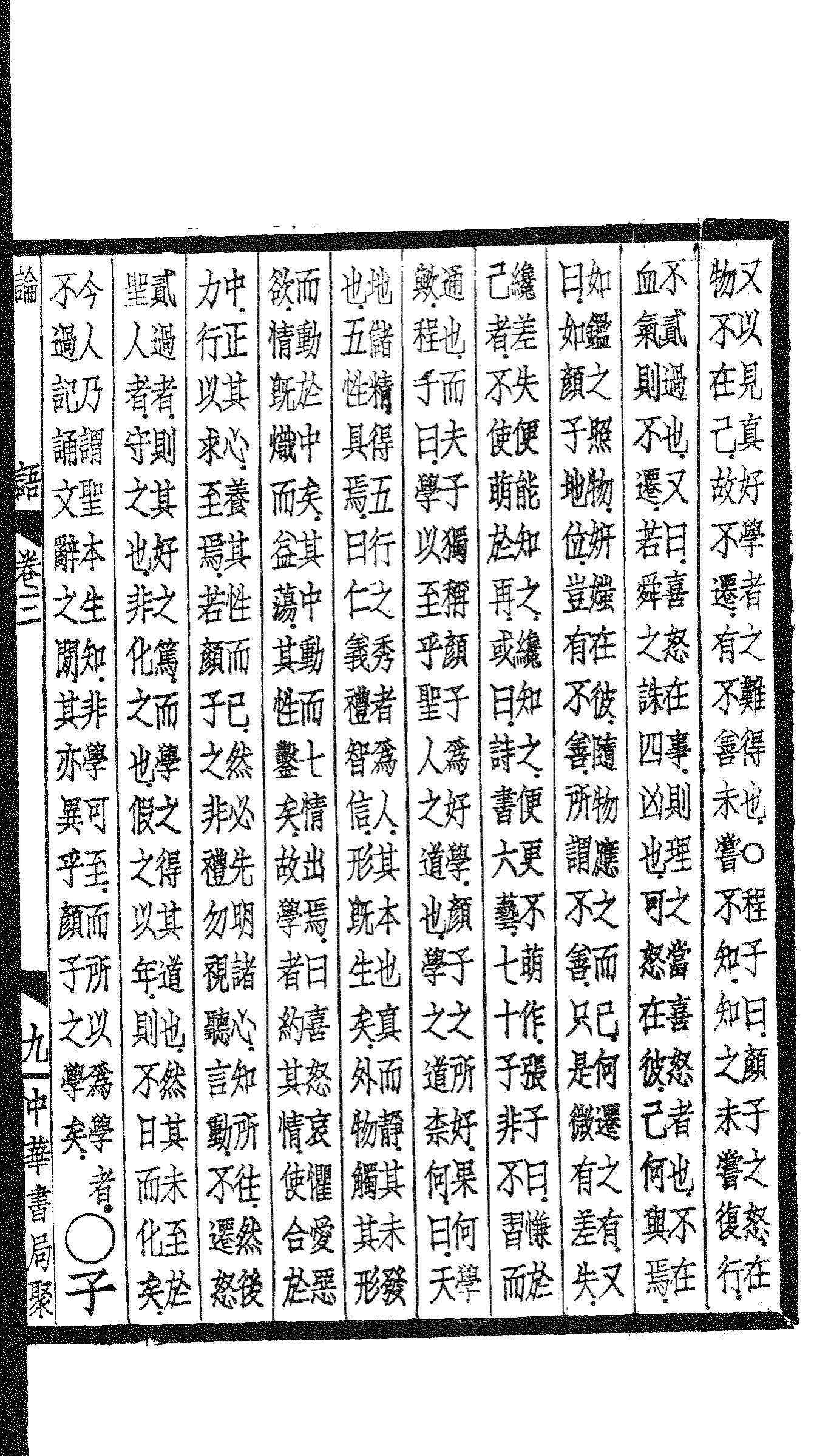
Master Cheng: “圣人宽容,不欲直拒人,故与之少,所以示不当与也……求未达而自与之多,则已过矣” — the sage is tolerant and does not wish to refuse flatly, so he gave little to show it should not be given … Qiu did not understand and gave a lot on his own, which was going too far; “原思为宰,则有常禄。思辞其多,故又教以分诸邻里之贫者,盖亦莫非义也” — as steward Yuan Si had a regular salary; when he declined it as too much, the Master taught him to share it with the poor of his neighbourhood: this too was right. Master Zhang: “于斯二者,可见圣人之用财矣” — in these two cases one sees how the sage uses wealth.
读How Yikonglu reads it
How much to give depends not on favour but on what is right. Zihua's family rode fat horses and wore light furs, not in need, so he gave only a little, refusing to add to the rich; Yuan Si's salary was owed by his post, and refusing it would be wrong, so any excess should go to his neighbours. One case is “help the needy, not the rich”; the other is “a regular salary should not be declined”.
家Other commentaries
Our base text is Zhu Xi's Collected Commentaries (above). Here are other commentaries side by side: for old commentaries, the first line of the sub-commentary with a link to the woodblock scan; for modern editions, one short quoted translation for comparison. The “compared with Zhu Xi” notes are written by Yikonglu, not quoted.
皇侃《论语义疏》Liang dynasty · 1750 Japanese woodblock edition · juan 三
“云子華使於齊者,子華,弟子公西赤字也。”……
Compared with Zhu Xi
| Commentary | Point | Relation | Confidence | Note |
|---|---|---|---|---|
| 钱穆《论语新解》 | differs | fairly sure | 周急不继富及常禄可推济邻里同解;庾量不同,钱取二斗四升并在釜外添与,朱取十六斗。 |
核Check every citation
Every commentary line quoted in the video: the original wording, who said it, and the page in the base edition. “Paraphrase” marks our summary, not the commentator's words. About this edition
| Quoted text | Source | Page |
|---|---|---|
| “使、为,并去声。子华,公西赤也。使,为孔子使也。釜,六斗四升。庾,十六斗。秉,十六斛” | Zhu Xi's commentary | page 78 |
| “衣,去声。乘肥马、衣轻裘,言其富也。急,穷迫也。周者,补不足。继者,续有余” | Zhu Xi's commentary | page 78 |
| “原思,孔子弟子,名宪。孔子为鲁司寇时,以思为宰。粟,宰之禄也。九百不言其量,不可考” | Zhu Xi's commentary | page 78 |
| “毋,禁止辞。五家为邻……盖邻、里、乡、党有相周之义” | Zhu Xi's commentary | page 78 |
| “程子曰:夫子之使子华……不待请矣” | Cheng Yi, quoted by Zhu Xi | page 78 |
| “原思为宰,则有常禄……盖亦莫非义也。张子曰:于斯二者,可见圣人之用财矣” | 朱注引程子(续)、张子 | page 78 |
音Pronunciation
| Character | In the line | Read as |
|---|---|---|
| 使 | 子华使于齐、为孔子使、夫子之使子华、为夫子使 | shì |
| 为 | 为其母请粟、为孔子使、为之请 | wèi |
| 釜 | 与之釜、釜 | fǔ |
| 庾 | 与之庾、庾 | yǔ |
| 秉 | 五秉 | bǐng |
| 适 | 赤之适齐 | shì |
| 乘 | 乘肥马 | chéng |
| 衣 | 衣轻裘 | yì |
| 毋 | 毋 | wú |
页Pages of the base edition
Yikonglu, Analects 雍也第六 6.3 “Why did Confucius give one man little grain and another a lot?”, https://yikonglu.com/en/lunyu/yong-ye/3.html, version 2026-11-05.Last checked: 2026-11-05. Changes are logged on theerrata page.
Found an error in this chapter? Email us; once checked, it goes on the errata page under your username: 
