 一孔录
子曰:贤哉,回也!一箪食,一瓢饮,在陋巷。人不堪其忧,回也不改其乐。贤哉,回也!The Master said: How worthy Hui is! A bamboo basket of rice, a gourd of water, living in a mean alley: others could not bear the hardship, yet Hui does not let it change his joy. How worthy Hui is!
Tap any sentence of the original to copy it with its source.
白Plain Chinese
孔子说:颜回真是贤德啊!一小竹筐饭,一瓢清水,住在窄巷子里。别人受不了那份清苦,颜回却始终不改他的快乐。颜回真是贤德啊!
A plain modern-Chinese rendering following Yikonglu's reading.
常The common reading
Yan Hui was this poor: what was he happy about?
注Key words in the commentary
“箪,竹器。食,饭也。瓢,瓠也” — “dan” is a bamboo vessel; “si” is cooked rice; “piao” is a gourd; “颜子之贫如此,而处之泰然,不以害其乐” — Yanzi was this poor, yet bore it calmly and did not let it harm his joy; note the word “其” (his).
家What other commentators say
Master Cheng: “颜子之乐,非乐箪瓢陋巷也,不以贫窭累其心而改其所乐也,故夫子称其贤” — Yanzi's joy was not joy in the basket, gourd and alley; he did not let poverty burden his heart and change what he delighted in, so the Master called him worthy; “其字当玩味,自有深意” — the word “其” deserves pondering; it holds a deep meaning. Zhu Xi's note: “程子之言,引而不发,盖欲学者深思而自得之。今亦不敢妄为之说” — Master Cheng drew the bow without releasing, wishing learners to think deeply and find it themselves; I too dare not explain it rashly.
读How Yikonglu reads it
What he enjoyed was not poverty, but a joy that poverty could not change. Zhu Xi would rather not spell it out, leaving readers to find for themselves what lies in the word “其”.
家Other commentaries
Our base text is Zhu Xi's Collected Commentaries (above). Here are other commentaries side by side: for old commentaries, the first line of the sub-commentary with a link to the woodblock scan; for modern editions, one short quoted translation for comparison. The “compared with Zhu Xi” notes are written by Yikonglu, not quoted.
皇侃《论语义疏》Liang dynasty · 1750 Japanese woodblock edition · juan 三
“先云賢哉回也者,美顔淵之賢行,故先言賢哉回也。”……
Compared with Zhu Xi
| Commentary | Point | Relation | Confidence | Note |
|---|---|---|---|---|
| 钱穆《论语新解》 | same | fairly sure | 同以贫困不能改颜子原有所乐,不把箪瓢陋巷本身当快乐之物;钱认宋儒寻孔颜乐处之教有深意,朱亦引程子此语。 |
核Check every citation
Every commentary line quoted in the video: the original wording, who said it, and the page in the base edition. “Paraphrase” marks our summary, not the commentator's words. About this edition
| Quoted text | Source | Page |
|---|---|---|
| “箪,竹器……以深叹美之” | Zhu Xi's commentary | page 81 page 82 |
| “程子曰:颜子之乐……所乐何事” | 朱注引程子(三句) | page 82 |
| “愚按:程子之言……则庶乎有以得之矣” | Zhu Xi's commentary | page 82 |
音Pronunciation
| Character | In the line | Read as |
|---|---|---|
| 箪 | 一箪食、箪瓢 | dān |
| 食 | 一箪食 | sì |
| 乐 | 不改其乐、乐处、所乐、非可乐 | lè |
| 瓢 | 一瓢饮 | piáo |
页Pages of the base edition
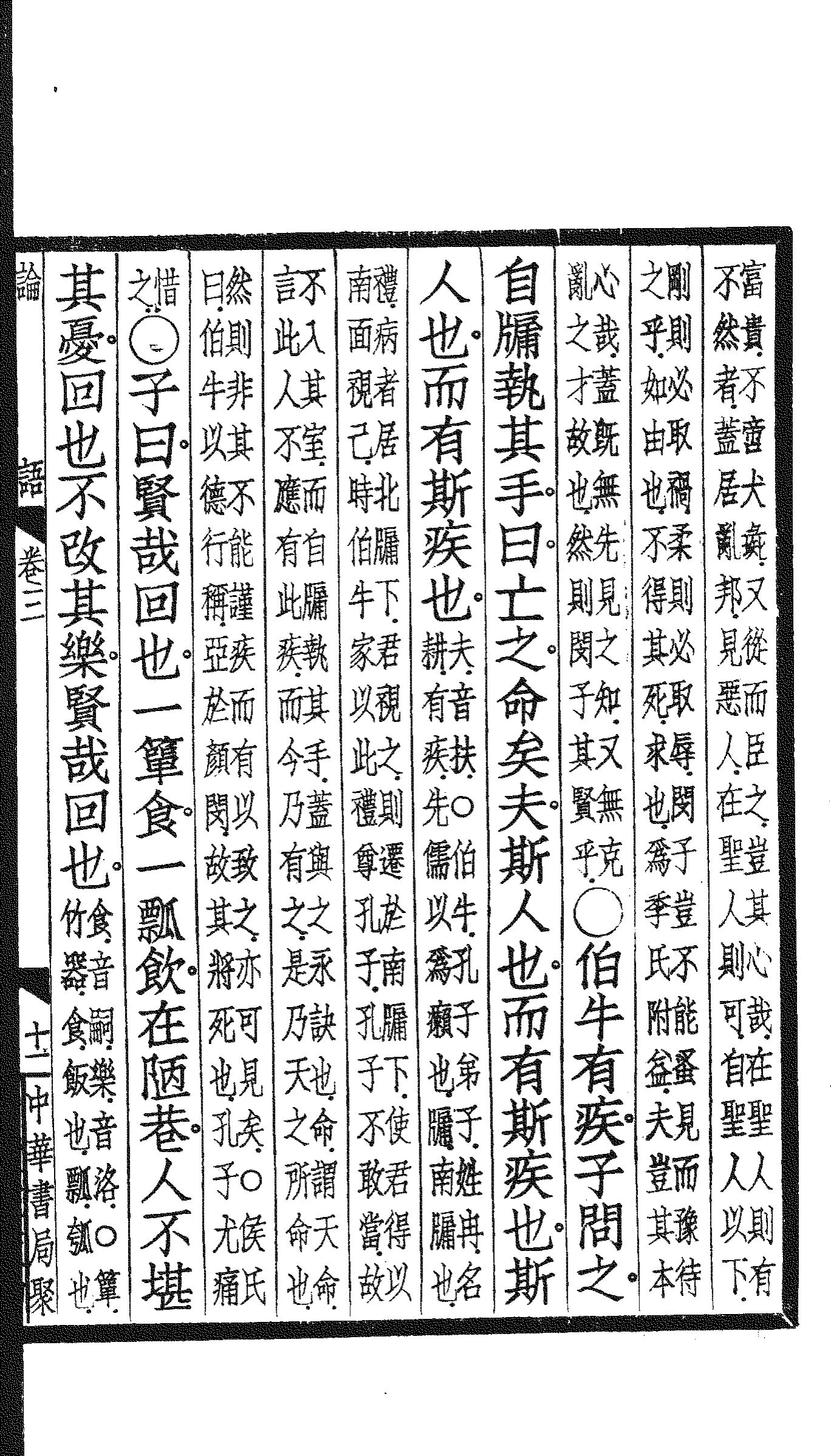
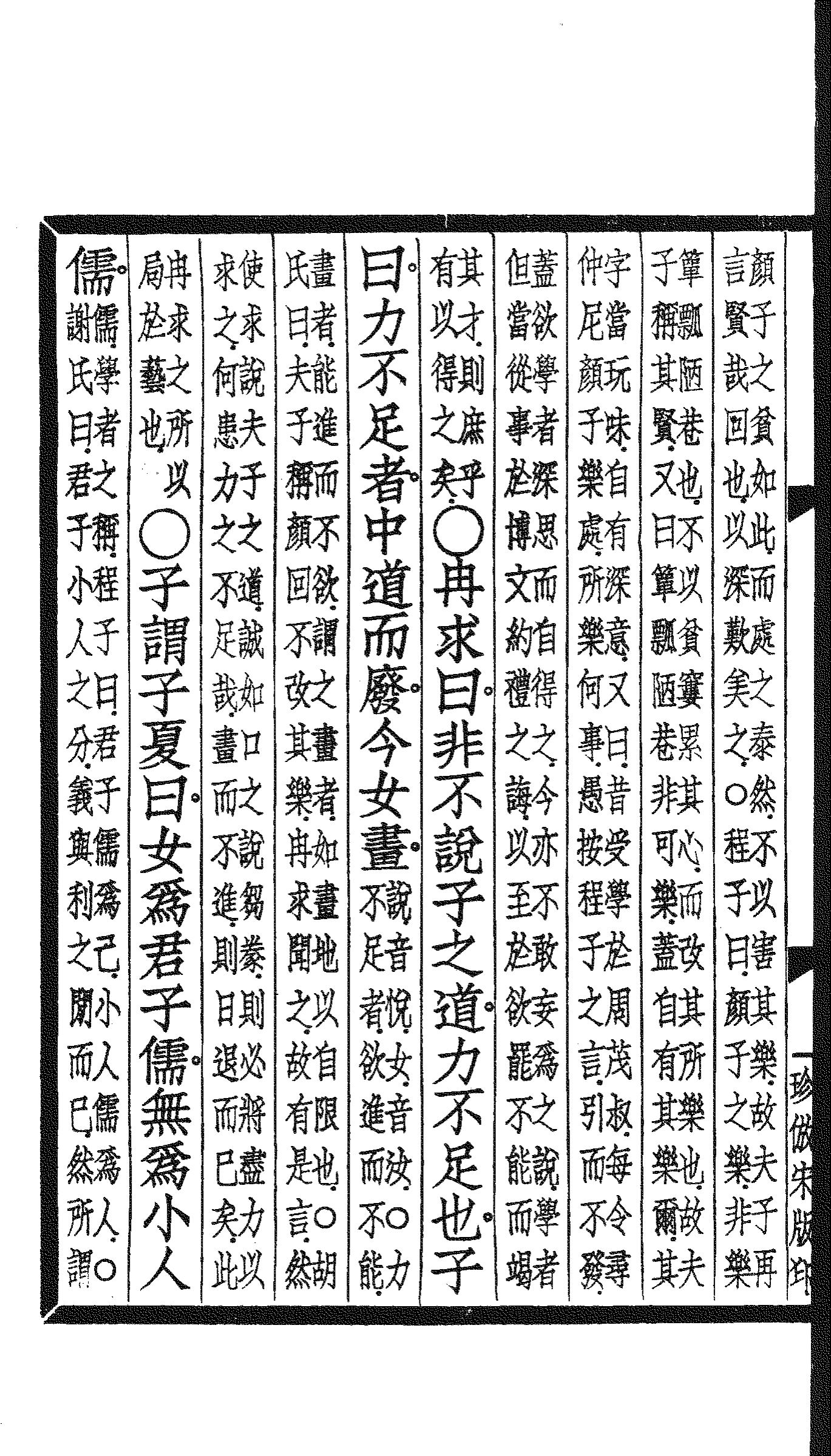
Yikonglu, Analects 雍也第六 6.9 “So poor, what was Yan Hui happy about?”, https://yikonglu.com/en/lunyu/yong-ye/9.html, version 2026-11-05.Last checked: 2026-11-05. Changes are logged on theerrata page.
Found an error in this chapter? Email us; once checked, it goes on the errata page under your username: 
