 一孔录
子曰:知之者不如好之者,好之者不如乐之者。The Master said: Those who know it are not equal to those who love it; those who love it are not equal to those who delight in it.
Tap any sentence of the original to copy it with its source.
白Plain Chinese
孔子说:懂得一样道理,不如真心爱它;真心爱它,又不如从中得着快乐。
A plain modern-Chinese rendering following Yikonglu's reading.
常The common reading
Knowing, loving, delighting: where do they differ?
注Key words in the commentary
“好” in the departing tone, to love; “乐” is read lè, to delight.
家What other commentators say
Yin: “知之者,知有此道也。好之者,好而未得也。乐之者,有所得而乐之也” — to know it is to know that this Way exists; to love it is to love it without yet having gained it; to delight in it is to have gained something and rejoice in it. Zhang Jingfu: “譬之五谷,知者知其可食者也,好者食而嗜之者也,乐者嗜之而饱者也……此古之学者,所以自强而不息者欤” — compare the five grains: the knower knows they are edible, the lover eats and relishes them, the delighter relishes them and is full … is this not why learners of old strove without ceasing?
读How Yikonglu reads it
Knowing there is this bowl of rice, loving to eat it, and having eaten your fill and being at ease: three levels. The difference is not how much you know, but whether you have actually gained it.
家Other commentaries
Our base text is Zhu Xi's Collected Commentaries (above). Here are other commentaries side by side: for old commentaries, the first line of the sub-commentary with a link to the woodblock scan; for modern editions, one short quoted translation for comparison. The “compared with Zhu Xi” notes are written by Yikonglu, not quoted.
皇侃《论语义疏》Liang dynasty · 1750 Japanese woodblock edition · juan 三
“云知之者不如好之者者,謂學者深淺也。”……
Compared with Zhu Xi
| Commentary | Point | Relation | Confidence | Note |
|---|---|---|---|---|
| 钱穆《论语新解》 | same | fairly sure | 同分知道、好而未得、得之而乐三个层次,并以知谷可食、食嗜而饱作比,均重学道与己浑然不离。 |
核Check every citation
Every commentary line quoted in the video: the original wording, who said it, and the page in the base edition. “Paraphrase” marks our summary, not the commentator's words. About this edition
| Quoted text | Source | Page |
|---|---|---|
| “尹氏曰:知之者……有所得而乐之也” | Yin Tun, quoted by Zhu Xi | page 85 |
| “张敬夫曰:譬之五谷……自强而不息者欤” | Zhang Shi, quoted by Zhu Xi | page 85 |
音Pronunciation
| Character | In the line | Read as |
|---|---|---|
| 好 | 好之者、好而未得、好者、未能好、好之未至 | hào |
| 乐 | 乐之者、乐而、未及于乐 | lè |
页Pages of the base edition
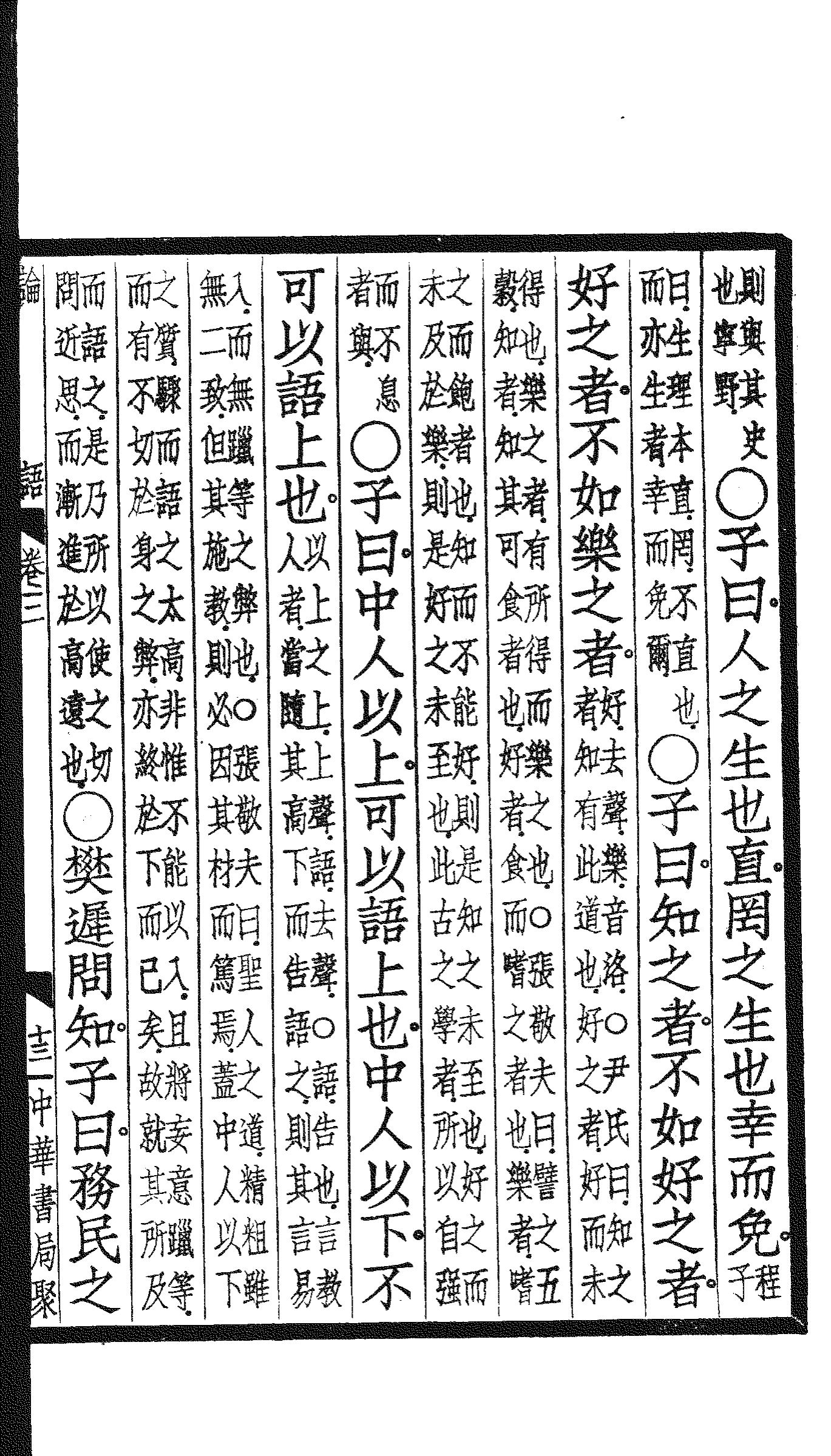
Yikonglu, Analects 雍也第六 6.18 “Knowing, liking, delighting: what's the difference?”, https://yikonglu.com/en/lunyu/yong-ye/18.html, version 2026-11-06.Last checked: 2026-11-06. Changes are logged on theerrata page.
Found an error in this chapter? Email us; once checked, it goes on the errata page under your username: 
